

Most SOCs start the morning the same way: a dozen feeds, a triage call on what's real, a second call on what's ours, and then the long stretch of turning that intel into a deployable detection before the patch cycle catches up. That last step is where the day usually disappears, and where exposure lives.
Here's the same workflow in Mallory, end to end, in five minutes. Overnight Slack ping on Bleeding Llama (CVE-2026-7482), to two Suricata rules a detection engineer can drop into the SIEM today.
Morning triage

The day starts in Slack. Mallory pushes a daily digest of recent and relevant vulns, scoped to your stack. Bleeding Llama (CVE-2026-7482) is at the top, with one observed exploit. Some excellent research from the Cyera team. Worth a click.
One view, not five tabs
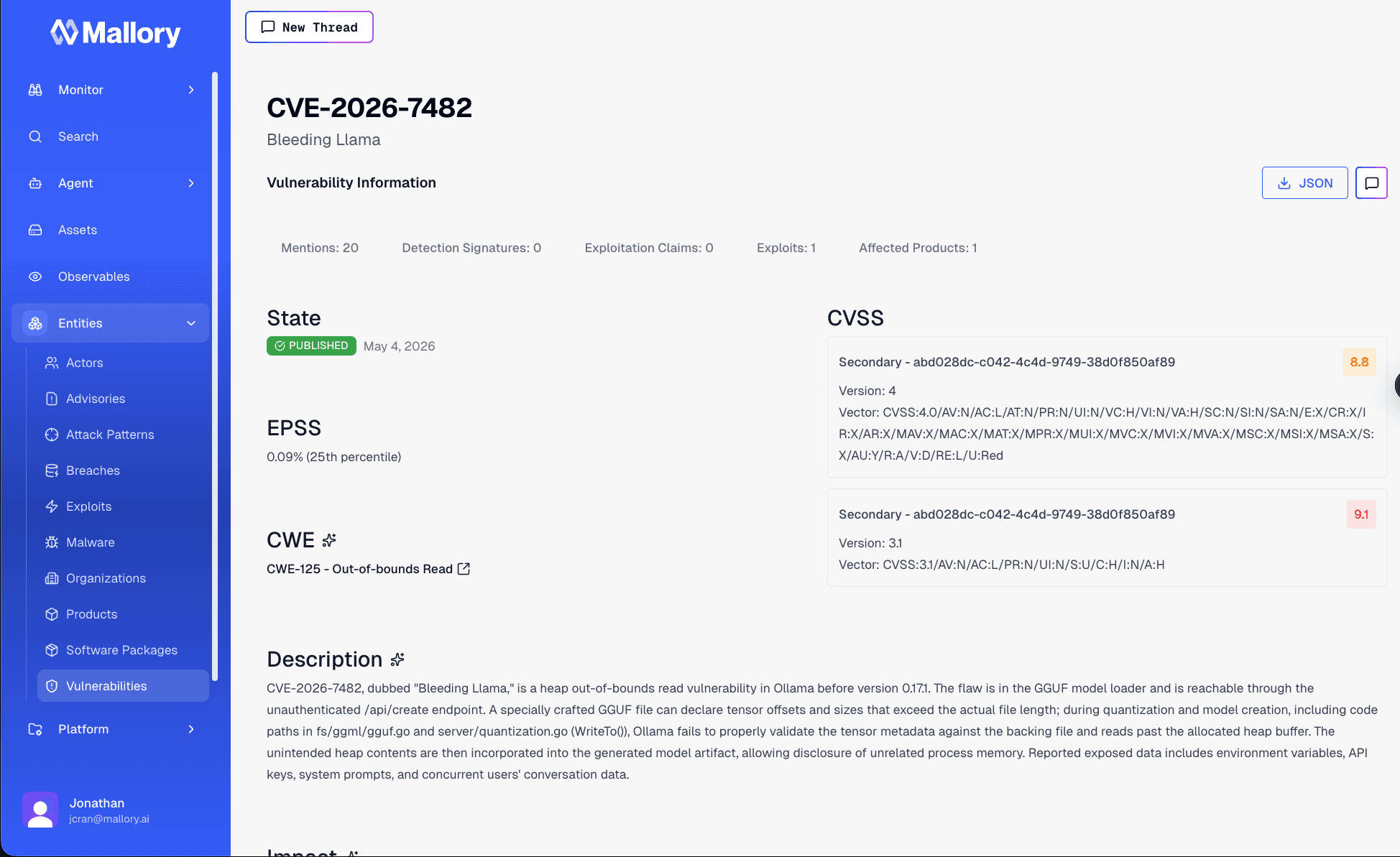
Pivot into the vulnerability. Heap-based out-of-bounds read in Ollama's GGUF model loader, reachable unauthenticated. CWE-125. CVSS, EPSS, mentions, exploit count, all in one view. No five-tab triage routine.
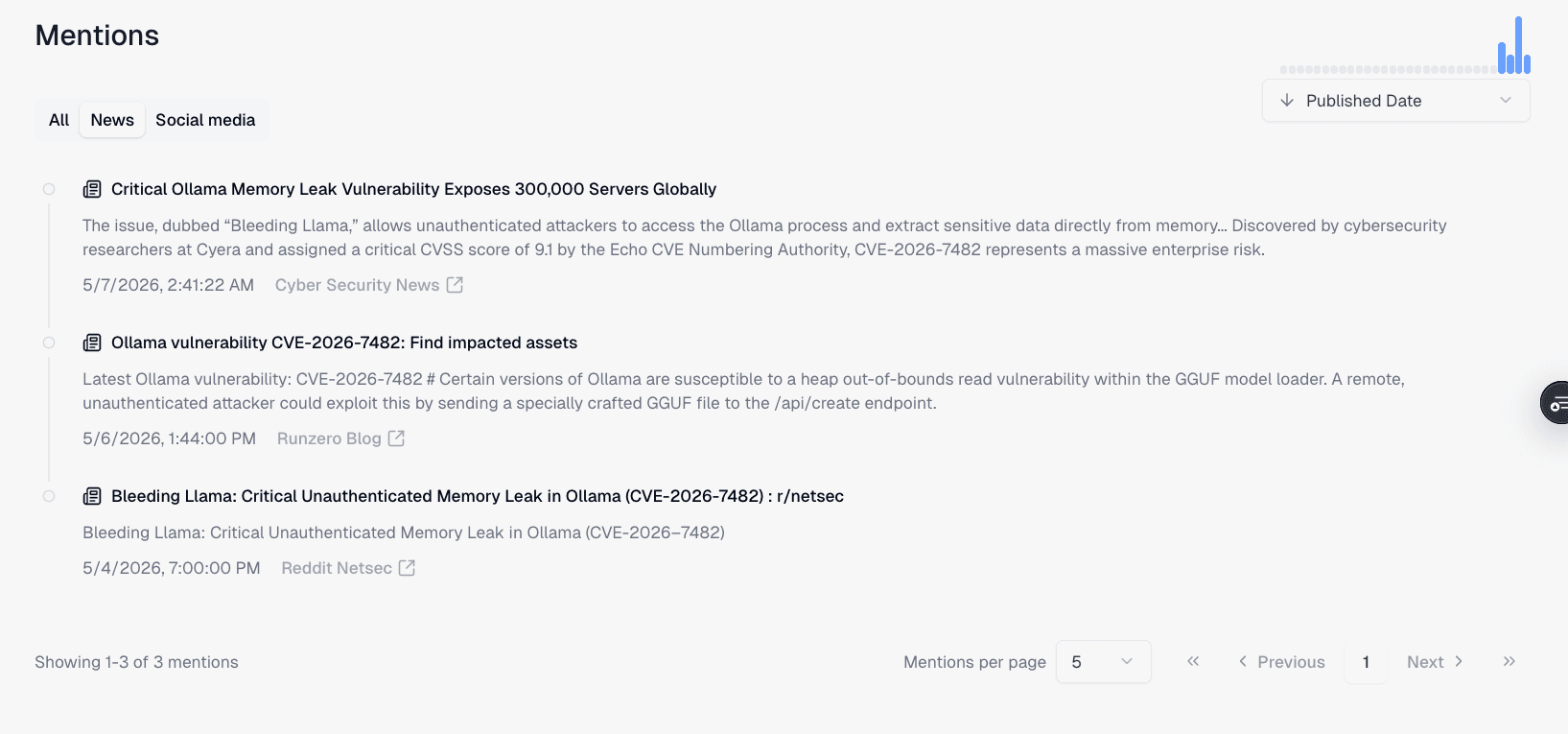
Watch the conversation form in real time across news and social. Cyber Security News, Runzero blog, Reddit netsec.
Day-zero exposure check
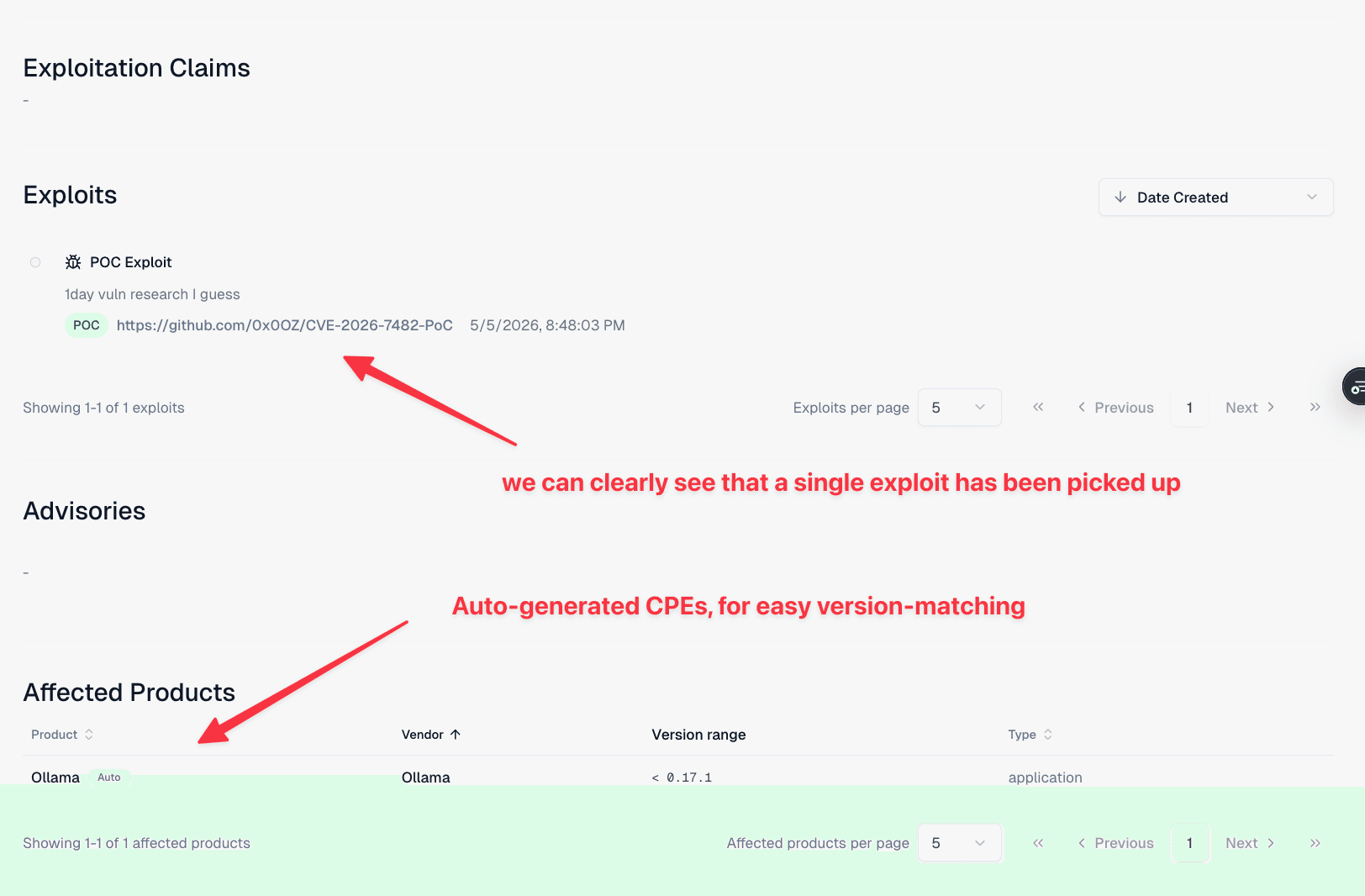
One PoC in the wild (0x0OZ/CVE-2026-7482-PoC on GitHub). Affected products auto-resolved to Ollama < 0.17.1, with CPEs generated for version matching. The thing your scanner needs and almost never has on day zero.
Real exploit or PoC theater
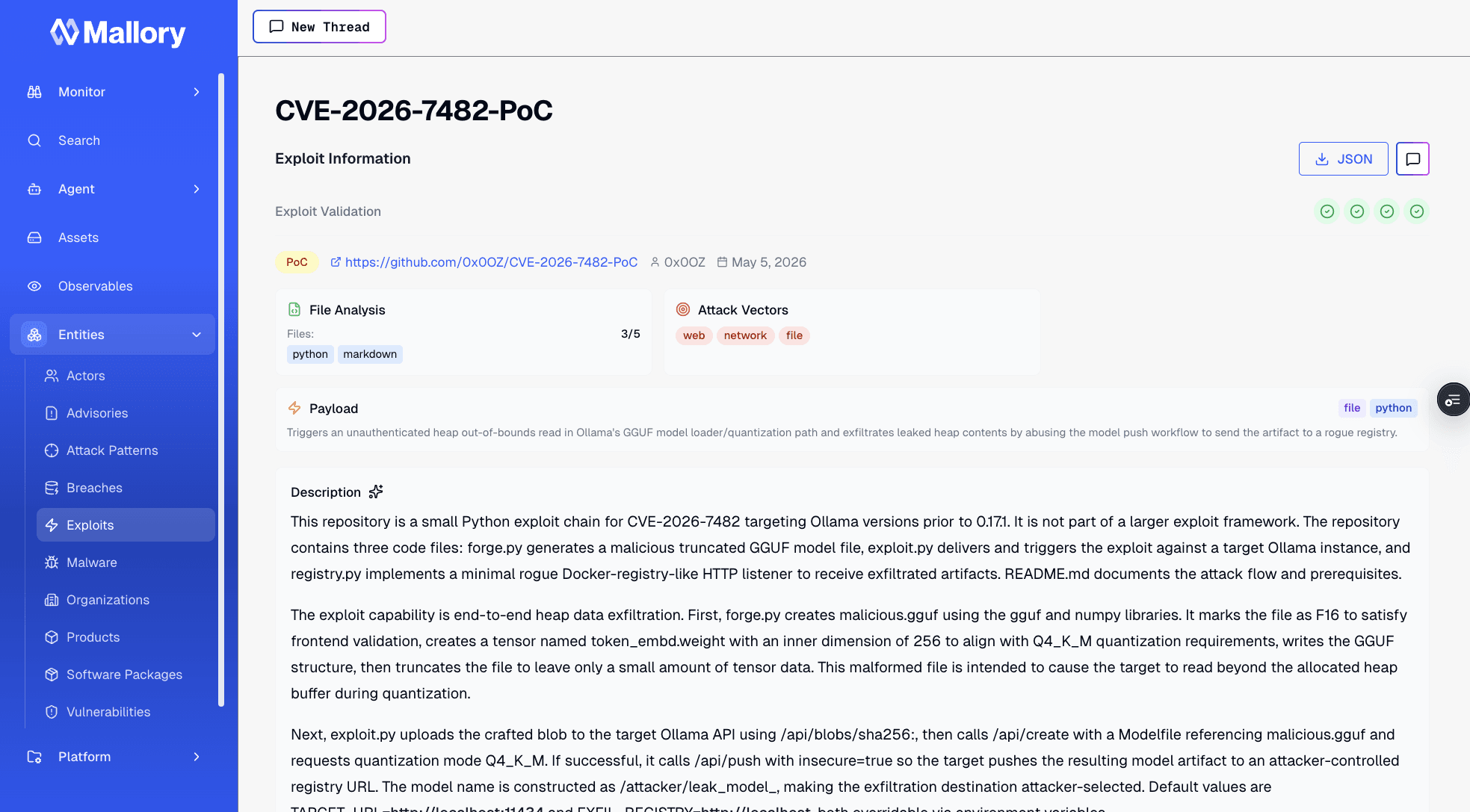
Click into the exploit and you get a clean breakdown. File analysis 3/5. Attack vectors tagged (web, network, file, python). A plain-English description of the chain: malicious GGUF, truncated model header, Modelfile forging, push to attacker-controlled registry, heap leak. And an honest assessment of whether it's a real exploit or PoC theater.
At this point the only open question is detection coverage.
Tier-1 to detection-engineering handoff
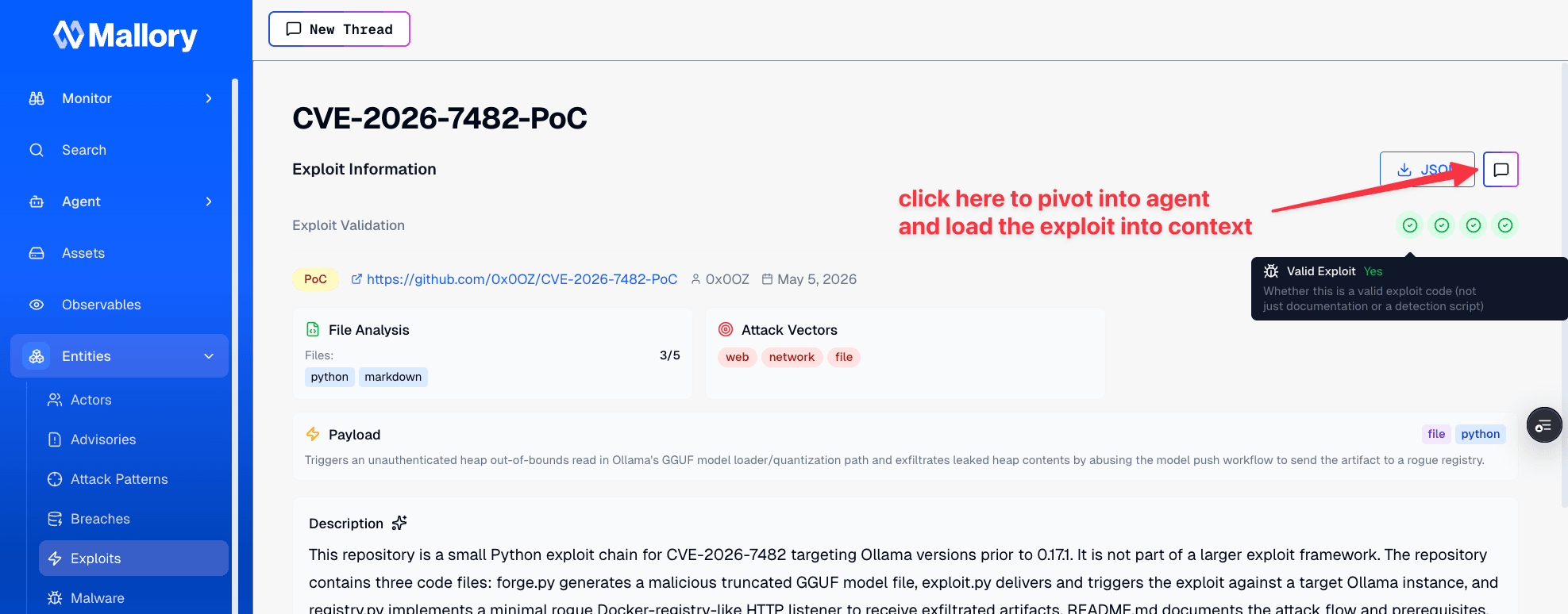
Time for the handoff. A button on the exploit page sends it straight into the agent.
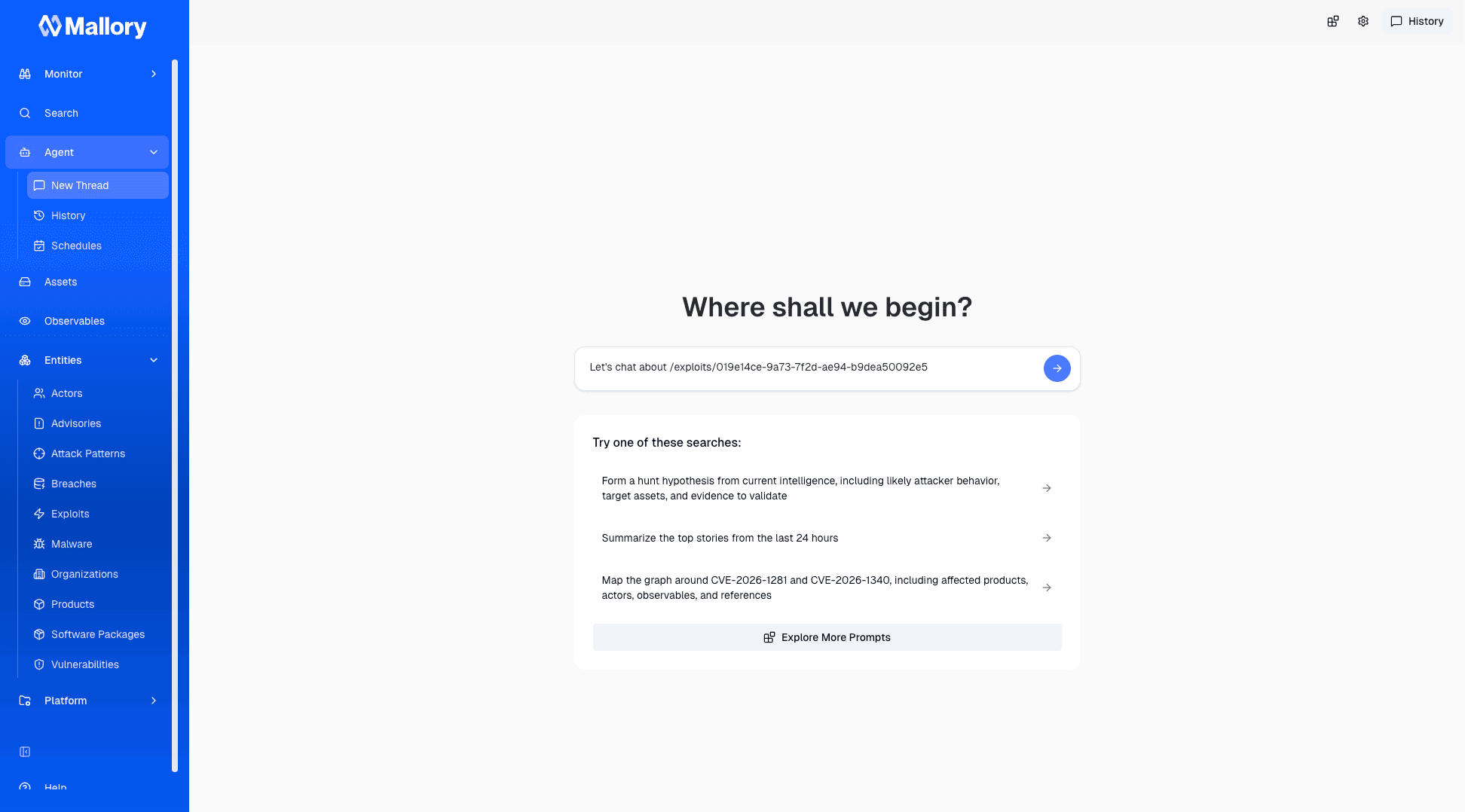
We land on the agent with the prompt pre-filled. Edit if you need to.
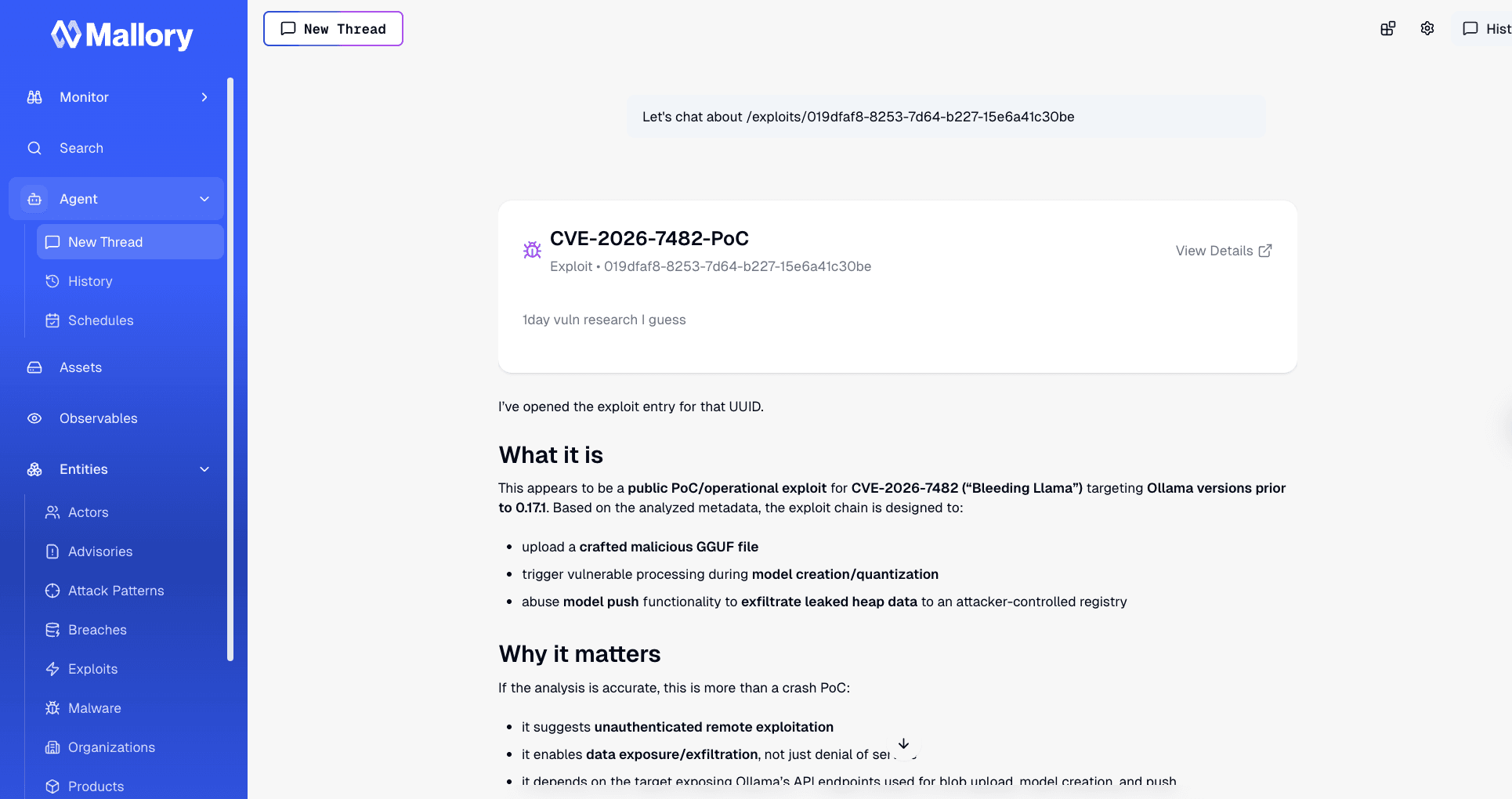
Structured summary: what it is, why it matters, the full operational story ready to reason on.
Detection in hand before the patch lands
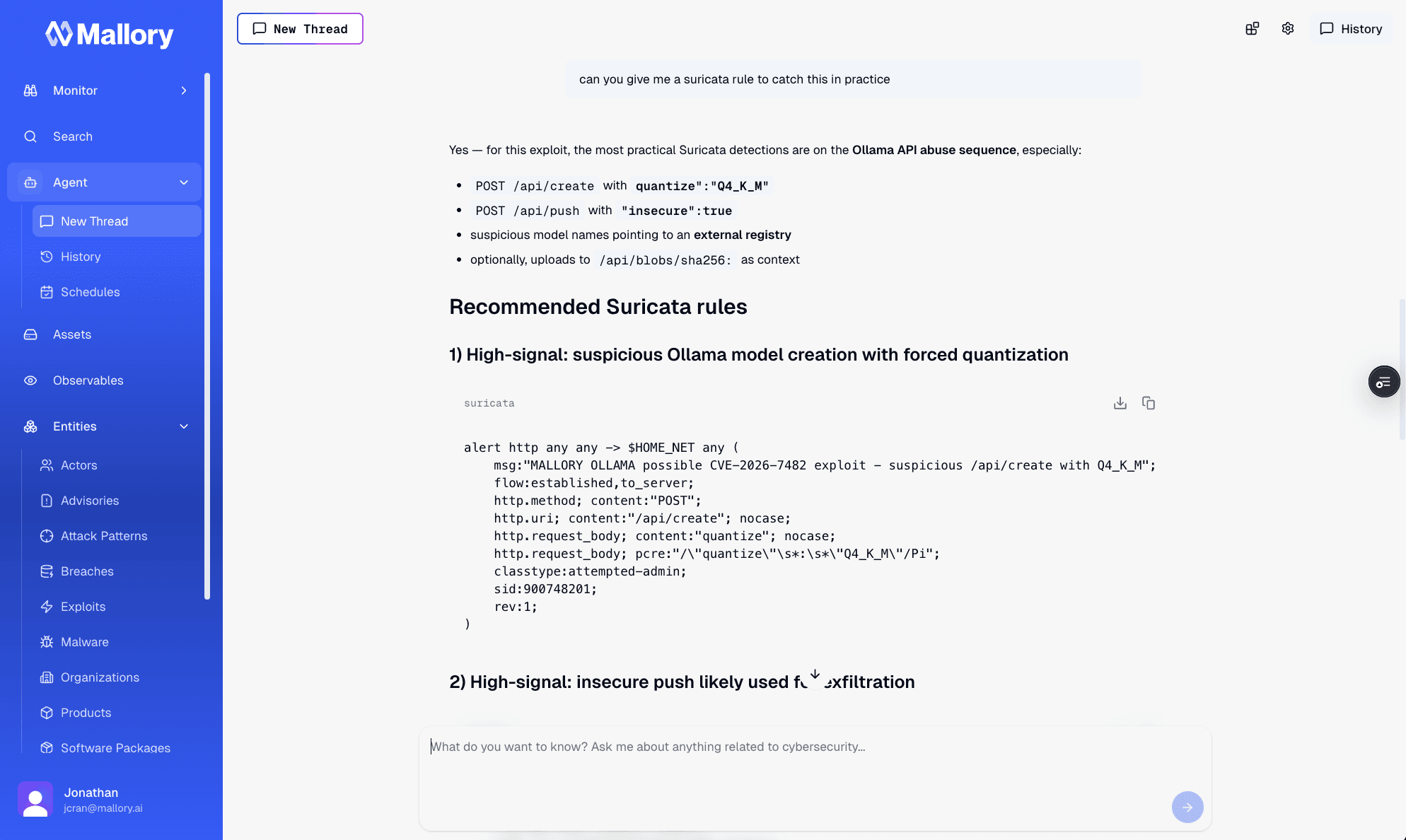
Then you ask for what you need. Today: Suricata rules. Tomorrow: Sigma, Splunk SPL, KQL. Whatever your stack speaks. Two high-signal candidates come back. One for suspicious Ollama model creation with forced quantization. One for the insecure push pattern likely used for exfiltration. Drop them into the SIEM and you've closed the loop, before the patch cycle even starts.
That's the workflow. Slack ping to deployable detection in a few minutes. Not because we automated a checklist, but because the data model and the agent are sitting on top of the same context.
The mythos is that vuln-ops is hard. The reality is that most of it is connective tissue between tools that don't talk. Pull that out and you get back the things SOCs actually optimize for: MTTR shrinks, detection coverage exists before the patch lands, and the handoff from Tier 1 to detection engineering is one click instead of a Jira novel, with the same context every analyst on the team is working from.
If this sounds like your morning workflow, we'd love to show you what Mallory can do.
Try Mallory for Free
From Slack ping to deployable detection in a few minutes. Real-time vuln-ops on top of intelligence tailored to your environment.
Start Free Trial