
CVE-2026-132165 (Drupal Fail2Install) is a Drupal installer flaw that Drupal says has been exploited on live sites and that CISA added to its Known Exploited Vulnerabilities catalog on November 24. In a survey of 10,000 endpoints, 41 (0.41%) returned a resuming installer. Drupal fixed the flaw in 10.6.22, 11.3.22 and 11.4.13.
On the morning of November 25, we opened Mallory and found a Drupal CVE in second place on the 24-hour trending list. It was marked Reserved, and an NVD lookup returned zero records for the ID. Public reporting was already driving attention. We wanted to know what happened on a real Drupal site. Was the affected installer state common on the internet? Would we find it at all in a survey? NVD lookup
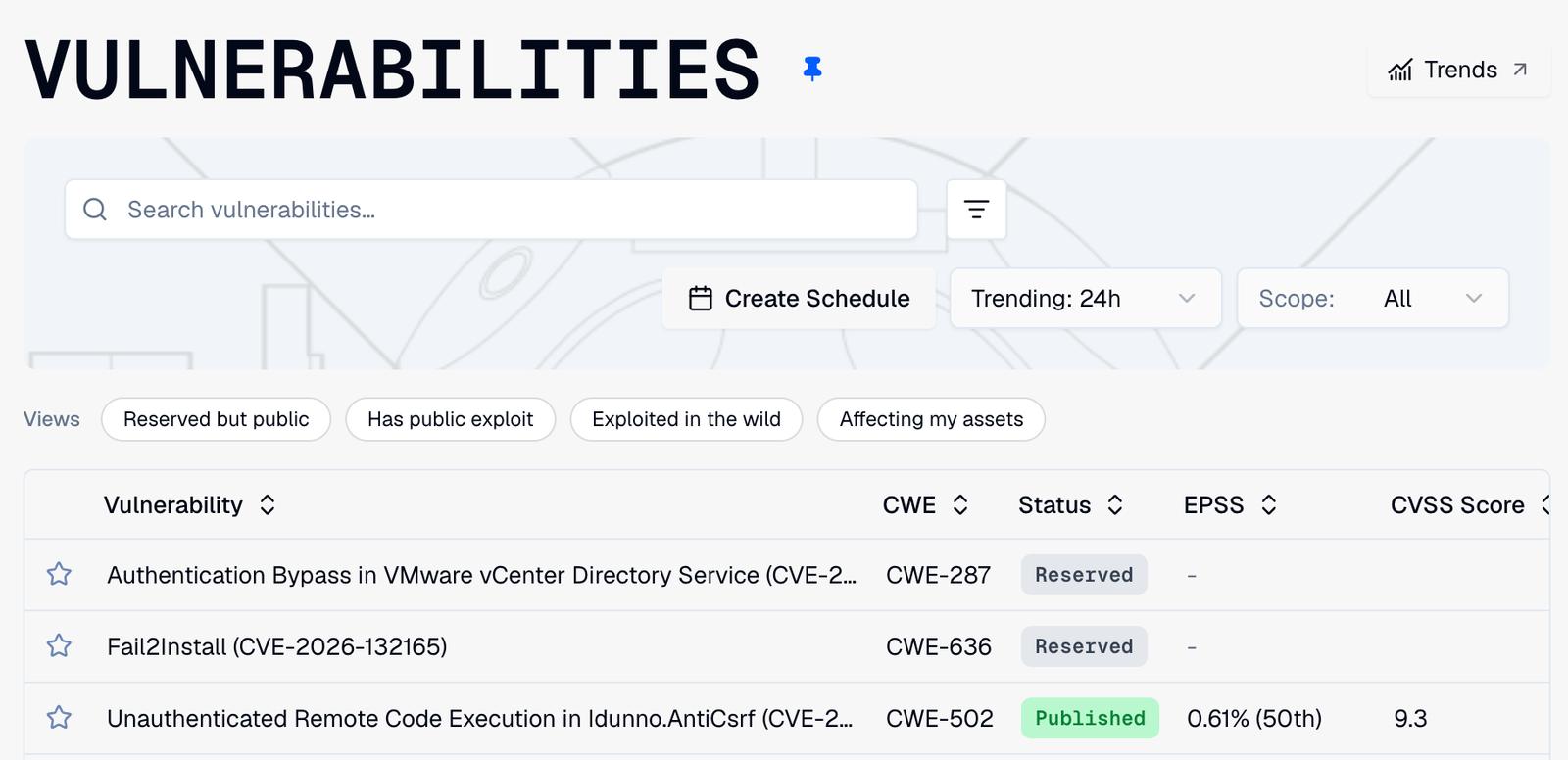
Follow the evidence from the CVE page
We opened the CVE record and found two signals that were already available. Drupal had reported exploitation on live sites as early as November 19, and CISA had added the flaw to its Known Exploited Vulnerabilities catalog on November 24. That gave us a reason to ask which deployments were actually exposed. Mallory CVE page · Drupal advisory · CISA KEV entry
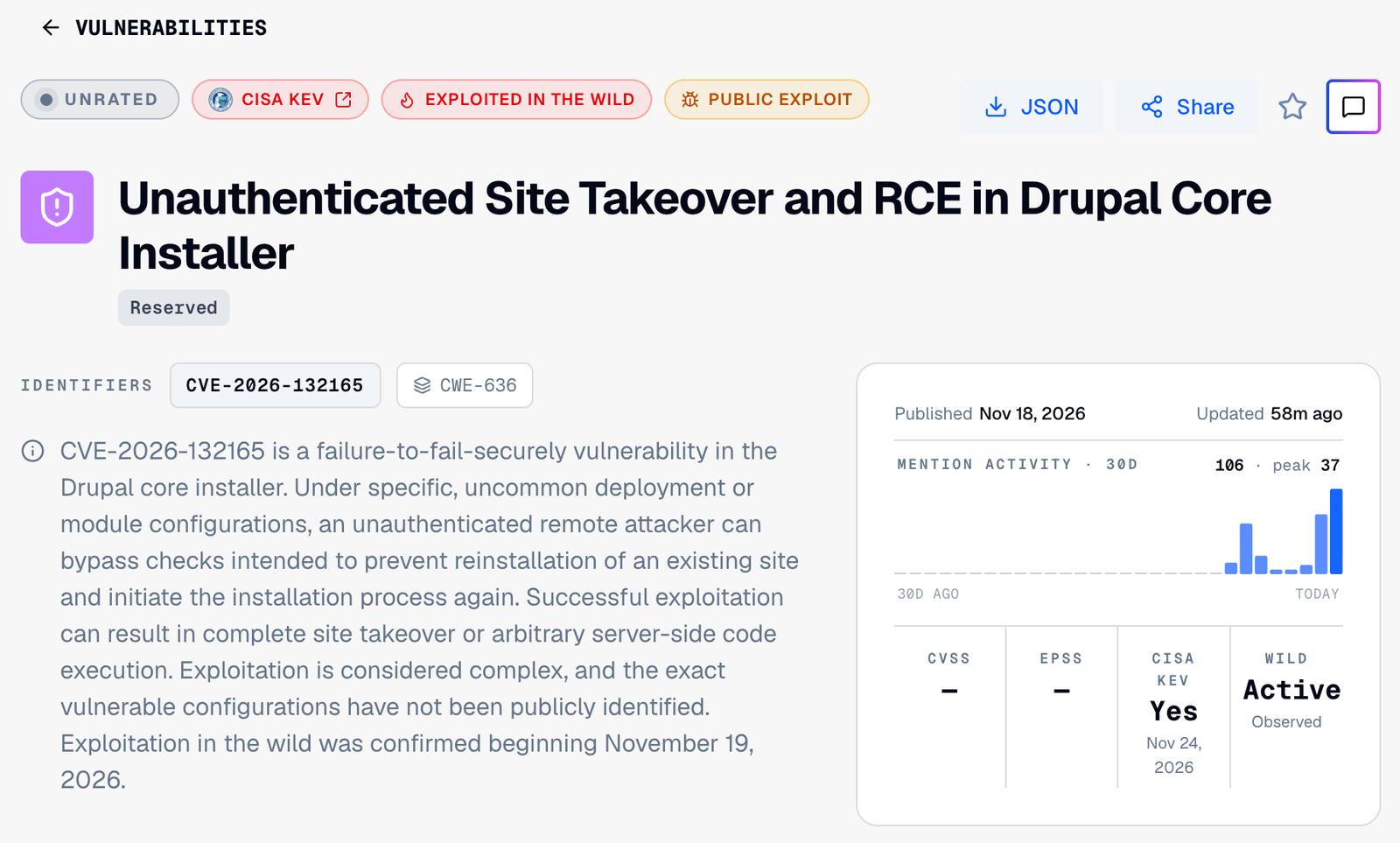
Click the speech bubble on the CVE page to start a thread. Mallory fills in the vulnerability record so you can go straight to the question.
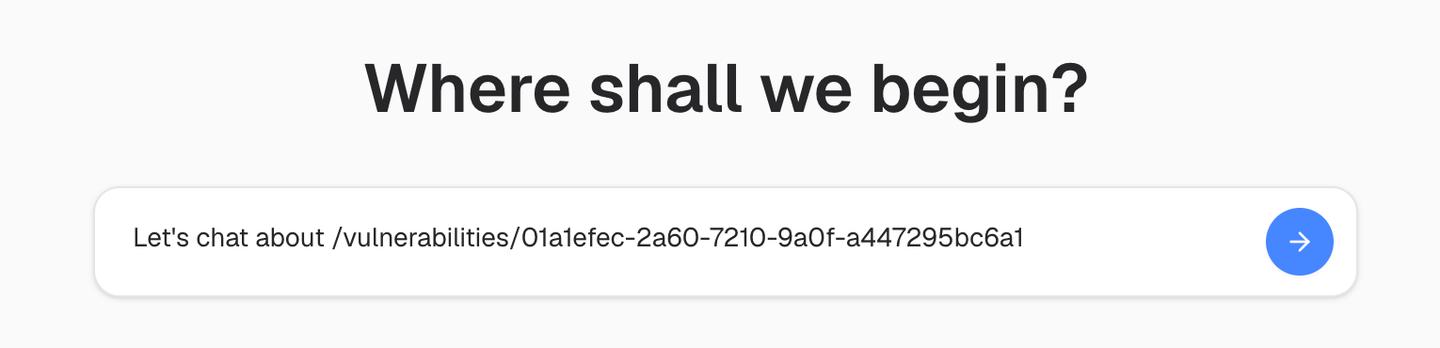
What has Drupal confirmed about this flaw? Explain what makes a deployment susceptible, what the reports establish about real-world exploitation, and how an operator should respond. Cite the sources and flag what I still need to verify.
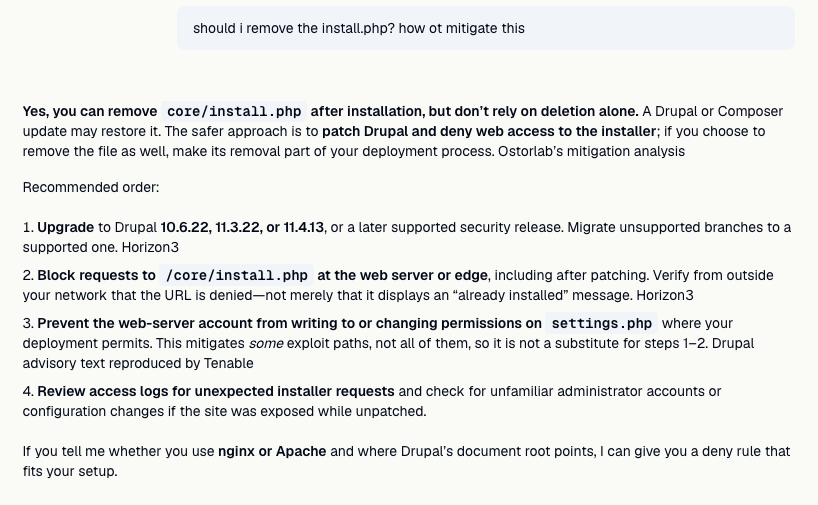
Our follow-up was practical. Should a Drupal owner delete the installer file? Mallory pointed out that an update could restore it and pulled together the upgrade, access restriction and log review guidance. Drupal remediation guidance
What the Fail2Install flaw (CVE-2026-132165) does
Drupal’s installer is supposed to stop when it detects an existing installation. Under specific conditions, that check can fail and an unauthenticated visitor can reach an installer that tries to continue setup. The Drupal Security Team says the impact can include site takeover or remote code execution. A resuming installer is a signal to investigate. Establishing whether an individual site is exploitable takes additional evidence about its build and configuration. Drupal advisory
How common is Fail2Install exposure?
41 of 10,000 checked endpoints (0.41%) returned a resuming installer. That was uncommon in the survey. Drupal’s report of live exploitation makes this urgent for teams running affected deployments. CISA lists November 27 as the remediation deadline for federal civilian executive branch agencies. Drupal advisory · CISA KEV entry
What the Drupal installer returned
Outcomes across 10,000 checked endpoints
- Exposure signal
- Installer inaccessible
- Other or inconclusive
- Resuming installer
- 41 (Exposure signal)
- Blocked or absent
- 4,223 (Installer inaccessible)
- Already installed
- 1,258 (Other or inconclusive)
- Request error
- 1,997 (Other or inconclusive)
- Redirected
- 1,549 (Other or inconclusive)
- Other response
- 932 (Other or inconclusive)
Source: November 25, 2026 survey of Shodan results matching the Drupal component fingerprint.
How we ran the survey
We took the first 100 pages of Shodan’s Drupal component search in default order. That gave us 10,000 distinct IP-and-port combinations across 9,295 IP addresses. We classified each result from a read-only HTTP response and counted installers offering to continue setup as resuming. Checks stopped at reading the response. Redirects and request errors stayed in the denominator, with exposure unresolved for those endpoints.
Shodan returned 55,625 matching banners in a separate count that day. The default ordering, the limits of fingerprinting and the inconclusive checks make 0.41% a description of this survey. The full index and the wider internet could have different rates. Public responses yielded zero complete Drupal versions, so use internal package records to verify affected builds. How Shodan counts search results
How to triage Drupal sites for CVE-2026-132165
Ask Mallory to turn the advisory into a short list of inventory checks. If you’ve connected your inventory, ask which deployments match the affected versions and which still need an owner to verify the build. Check the installed drupal/core version in your deployment records or Composer lockfile. Drupal shipped fixes in 10.6.22, 11.3.22 and 11.4.13. Move end-of-life releases onto a supported, fixed branch. Affected versions and fixes
- Clear a deployment once you verify that it runs a fixed build or uses a different platform. Record the source of that decision.
- Verify unknown versions or incomplete inventory with the service owner.
- Act on affected deployments. Prioritize exposed sites for an upgrade, restrict web access to the installer and review logs if a site was exposed while unpatched.
That’s how we use AI when the queue fills up. Start with the CVE, ask for the evidence that would change the decision, then use your own inventory to clear the deployments you can verify and send the rest to the right owners. See how Mallory prioritizes vulnerabilities against your own inventory.