Salesforce-Targeted Data Breaches Impacting Google, Workday, and Others via Social Engineering
Social Engineering & Fraud · 18 sources · Updated 4mo ago · First seen Oct 3, 2025
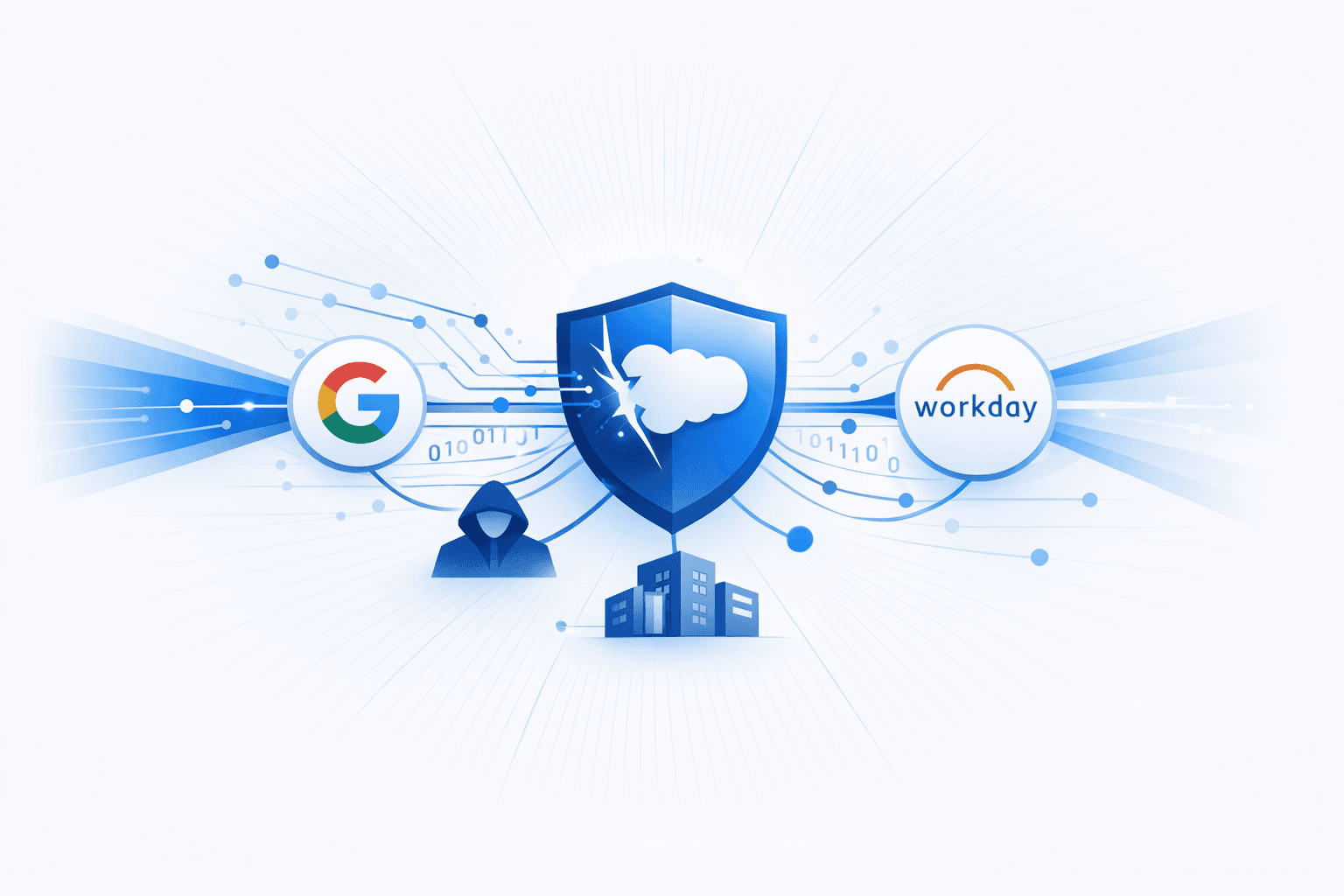
A coordinated wave of cyberattacks in 2025 targeted organizations using Salesforce’s CRM platform, resulting in significant data breaches at major companies including Google and Workday. Attackers exploited the inherent trust and connectivity of cloud-based CRM systems, focusing on social engineering rather than technical vulnerabilities. Workday confirmed that attackers accessed a database containing business contact information for up to 11,000 corporate customers and 70 million individual user records, with the breach discovered in early August 2025. Google also disclosed that its Salesforce instance used for Google Ads leads was compromised, leading to the theft of over 2.5 million customer records, including business contact details and sales notes for small and mid-sized clients. Cisco and other organizations were also listed among the victims of this campaign. The threat group responsible, identified as UNC6040 and associated with ShinyHunters, used telephone-based social engineering (vishing) to trick employees into granting access or sharing credentials. Attackers convinced targets to use a modified, unauthorized version of the Salesforce Data Loader app, which enabled them to exfiltrate sensitive data from Salesforce environments. Mandiant, working with Google, provided proactive defense recommendations, emphasizing that the attacks did not exploit Salesforce vulnerabilities but rather relied on manipulating end users. The attackers’ tactics included delayed extortion demands, sometimes occurring months after the initial compromise. The breaches highlighted the risks of interconnected cloud services and the importance of robust identity and access management. Security experts stressed the need for organizations to harden their Salesforce and other cloud assets against social engineering. The incidents underscored the growing trend of targeting SaaS platforms through human factors rather than technical flaws. Lessons from these breaches include the necessity of employee training, multi-factor authentication, and vigilant monitoring of third-party integrations. The scale and sophistication of the attacks demonstrated the evolving threat landscape for cloud-based business applications. Organizations are urged to review their incident response plans and ensure that all users are aware of the risks posed by social engineering campaigns. The breaches serve as a warning for enterprises to reassess their security posture around cloud CRM platforms and to implement layered defenses against both technical and human-centric threats.