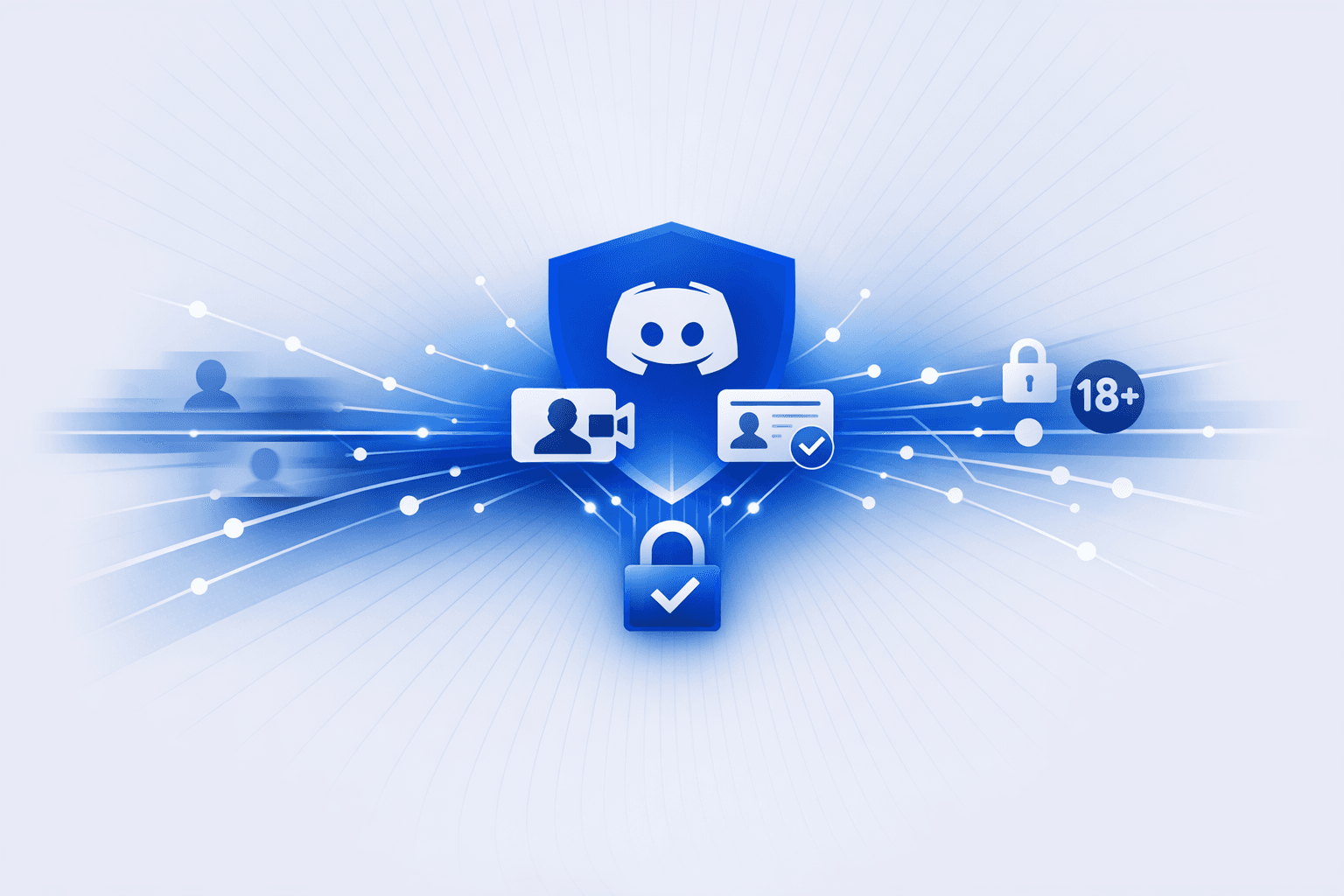
Discord announced a phased global rollout requiring users to verify their age using video selfies or government IDs, citing growing regulatory pressure for age checks on social platforms and a goal of providing a “teen-appropriate experience by default.” Discord said the verification data will be deleted immediately after age is confirmed and claimed it will not leave the user’s device; the company also described new defaults that restrict access to age-gated features (e.g., blurring sensitive content and limiting age-restricted channels/commands to verified adults). The rollout is expected to begin in early March, following earlier “teen-by-default” measures introduced in the U.K. and Australia.
The policy change triggered backlash in gaming communities due to privacy and breach concerns, amplified by a prior incident in which roughly 70,000 images of government IDs were exposed after users had uploaded them for customer service purposes; reporting attributes the exposure to a third-party service Discord used to manage data. Discord is attempting to reassure users by pointing to tightened controls and a partnership with k-ID for age checks, but critics highlighted perceived ambiguity in how ID scans may be handled (including potential uploads to vendor servers and involvement of additional third parties), and warned that expanding collection of sensitive identity data increases the platform’s attractiveness as a target.
Mallory correlates global threat intelligence with your attack surface — know if you’re exposed before adversaries strike.
5 events from the most recent confirmed update back to the earliest known activity.
On February 12, 2026, the Electronic Frontier Foundation published a critique warning that Discord's age verification and age inference systems create privacy, surveillance, bias, and free-expression risks. EFF argued the prior breach showed identity data is inherently high-risk and urged platforms and lawmakers not to adopt broad age-verification mandates.
Following the announcement, users, privacy advocates, and gaming communities sharply criticized the plan, arguing that requiring facial scans or IDs expands Discord's attack surface and is especially troubling after the 2025 breach. Some users began discussing migration to alternative platforms that do not require identity verification.
By February 10, 2026, reporting revealed additional implementation details: unverified users would face blurred sensitive content, restricted access to age-gated spaces, reduced DM capabilities, and limits in some features, while Discord would also use an age inference model to avoid prompting most users. Discord said it had switched to new vendors and described safeguards such as on-device selfie processing and rapid deletion of uploaded IDs.
On February 9, 2026, Discord announced it would require age verification globally using video selfies or government IDs, while placing accounts into a 'teen-appropriate' experience unless adulthood is verified. The company said the rollout would begin in phases in early March and cited growing legal and regulatory pressure around protecting minors online.
In October 2025, a breach involving a third-party service used by Discord exposed sensitive identity data previously uploaded by roughly 70,000 users, including government IDs and selfies. The incident became a central point of criticism in later debates over Discord's identity-based age checks.
Vulnerabilities, threat actors, malware, products, organizations, and breaches Mallory has linked to this story.
6 references tracked. Mallory keeps watching after this page renders.
eff.org
Open sourcezdnet.com
Open sourcescworld.com
Open sourcezdnet.com
Open sourcearstechnica.com
Open sourcetherecord.media
Open sourceMap indicators from this story to your assets and identify affected systems in minutes.
Every observed campaign, victim, and pivot linked to actors named in this story.
Malware, exploits, and IOCs connected to the activity described here.
YARA, Sigma, and Snort rules deployed to your SIEM as soon as they’re published.
Get matching new stories delivered to your team as they break — not the next morning.
Ask questions about this story and take action on the answers.