Loading story…

Multiple reports highlighted a surge in AI-enabled social engineering that blends convincing pretexts with increasingly effective lures to steal credentials, money, or sensitive data. One account described a near-miss LinkedIn job/recruiter scam in which an attacker impersonated a recruiter tied to a well-known tech brand and attempted to draw the target into a fraudulent hiring/workflow process, illustrating how professional networking platforms are being used to seed high-trust approaches and extract personal information.
Separately, threat reporting cited a sharp rise in fake CAPTCHA lures—up 563% over 2025 per CrowdStrike’s 2026 Global Threat Report—as attackers shift away from older “malicious browser update” prompts toward CAPTCHA-themed interactions that can trick users into executing malicious steps or handing over access. ESET also warned that deepfake voice has lowered the barrier for CEO/CFO impersonation, supplier fraud, and account takeover attempts: attackers can clone a voice from short public audio samples (e.g., interviews, earnings calls, social media) and then target finance or helpdesk staff (often identified via LinkedIn) to pressure wire transfers or bypass authentication and KYC checks.

Get the infrastructure and lures behind it.
8 events from the most recent confirmed update back to the earliest known activity.
ZDNET described a recruitment scam in which an attacker impersonated a recruiter tied to Docker, moved the conversation from LinkedIn to email, and attempted to steer the victim toward paying for bogus resume help. The report highlighted how AI can make scam emails and branding more convincing.
The article references a ZDNET investigation by Ed Bott into a fake CAPTCHA page using Cloudflare branding that instructed users to run PowerShell, resulting in an information-stealing trojan infection. The example demonstrated how fake CAPTCHA lures can bypass traditional anti-phishing defenses by having users execute the command themselves.
ESET published guidance warning that generative AI has made deepfake voice calls easier to produce and more dangerous for businesses, enabling fraud such as wire-transfer scams, executive impersonation, and KYC bypass. The article also outlined detection signs and recommended mitigations such as out-of-band verification and dual approval for payments.
CrowdStrike's 2026 Global Threat Report found that malicious fake CAPTCHA attacks increased by 563% in 2025 compared with 2024 event data. Attackers increasingly used these prompts to trick users into manually running commands that download malware.
Unit 42 reported that since August 2025, attackers have impersonated Palo Alto Networks talent acquisition staff to target senior-level professionals with fake recruiting outreach and pressure them into buying paid resume optimization services. Palo Alto Networks said its recruiters never request payment and published associated email addresses, social handles, a phone number, and verification advice for recipients.
The ESET article cites a UK government claim that up to eight million synthetic clips were shared in the prior year, a sharp increase from 500,000 in 2023. The statistic reflects rapid growth in AI-generated audio and video content available for misuse.
Since 2023, LinkedIn has introduced measures to curb recruitment scams, including AI and verification controls, recruiter verification requirements, automated scam detection in messages, and large-scale fake account removals. These steps were cited as part of the platform's response to growing abuse.
In a case referenced by the article, criminals used AI voice-cloning to impersonate a company director and request a fraudulent transfer, leading to the theft of about $35 million from a bank in the UAE. The incident illustrated early real-world abuse of synthetic voice for business fraud.
Vulnerabilities, threat actors, malware, products, organizations, breaches, and observables Mallory has linked to this story. Indicator values are masked here and available in full in the app.
Indicator values are masked on this page. See the values in Mallory Domains, IPs, hashes, and URLs are exportable to your SIEM.
Get the infrastructure, lures, and IOCs behind this campaign, ready to push into your email and identity stack.
4 references tracked. Mallory keeps watching after this page renders.
unit42.paloaltonetworks.com
Open sourcezdnet.com
Open sourcezdnet.com
Open sourcewelivesecurity.com
Open sourceMap indicators from this story to your assets and identify affected systems in minutes.
Every observed campaign, victim, and pivot linked to actors named in this story.
Malware, exploits, and IOCs connected to the activity described here.
YARA, Sigma, and Snort rules deployed to your SIEM as soon as they’re published.
Get matching new stories delivered to your team as they break — not the next morning.
Ask questions about this story and take action on the answers.
Other stories Mallory is tracking that overlap on entities, sources, or topic labels.

AI is accelerating and scaling social engineering by automating reconnaissance, targeting, and victim engagement, reducing both the cost and skill required to run convincing phishing and fraud campaigns. One reported evolution is the use of **AI agents** to collect open-source intelligence and conduct live, interactive conversations with targets with minimal or no human involvement, enabling high-volume, continuously running scam operations that can adapt in real time. Deepfake-enabled impersonation is further eroding trust in voice and video communications, including calls and meetings, with examples cited of finance staff being deceived into transferring **millions** after interacting with fabricated “executives.” Recommended mitigations emphasize shifting from human-sense validation to process-based controls—e.g., enforced verification procedures, out-of-band checks, shared authentication phrases (“safe words”), and emerging *content provenance* approaches—because traditional, predictable detection models are increasingly strained by the speed, personalization, and adaptability of AI-driven attacks.
Feb 10, 2026
A recent CrowdStrike survey highlights that 76% of organizations are struggling to keep pace with the sophistication of AI-powered attacks, with 87% considering AI-generated social engineering tactics more convincing than traditional methods. The report notes that phishing remains the leading access vector for ransomware, cited by 45% of victims, and that many organizations overestimate their preparedness, with only a quarter recovering from ransomware attacks within 24 hours. Deepfakes and AI-generated content are expected to become major attack vectors, especially concerning for healthcare organizations and C-level executives. Globally, scams are on the rise, with Bitdefender and the Global Anti-Scam Alliance reporting that 57% of adults encountered a scam in the past year and annual global scam losses now exceeding $1 trillion. Modern scams increasingly leverage AI-generated voices and deepfake videos to impersonate trusted brands or individuals, and nearly half of all spam messages are now malicious. The persistence of poor security habits, such as password reuse, continues to make individuals and organizations vulnerable to these evolving social engineering threats.
Oct 29, 2025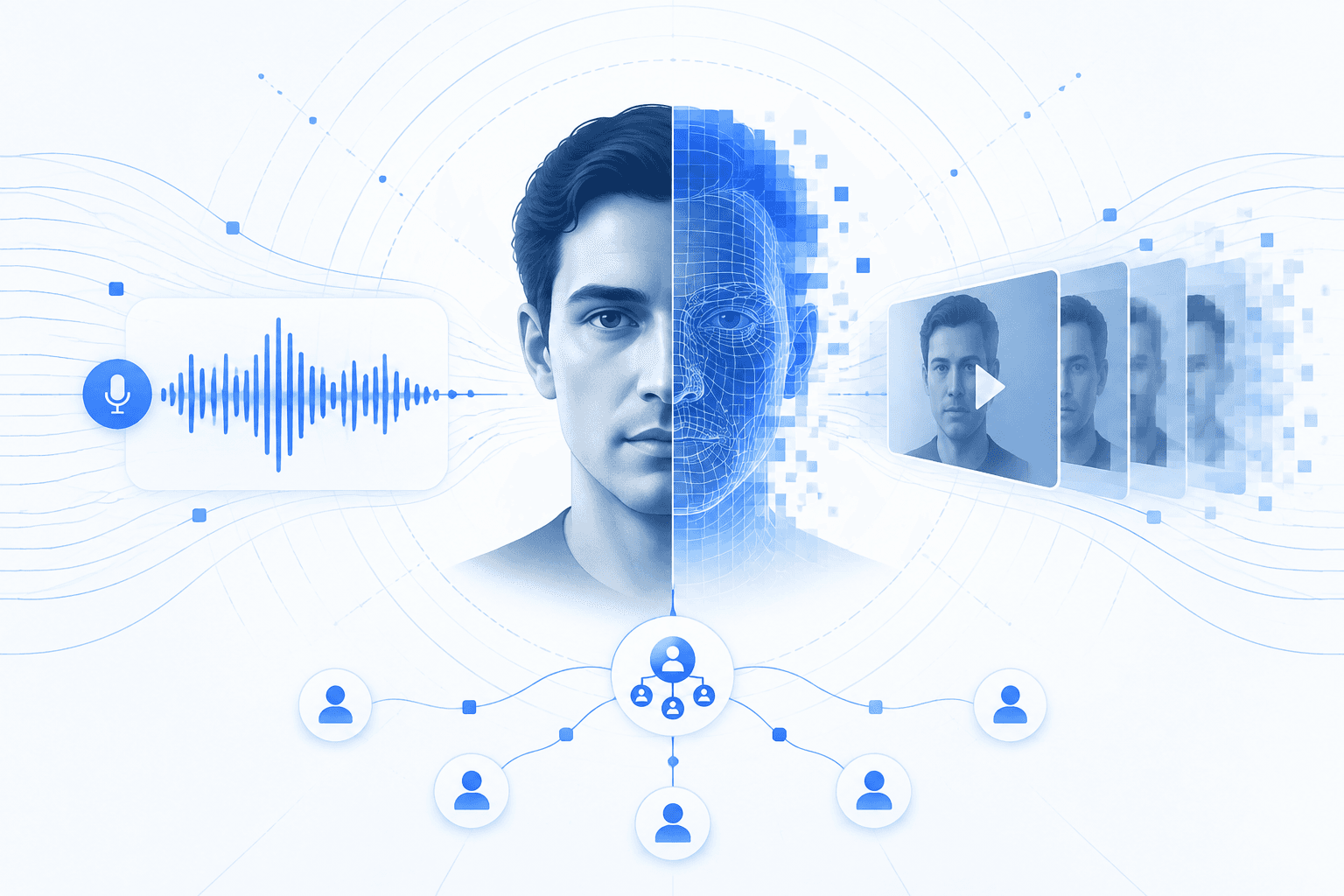
Gartner found that AI-enabled deepfake impersonation is making social-engineering attacks more convincing across phone calls, video conferences, email, and text messages. Of 297 senior cybersecurity leaders surveyed, **41%** reported a deepfake-related employee audio-call incident and **36%** reported a video-call incident in the preceding 12 months; **79%** encountered phishing, spear-phishing, or business-email-compromise activity. A prominent example was the 2024 fraud against engineering firm Arup, where video-call impersonations of colleagues persuaded an employee to transfer more than **$25 million** to criminal-controlled accounts. Gartner urged organizations to replace training focused on spotting fakes with mandatory, out-of-band verification for sensitive requests. CISOs should apply phishing-resistant and risk-based identity controls to high-value workflows, correlate suspicious communications with identity, device, privilege, and payment activity, and extend incident-response plans to cover multimodal impersonation and compromised AI agents.
Sep 25, 2026