
Loading story…
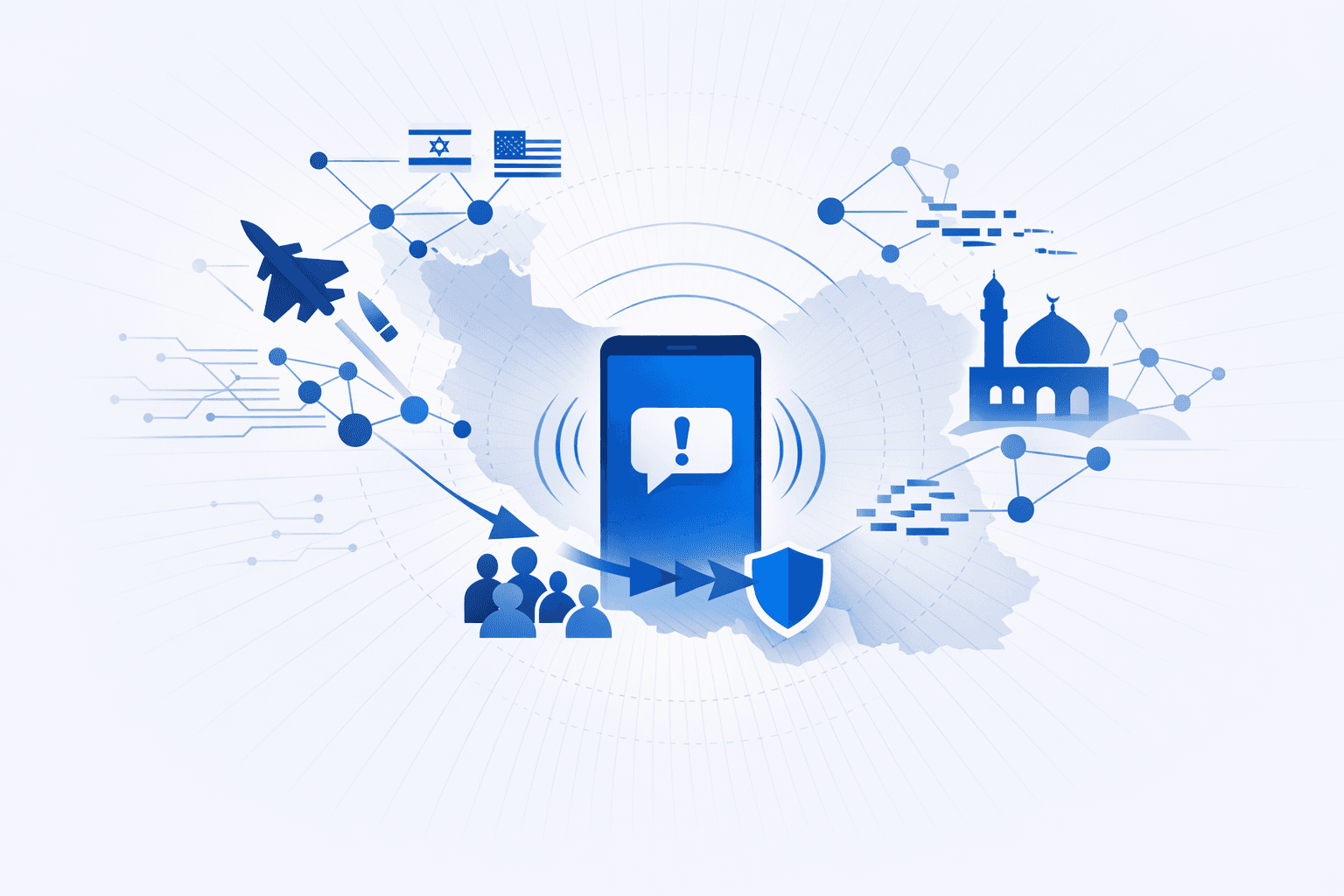
Amid Israeli and US strikes on Iran and subsequent regional escalation, an apparently compromised Android prayer-timing app (BadeSaba Calendar, reported as having 5M+ Google Play downloads) pushed coordinated political/psychological messages to users in Iran, including calls for Iranian military personnel to surrender and promises of amnesty. The notifications arrived in rapid succession over roughly 30 minutes shortly after explosions were reported in Tehran; no actor publicly claimed responsibility, and the incident highlights the risk of mass-notification channels in widely installed mobile apps being abused for influence operations during kinetic conflict.
Separately, reporting described Iran’s recent, unusually severe communications blackout as part of a government crackdown on protests: beyond typical censorship, connectivity was disrupted across mobile networks, SMS, and landlines, and even Starlink access was reportedly blocked; when limited domestic services returned, social/interactive features were selectively removed to reduce coordination. A third item focused on the UAE’s layered missile-defense architecture (e.g., THAAD and Patriot) used to intercept Iranian ballistic missiles, which is contextually related to the broader conflict but not directly tied to the cyber/information-operations and communications-control developments.
TTPs, infrastructure, and targeting history in one profile.
12 events from the most recent confirmed update back to the earliest known activity.
Dubai authorities said social media posts claiming Iran had struck the Oracle Data Centre were false. The Dubai Media Office described the reports as fake news and urged the public to rely on official sources amid a broader wave of wartime misinformation.
By March 3, reporting cited U.S. Joint Chiefs Chairman Gen. Dan Caine saying coordinated space and cyber operations had disrupted Iranian communications and sensor networks to disorient Iranian forces during the campaign.
During the March 2026 Iran-Israel conflict, cybersecurity experts cited by Khaleej Times alleged that a large Iranian bot and disinformation network rapidly pushed coordinated narratives, hashtags, and doctored or AI-generated media online. The campaign reportedly amplified false claims including fabricated imagery of a Bahraini building fire and a fake strike on the U.S. Fifth Fleet headquarters in Bahrain.
Amazon said its Middle East data center in the UAE suffered an outage after objects struck the facility, causing sparks and fire during the broader regional escalation.
As the conflict escalated, Iran reportedly carried out retaliatory kinetic attacks against military bases across the Middle East, with explosions reported in multiple Gulf countries and some missiles intercepted.
During the same period, state-affiliated outlets including IRNA and ISNA were reportedly taken offline or altered to display anti-government content, further constraining communications inside Iran.
Amid the strikes and cyber activity, internet measurement groups reported a severe nationwide outage in Iran, with NetBlocks saying traffic fell to about 4% of normal and other providers observing near-total connectivity loss.
Shortly after explosions were reported, the BadeSaba Calendar app's push-notification system was apparently compromised and used to send anti-government and surrender messages to users for roughly 30 minutes beginning around 9:52 a.m. Tehran time.
During reported joint U.S. and Israeli preemptive strikes on Iran in late February 2026, cyber activity accompanied the military campaign, with officials and reporting describing efforts to disrupt Iranian communications and sensor networks.
During a January 2026 crackdown on nationwide protests, Iran imposed a major communications blackout that disrupted not only international internet access but also domestic infrastructure including mobile networks, SMS, landlines, and some local services.
In July 2025, Iran reportedly formalized the two-tier internet model through a regulation making access to the global internet a privilege granted to approved groups such as officials, security forces, and selected professionals.
According to the Schneier summary, Iran's Supreme Council of Cyberspace had been developing a class-based or 'two-tier' internet approach since 2009, designed to differentiate access based on user status and loyalty.
Vulnerabilities, threat actors, malware, products, organizations, and breaches Mallory has linked to this story.
See this adversary's TTPs, infrastructure, and targeting history, correlated against your exposure.
9 references tracked. Mallory keeps watching after this page renders.
khaleejtimes.com
Open sourcekhaleejtimes.com
Open sourceschneier.com
Open sourcetechcrunch.com
Open sourcehackread.com
Open sourcecybersecuritynews.com
Open sourcetechcrunch.com
Open sourcewired.com
Open sourceschneier.com
Open sourceMap indicators from this story to your assets and identify affected systems in minutes.
Every observed campaign, victim, and pivot linked to actors named in this story.
Malware, exploits, and IOCs connected to the activity described here.
YARA, Sigma, and Snort rules deployed to your SIEM as soon as they’re published.
Get matching new stories delivered to your team as they break — not the next morning.
Ask questions about this story and take action on the answers.
Other stories Mallory is tracking that overlap on entities, sources, or topic labels.

Regional conflict following **U.S.–Israeli strikes on Iran** has been accompanied by heightened cyber and electronic-warfare activity affecting both military operations and civilian infrastructure. U.S. officials publicly acknowledged that **U.S. Cyber Command**, alongside space capabilities, conducted “non-kinetic” operations to **disrupt Iranian communications and sensor networks** in support of *Operation Epic Fury*, describing effects intended to degrade Iran’s ability to coordinate and respond; reporting also noted follow-on hack-and-leak style activity against Iranian-facing online properties (e.g., news sites and an app) and warned of potential retaliatory cyber activity by Iranian-aligned actors. In parallel, maritime intelligence reporting described a sharp increase in **GPS/AIS disruption (jamming/spoofing)** impacting shipping around the Strait of Hormuz, with vessels appearing in false locations and maritime authorities warning of elevated risk to navigation and safety. Iran’s domestic crypto ecosystem also showed signs of stress consistent with conflict conditions and connectivity constraints: observers reported **internet outages**, exchanges moving into risk-containment modes (e.g., batching/suspending withdrawals), and temporary restrictions on the **USDT–toman** trading pair under central bank direction—collectively reducing liquidity and market activity rather than clearly indicating capital flight. Separate reporting on Pakistan’s TV broadcast hijacks and a DDoS incident affecting Russian government sites appear unrelated to the Iran conflict-driven activity described above.
Jun 29, 2026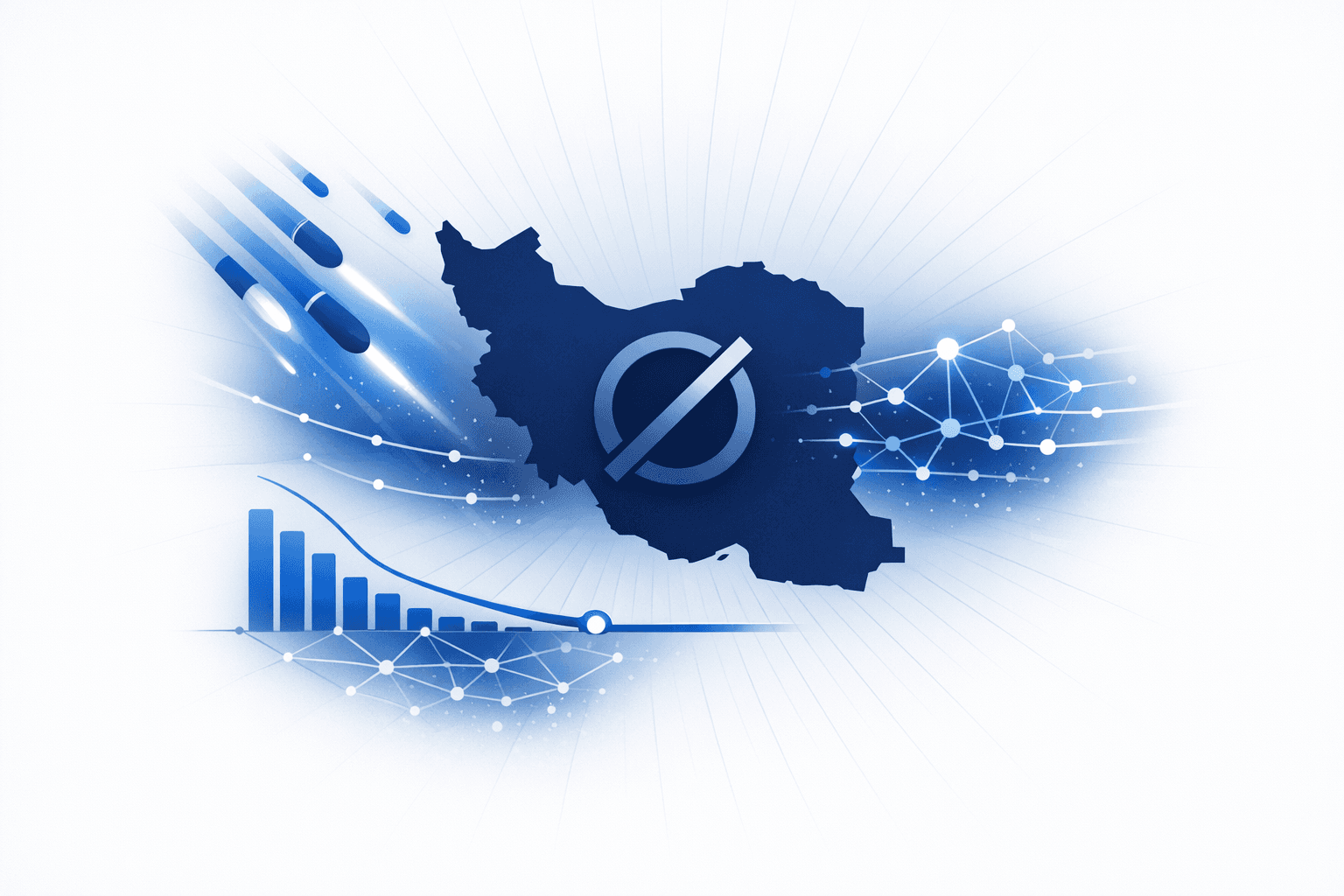
Iran experienced a **near-total nationwide internet blackout**, with independent monitoring indicating national connectivity fell to roughly **4% of normal levels** amid **US and Israeli strikes**. **NetBlocks** reported the sharp drop in connectivity, and **Cloudflare** telemetry similarly showed Iran’s internet traffic falling to effectively **zero**, consistent with a broad disconnection from the global internet. Reporting characterized the disruption as resembling prior wartime connectivity restrictions and suggested it may reflect deliberate state measures to control information flows and reduce exposure to external cyber activity during a crisis. Separate reporting tied the blackout to a **large-scale cyberattack** occurring in parallel with kinetic operations (described as part of Operation *“Roar of the Lion”*), alleging impacts to **critical infrastructure**, official news sites, and security communications. In contrast, analysis of Iran’s earlier 2026 communications shutdown described a **government-led, multi-layer takedown** that went beyond typical censorship—disrupting not only international connectivity but also domestic services (including the National Information Network), with broad outages across mobile networks, SMS, landlines, and reported blocking of **Starlink**—highlighting Iran’s evolving “two-tier” network design and its use for internal control during unrest.
Jun 29, 2026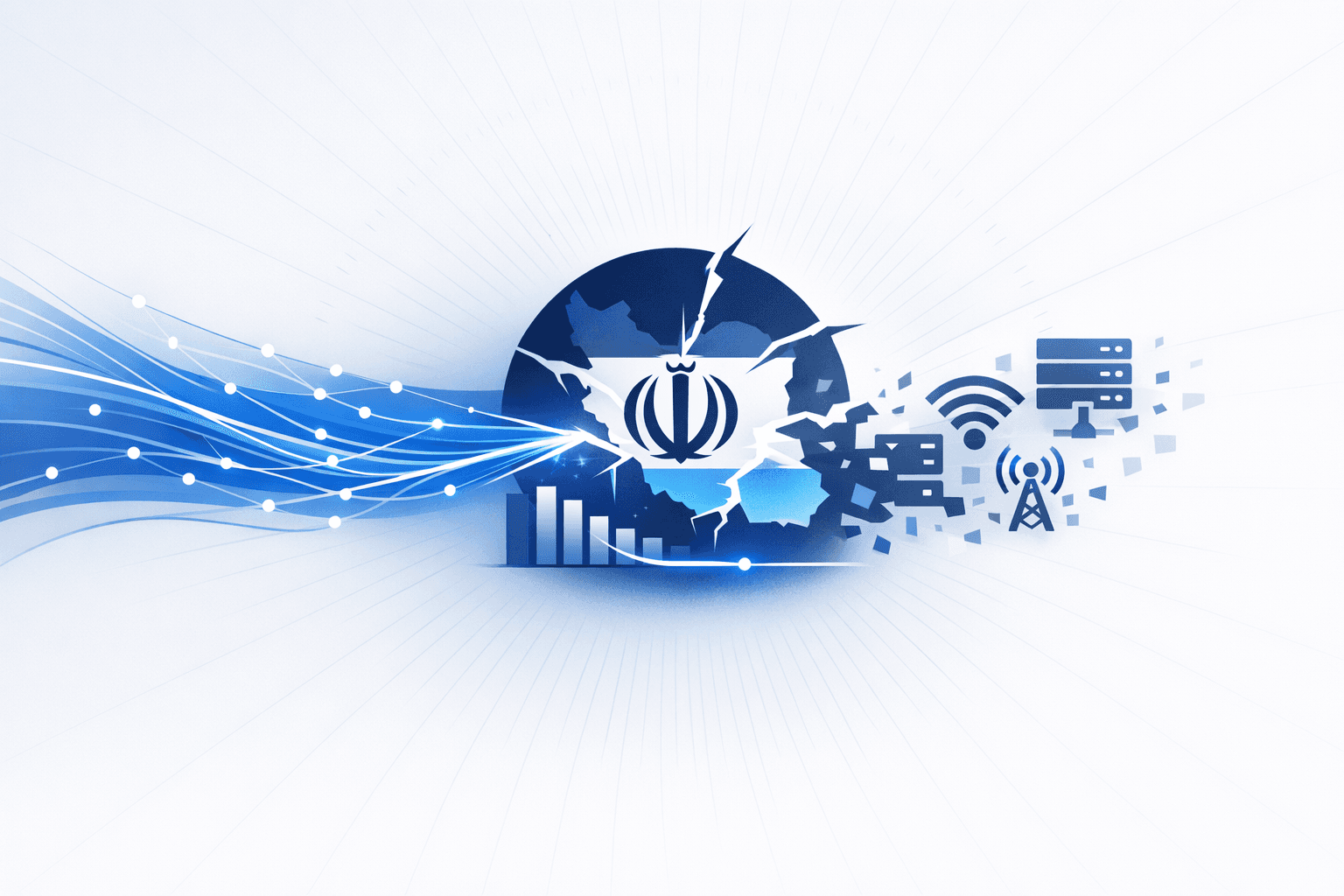
Iran remained under a **near-total government-imposed internet blackout** for more than 10 days, with Cloudflare Radar showing HTTP traffic falling by roughly **98%** from pre-shutdown levels to below **1% of normal** beginning around 07:00 UTC on February 28. Reporting indicates the disruption affected all major regions and the country’s largest networks simultaneously, including **MCCI (`AS197207`)**, **IranCell (`AS44244`)**, and **TCI (`AS58224`)**, supporting assessments that the outage was a centrally coordinated national shutdown rather than a cyberattack or physical infrastructure failure. At the same time, Iranian state and IRGC-linked messaging signaled an escalation of the wider conflict toward **economic targets**, warning that banks and commercial infrastructure tied to the U.S. and Israel could be considered legitimate targets after an alleged strike on a bank in Tehran. Iranian outlets reportedly named major technology firms including **Nvidia, Microsoft, Google, Oracle, IBM, and Palantir** in connection with facilities in Israel and the broader Middle East, while warning civilians to avoid areas near banks. Together, the reporting points to a broader campaign in which Iran is both restricting domestic connectivity and publicly threatening regional economic and technology infrastructure as the conflict expands.
Jun 29, 2026