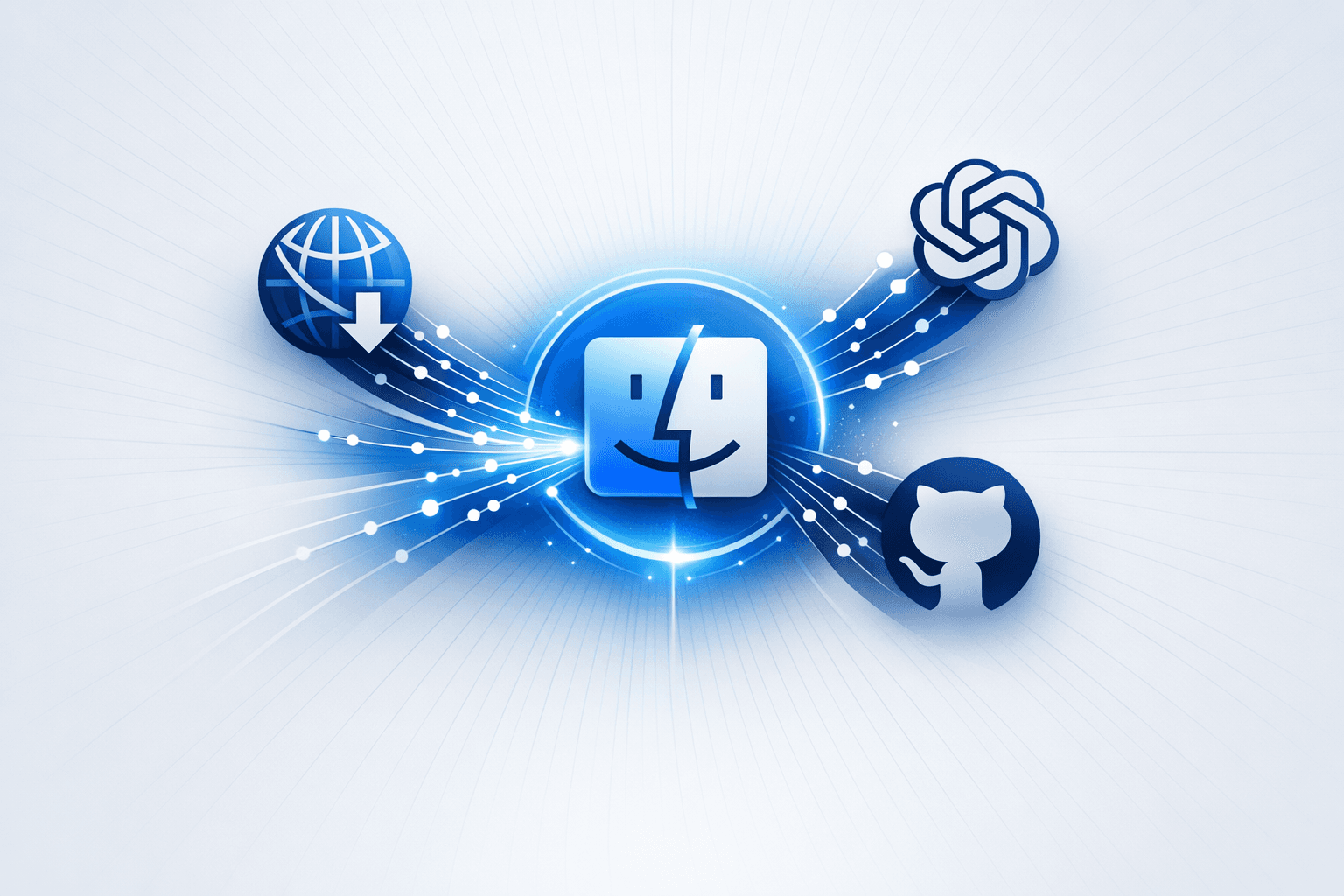
Researchers reported three ClickFix campaigns that used social engineering rather than software exploitation to infect macOS users with the MacSync infostealer. The activity evolved over several months, beginning with fake sponsored search results for an OpenAI Atlas browser download hosted on fraudulent pages, then shifting to malicious workflows that abused shared ChatGPT conversations and GitHub-themed landing pages to make the infection chain appear legitimate. In each case, victims were instructed to open Terminal and paste commands, allowing the malware to be installed through user action instead of a traditional exploit.
The most recent campaign introduced a more advanced MacSync variant with multi-stage loaders, dynamic AppleScript payloads, and in-memory execution intended to improve evasion and persistence. Reporting indicates the later activity targeted users in Belgium, India, and parts of North and South America, while researchers said it remains unclear whether all three campaigns were conducted by the same threat actor. The findings underscore a broader trend of attackers adapting ClickFix lures for macOS, using trusted platforms, sponsored links, and fake AI-tool installers to steal credentials and other sensitive data while bypassing file-based defenses by persuading users to execute the attack themselves.
Mallory correlates global threat intelligence with your attack surface — know if you’re exposed before adversaries strike.
15 events from the most recent confirmed update back to the earliest known activity.
On 2026-07-02, Jamf Threat Labs disclosed a ClickFix-style macOS malware campaign delivered through a sponsored ad on X that impersonated the DynamicLake app and redirected users to a lookalike domain where they were told to paste Terminal commands. Jamf identified the payload as a recent Atomic Stealer variant it tracks as MacSync, noted DigitStealer had also been seen in the attack chain, and said X removed the ad after notification while the legitimate developer warned users to use DynamicLake.com.
On 2026-05-06, Microsoft reported an evolving macOS ClickFix campaign using fake troubleshooting and utility pages to trick users into pasting Terminal commands, documenting helper, loader, and script-install variants active from late January through April 2026. The report said the activity delivered SHub Stealer and related payloads, used persistence via LaunchAgents and LaunchDaemons, included Telegram-based C2 fallback, and noted Apple had updated XProtect and added Terminal paste-blocking protections in macOS 26.4 and later.
On 2026-05-01, SC Media reported that North Korea-linked Lazarus Group was targeting high-value fintech and cryptocurrency professionals on macOS with a ClickFix campaign using fake Teams, Zoom, and Google Meet pages. Victims were tricked into running Terminal commands that launched the Mach-O Man malware kit, which staged fake macOS apps, harvested credentials and host data, and deployed the macrasv2 stealer.
On 2026-04-21, Netskope Threat Labs disclosed an active ClickFix campaign targeting macOS users in Asia’s finance sector with an AppleScript-based infostealer that also has Windows-targeting capability. The campaign uses fake CAPTCHA prompts and a pasted curl command to steal credentials, Keychain data, browser and wallet information, and forces victims to enter their macOS password through a deceptive Apple-like prompt.
On 2026-04-03, Breakglass Intelligence reported a newly identified MacSync command-and-control server and documented 29 API endpoints exposing a mature malware-as-a-service platform. The analysis showed MacSync could convert infected Macs into rotating SOCKS5 residential proxies and noted that Apple Developer ID certificate GNJLS3UYZ4 was still valid and signing MacSync samples, helping them bypass Gatekeeper warnings.
On March 25, 2026, Recorded Future’s Insikt Group reported five distinct ClickFix activity clusters targeting Windows and macOS users through fake verification and brand-impersonation lures. The report said several clusters delivered NetSupport RAT, while a dual-platform/macOS cluster was assessed with high confidence to deliver the MacSync infostealer using a common four-stage execution chain.
On March 19, 2026, CIS CTI reported an ongoing ClickFix-driven MacSync stealer campaign affecting macOS users in U.S. State, Local, Tribal, and Territorial government organizations. The activity used SEO poisoning and fake CAPTCHA pages to trick victims into running Terminal commands, extending known MacSync tradecraft into a newly identified government-sector victim set.
By early 2026, a separate macOS campaign used SEO poisoning around searches for PDF books to redirect users to fake verification pages that prompted malicious Terminal execution. The staged infection chain delivered an AppleScript-based MacSync stealer that exfiltrated credentials, browser data, wallets, SSH keys, cloud configs, and documents.
By March 2026, a campaign dubbed Claude Fraud was using sponsored Google ads and fake Claude-related sites, including pages on claude.ai and Squarespace, to target developers and security professionals. On macOS, victims were induced to paste Terminal commands that installed MacSync, and the campaign was reported to have affected more than 15,600 victims overall.
On March 16, 2026, Sophos publicly reported three distinct ClickFix campaigns observed from November 2025 through February 2026 that delivered the MacSync infostealer to macOS users. The disclosure highlighted a clear increase in attacker sophistication and the growing use of AI-themed and trusted-platform lures to steal credentials, files, keychain data, and cryptocurrency seed phrases.
On 2026-03-12, Breakglass Intelligence reported that the MacSync stealer, also tracked as BarkBlitz, had been active since at least November 2025 and was targeting cryptocurrency users through ClickFix-style fake Zoom, Trezor Suite, and Ledger lures. The report detailed recovered AppleScript payloads, three C2 domains, malware signed with a stolen Apple Developer ID, and a capability to backdoor Ledger Wallet and Ledger Live for later seed-phrase theft and transaction interception.
In February 2026, researchers observed the most advanced MacSync ClickFix campaign yet, using regionally targeted pages impersonating trusted platforms such as GitHub and multi-stage loaders. The updated MacSync variant added dynamic AppleScript payloads, in-memory execution, and tracking infrastructure to improve evasion and victim profiling.
By December 2025, attackers had evolved their macOS ClickFix activity to use malicious or weaponized ChatGPT shared conversation links and other AI-themed installation prompts. The campaign continued to rely on users manually executing Terminal commands rather than exploiting software flaws.
In December 2025, Jamf Threat Labs previously identified ClickFix-style lures being used to distribute the MacSync infostealer to macOS users. This marked an early public indication that pastejacking-style social engineering had expanded to MacSync delivery.
In November 2025, researchers observed a ClickFix campaign targeting macOS users through sponsored Google search results and a fake Google Sites page advertising a bogus OpenAI Atlas browser. Victims were tricked into pasting obfuscated Terminal commands that installed the MacSync infostealer.
Vulnerabilities, threat actors, malware, products, organizations, and breaches Mallory has linked to this story.
18 references tracked. Mallory keeps watching after this page renders.
9to5mac.com
Open sourcehackread.com
Open sourcerhisac.org
Open sourcecybersecuritynews.com
Open sourcesecurityaffairs.com
Open sourcescworld.com
Open sourcethehackernews.com
Open sourceintel.breakglass.tech
Open sourceMap indicators from this story to your assets and identify affected systems in minutes.
Every observed campaign, victim, and pivot linked to actors named in this story.
Malware, exploits, and IOCs connected to the activity described here.
YARA, Sigma, and Snort rules deployed to your SIEM as soon as they’re published.
Get matching new stories delivered to your team as they break — not the next morning.
Ask questions about this story and take action on the answers.