JPMorgan Chase Breach Exposed Contact Data for 76 Million Households
Sector Threat Intelligence · 7 sources · Updated 5mo ago · First seen May 25, 2026

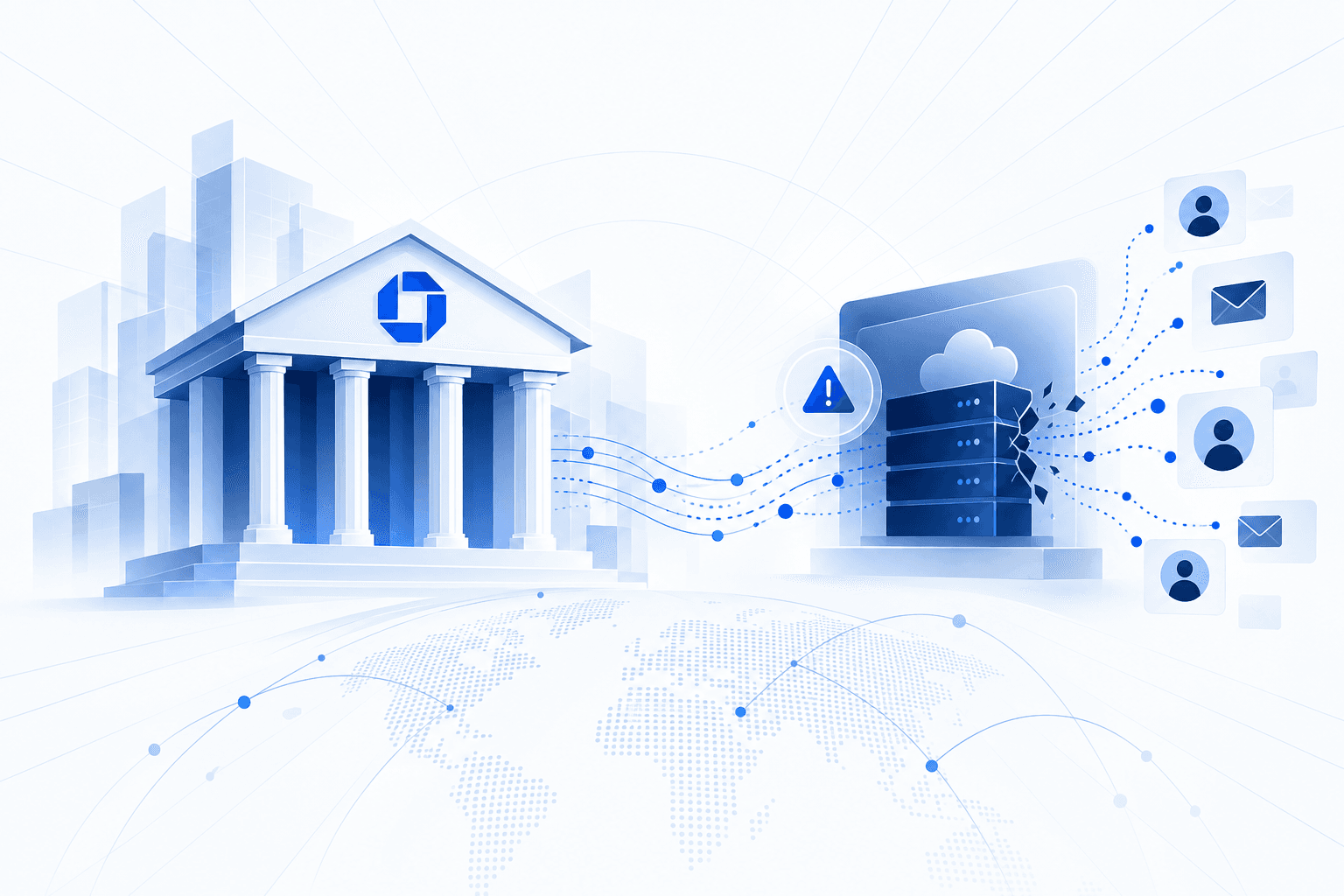
JPMorgan Chase disclosed that attackers breached its network and accessed customer contact information tied to 76 million households and 7 million small businesses, making it one of the largest publicly reported compromises of a U.S. financial institution. The bank said the stolen data included names, email addresses, phone numbers, and physical addresses, while account numbers, passwords, Social Security numbers, dates of birth, and debit or credit card data were not exposed. The intrusion reportedly began in June, went undetected for weeks, and involved access to more than 90 servers before the company contained it and notified customers using services such as Chase.com and its mobile banking platforms.
U.S. investigators examined possible Russian links early in the case, and later authorities charged Gery Shalon, Joshua Samuel Aaron, and Ziv Orenstein in connection with a broader hacking campaign tied to the JPMorgan intrusion and other attacks on financial firms and publishers. Prosecutors described the operation as part of a multi-year scheme that stole data from more than 100 million customers across victims, while security experts warned that the JPMorgan data set remained highly valuable for phishing and fraud because it provided a large, current list of bank customers and small businesses. JPMorgan said it had not seen unusual fraud directly tied to the breach and urged customers to be wary of unsolicited emails and text messages.
Why it matters
Impact assessment
JPMorgan Chase customers and small-business users of Chase.com, JPMorganOnline, Chase Mobile, and JPMorgan Mobile were affected by a large-scale exposure of contact data tied to 76 million households and 7 million small businesses. The immediate impact was lower than a full financial-account compromise because JPMorgan reported no exposure of account numbers, passwords, Social Security numbers, dates of birth, or payment card data, but the stolen dataset materially increases phishing, social-engineering, and fraud risk.
The scope was massive and broad rather than narrowly targeted, making this one of the largest publicly reported breaches of a U.S. financial institution at the time. The intrusion persisted for weeks, reached more than 90 servers, and was later tied by U.S. authorities to a broader criminal campaign involving Gery Shalon, Joshua Samuel Aaron, and Ziv Orenstein; however, JPMorgan stated it had not observed unusual fraud directly tied to the breach at disclosure.
Supporting facts
- Affected entity: JPMorgan Chase.
- Affected population: 76 million households and 7 million small businesses.
- Likely affected user channels: Chase.com, JPMorganOnline, Chase Mobile, JPMorgan Mobile.
- Data exposed: names, email addresses, phone numbers, physical addresses.
- Data reportedly not exposed: account numbers, passwords, Social Security numbers, dates of birth, debit card data, credit card data.
- Operational impact: attackers accessed more than 90 servers and held access for about a month before discovery.
- Business impact indicators: major regulatory disclosure, law-enforcement investigation, reputational damage, and reported after-hours share decline.
- Threat follow-on risk: exposed customer contact data is highly valuable for phishing, impersonation, and fraud against retail banking customers and small businesses.
- Known law-enforcement linkage: U.S. authorities later charged Gery Shalon, Joshua Samuel Aaron, and Ziv Orenstein in a broader hacking campaign tied to the intrusion.
- Broader campaign scope: prosecutors alleged theft of personal information from more than 100 million customers across multiple victims, including financial institutions and publishers.