
Loading story…
Chinese military- and state-linked researchers used outputs from advanced Western AI models, including systems from OpenAI and Anthropic, to train smaller domestic models for defense and security applications, according to reviews of more than 80 Chinese academic papers and patent filings. The reported work is tied to the People’s Liberation Army, the National University of Defense Technology, the Academy of Military Sciences, PLA Unit 96941, the North University of China, and other defense-affiliated institutes, with claimed use cases spanning battlefield hardware, naval warfare, unmanned systems, surveillance, public-security platforms, and cyber operations.
The published research describes model distillation aimed at reproducing reasoning capabilities in cheaper edge-deployable systems, alongside efforts to bypass safeguards, remove watermarks, and obscure model provenance. Reported experiments also included multimodal prompt-injection techniques that hid instructions inside images of tanks and warships, while proposed cyber uses covered threat analysis, malware detection, intelligence collection, and social-media monitoring. The findings highlight a potential export-control gap because restricting advanced chips does not stop access to model outputs through APIs or leaked responses, although the evidence cited comes from papers and patents rather than confirmed operational deployments.

Track how attackers are adapting to this technology.
2 events from the most recent confirmed update back to the earliest known activity.
A 2024 paper from the PLA's National University of Defense Technology described shrinking an image-processing model for unmanned aerial vehicles. The paper said the model was intended to analyze live video and make navigation decisions during communications blackouts.
Jamestown analysts identified Chinese academic and industry research published from 2024 through 2026 that points to deliberate adversarial AI distillation tied to military, state, and public-security organizations. Reuters separately reviewed more than 80 Chinese academic papers and patent filings describing use of Western model outputs to train domestic systems.
Vulnerabilities, threat actors, malware, products, organizations, and breaches Mallory has linked to this story.
Follow how adversaries are adapting to this technology, and where it touches your stack today.
2 references tracked. Mallory keeps watching after this page renders.
ghacks.net
Open sourcecybersecuritynews.com
Open sourceMap indicators from this story to your assets and identify affected systems in minutes.
Every observed campaign, victim, and pivot linked to actors named in this story.
Malware, exploits, and IOCs connected to the activity described here.
YARA, Sigma, and Snort rules deployed to your SIEM as soon as they’re published.
Get matching new stories delivered to your team as they break — not the next morning.
Ask questions about this story and take action on the answers.
Other stories Mallory is tracking that overlap on entities, sources, or topic labels.

The White House has accused China-linked actors and other foreign entities of running **industrial-scale AI model extraction and distillation campaigns** against U.S. frontier AI companies, saying the operations use tens of thousands of proxy or fraudulent accounts, jailbreaking techniques, distributed probing, and iterative prompt engineering to copy proprietary model behavior at scale. A memorandum from Office of Science and Technology Policy Director Michael Kratsios said the activity targets American AI innovation without requiring a traditional network breach, and warned that derivative systems may reproduce benchmark performance while stripping away safety controls, neutrality safeguards, and other protections built into the original models. Federal agencies have been directed to expand information sharing with AI firms and develop best practices for detecting, mitigating, and remediating the campaigns, with officials pointing to stronger telemetry, logging, identity controls, and real-time detection of distributed abuse as likely defenses. The administration is also weighing accountability measures, including possible sanctions and legal or export-control actions, while lawmakers advance legislation to identify and punish foreign actors targeting U.S.-owned AI models; China has rejected the allegations as "slander" and unjustified suppression, even as prior claims from OpenAI and Anthropic tied Chinese firms including **DeepSeek**, **Moonshot**, and **MiniMax** to large-scale distillation efforts.
Jun 29, 2026
The NSA, CISA, and FBI issued a joint advisory alleging that China-based AI companies have systematically extracted proprietary capabilities from U.S. frontier models since late 2024. The advisory named DeepSeek, Moonshot AI, Alibaba, MiniMax, StepFun, and Z.AI, alleging campaigns targeting variants of Anthropic Claude, OpenAI ChatGPT, Google Gemini, and Grok. The agencies said the companies allegedly generated billions of tokens and millions of model interactions through unauthorized or obscured access, distributing requests across accounts, APIs, cloud providers, aggregators, proxies, and gray-market services to evade safeguards and attribution. They characterized the activity as part of China’s AI-development strategy and urged AI developers, government agencies, and allied partners to improve detection, adjust response measures, and share threat intelligence.
Sep 11, 2026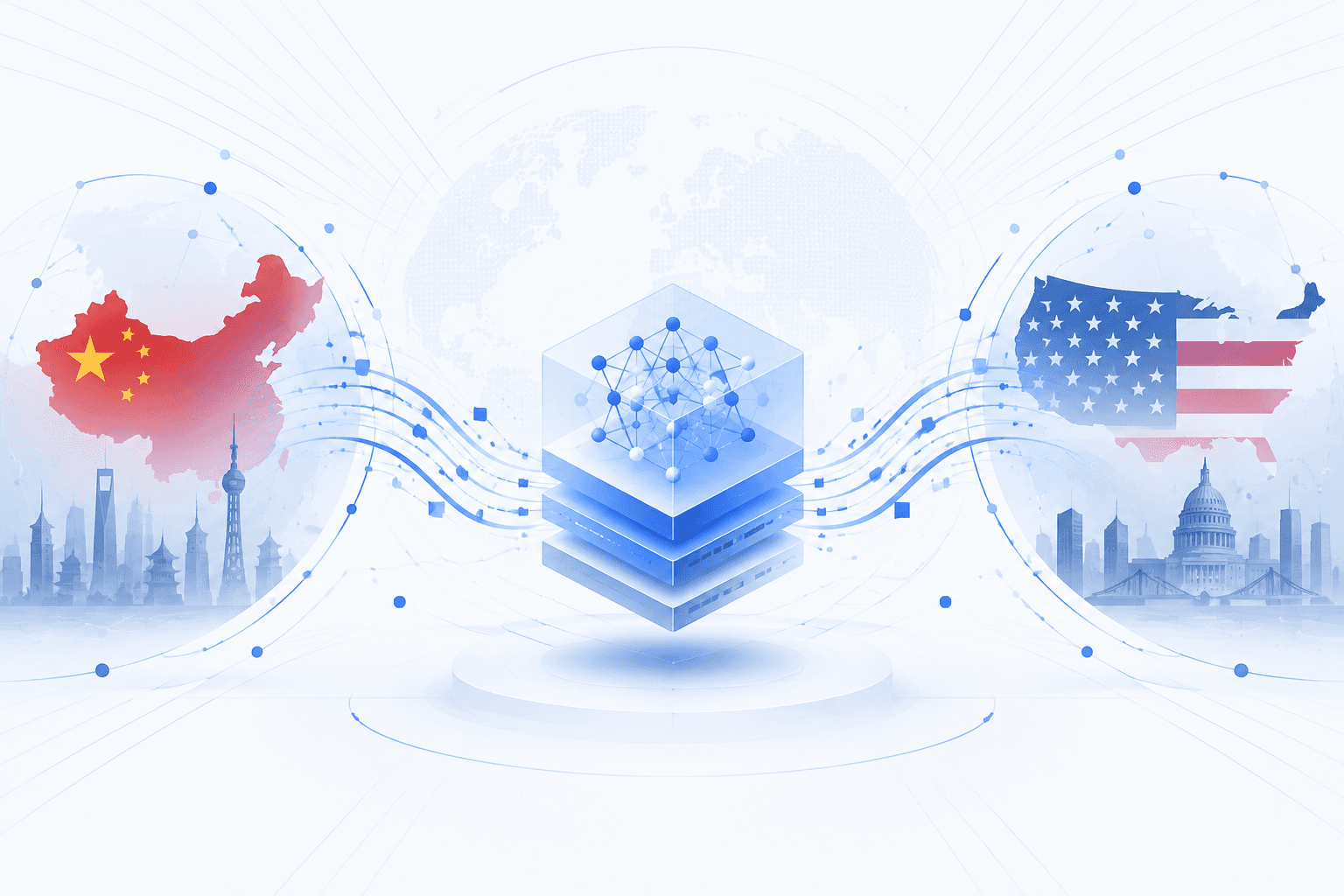
A U.S. government website used a Chinese AI model that the FBI had characterized as malicious, intensifying a policy debate over whether federal agencies and other U.S. users should be restricted from using Chinese open-source models. Some lawmakers regard their adoption as a national-security risk, while business users and Chinese officials oppose restrictions. Concerns extend beyond direct security exposure to censorship, privacy, supply-chain dependency, and Chinese influence over emerging AI standards. The U.S.-China Economic and Security Review Commission warned that China’s state-backed open-weight strategy creates reinforcing advantages: broad developer adoption generates rapid iteration, while deployment across manufacturing, logistics, robotics, and IoT produces proprietary operational data that improves models. Chinese ecosystems such as Alibaba’s Qwen, which has exceeded 100,000 derivatives on Hugging Face, are gaining users partly through low-cost offerings. U.S. export controls on leading training chips may limit frontier training but do not directly address smaller specialized models or the deployment-driven data advantage, amid worsening Chinese perceptions that U.S. AI-safety and export-control policies are intended to contain China.
Sep 20, 2026