Mallory
← Back to News
credential-stealer-activityfinancial-sector-threatcommand-and-control-methodcredential-access-method

Godfather Android Banking Trojan Uses Keylogging, VNC, and Telegram-Based C2 Discovery

Malware Intelligence · 2 sources · Updated 4mo ago · First seen Sep 22, 2023
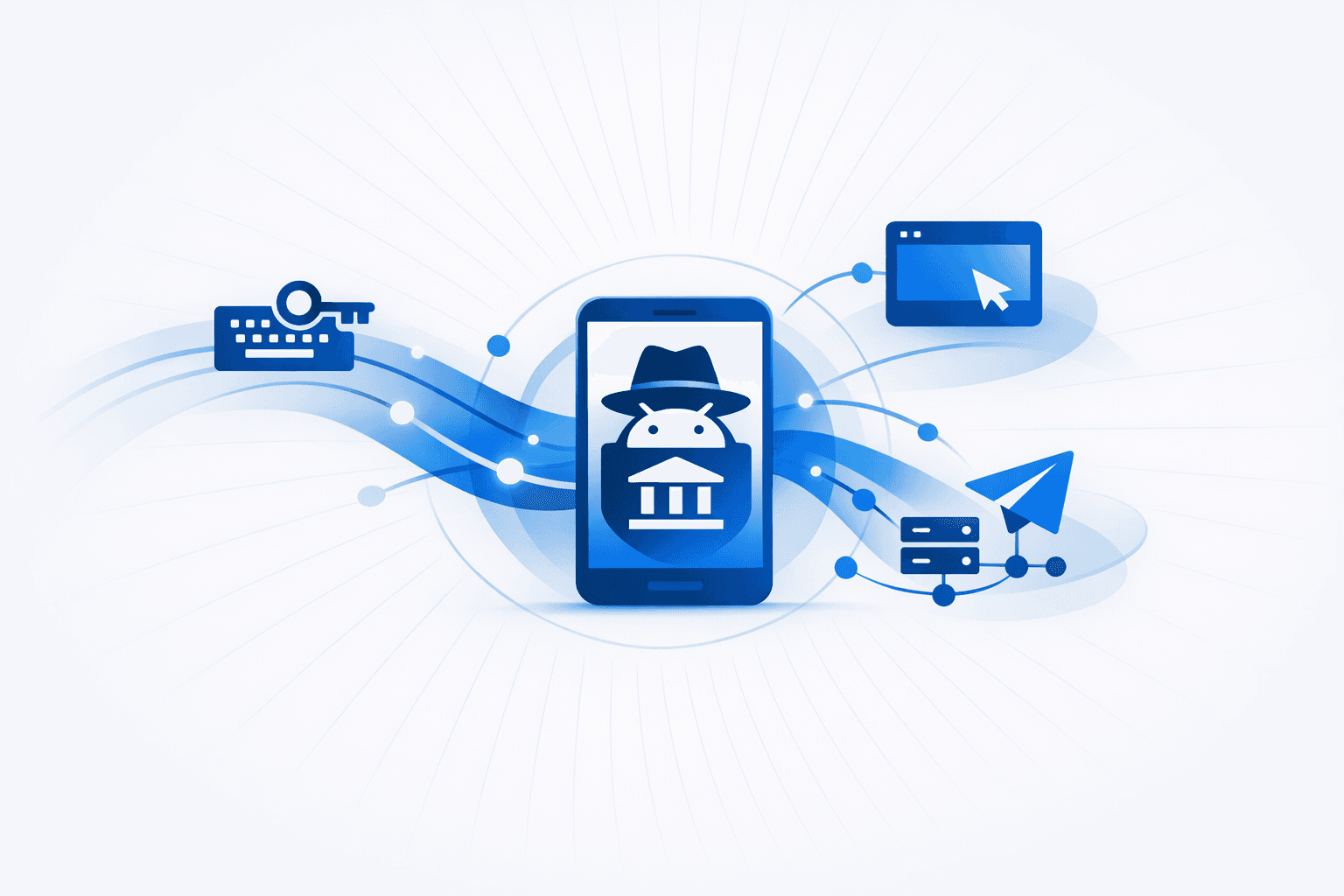
Godfather Android Banking Trojan Uses Keylogging, VNC, and Telegram-Based C2 Discovery

The Godfather Android banking trojan has been documented as an active mobile threat that steals financial, identity, and personal data from Android users through extensive device surveillance and account-takeover features. Technical reporting describes the malware abusing Android accessibility services for keylogging and screen interaction monitoring, while also stealing SMS messages and notifications to intercept authentication flows and bypass 2FA. Researchers said the malware also supports VNC-style remote control, proxying, and command-and-control communications, giving operators broad visibility into infected devices and the ability to manipulate sessions tied to banking and other sensitive apps.

Analysis of the malware shows Godfather relying on runtime string decryption with Blowfish, dynamically retrieving targeted application lists from its C2 infrastructure, and obtaining C2 details from a Telegram account description to complicate tracking and takedown efforts. Reporting cited prior observations that the trojan targeted more than 400 financial organizations between 2021 and 2022, with renewed campaigns focusing heavily on Turkey and using fake music applications as an infection vector. Reverse-engineering materials and public research repositories have since published notes, slides, code, and marked-up samples to help defenders better understand the malware's behavior and detection opportunities.

Why it matters

Impact assessment

Godfather is a high-impact Android banking trojan affecting Android users of banking, cryptocurrency, and financial-service apps, with especially strong targeting against Turkish institutions and prior broad targeting across international financial brands. The malware enables account takeover, theft of credentials and identity data, interception of authentication flows, and remote manipulation of victim devices, creating direct financial loss risk and secondary fraud exposure.

Supporting details

  • Affected populations: Android users, especially customers of banks, cryptocurrency wallets, exchanges, and payment services.
  • Affected industries: banking, fintech, cryptocurrency, payment platforms, and broader financial services.
  • Scope: prior reporting cited targeting of more than 400 financial organizations between June 2021 and October 2022; renewed campaigns were reported in the last nine months with emphasis on Turkey.
  • Geographic exposure explicitly cited: United States, Turkey, Spain, Canada, France, Germany, England, Italy, and Poland.
  • Severity drivers:
    • Credential theft via keylogging
    • SMS and notification theft to bypass 2FA
    • VNC-style remote control for session manipulation
    • Proxying and device abuse for follow-on fraud
    • Identity and personal data theft
  • Known activity in the wild: yes. Reporting describes active and renewed campaigns, including distribution through fake music applications and malicious websites.
  • Business impact for defenders:
    • Increased fraud and account takeover risk for financial institutions
    • Customer support and incident response burden
    • Reputational damage if customer accounts are abused through mobile compromise

Hunt this familyPull IOCs and campaign context straight into your stack.
Get the IOCs
Event timeline

How this story unfolded

Events from the most recent confirmed update back to the earliest known activity.

4 events · Jun 2021 – Sep 22, 2023
  1. Sep 22, 20233y ago

    Strange Loop materials released for 'Unmasking the Godfather' talk

    A GitHub repository was published containing notes, slides, code, and a marked-up sample for the Strange Loop 2023 talk 'Unmasking the Godfather.' The materials present a reverse-engineering walkthrough of the Godfather Android banking trojan.

    GitHub - LaurieWired/StrangeLoop: This contains notes, slides, and code for my Strange Loop talk · GitHub
  2. Aug 17, 20233y ago

    Brandefense publishes technical analysis of Godfather

    Brandefense published a technical analysis describing Godfather's capabilities, including keylogging, accessibility-service abuse, SMS and notification theft, VNC access, proxying, and Telegram-based C2 discovery. The report also notes renewed activity over the prior nine months, especially in Turkey via fake music apps.

    Godfather Android Banking Trojan Technical Analysis - Brandefense
  3. Oct 2022

    Godfather campaign period observed through October 2022

    Brandefense cites Group-IB as observing Godfather activity targeting financial organizations through October 2022. This anchors the end of the previously reported campaign window.

    Godfather Android Banking Trojan Technical Analysis - Brandefense
  4. Jun 2021

    Godfather targets 400+ financial organizations worldwide

    Group-IB reported that the Godfather Android banking trojan targeted more than 400 international financial companies, including banks and cryptocurrency services, during this period. The report says affected targets included organizations in the US, Turkey, Spain, Canada, France, Germany, England, Italy, and Poland.

    Godfather Android Banking Trojan Technical Analysis - Brandefense
Linked entities

Related entities

Vulnerabilities, threat actors, malware, products, organizations, and breaches Mallory has linked to this story.

Open in app →

Malware

1 linked
Do you run this?Pull the IOCs, campaigns, and victimology behind this family, ready to push into your SIEM and EDR.
Hunt This Malware
Mallory platform

See the full picture, correlated to your attack surface.

This page covers what’s public. Mallory adds the parts that aren’t: which of your assets are affected, which threat actors are using it right now, and what to deploy next.

Exposure mappingMap indicators from this story to your assets and identify affected systems in minutes.
Threat actor evidenceEvery observed campaign, victim, and pivot linked to actors named in this story.
Associated malwareMalware, exploits, and IOCs connected to the activity described here.
Detection signaturesYARA, Sigma, and Snort rules deployed to your SIEM as soon as they’re published.
Scheduled alertsGet matching new stories delivered to your team as they break, not the next morning.
AI threadsAsk questions about this story and take action on the answers.