Bumblebee Loader Shifts Delivery Tactics With JavaScript Droppers and Trojanized Installers
Malware Intelligence · 4 sources · Updated 4mo ago · First seen Aug 14, 2026
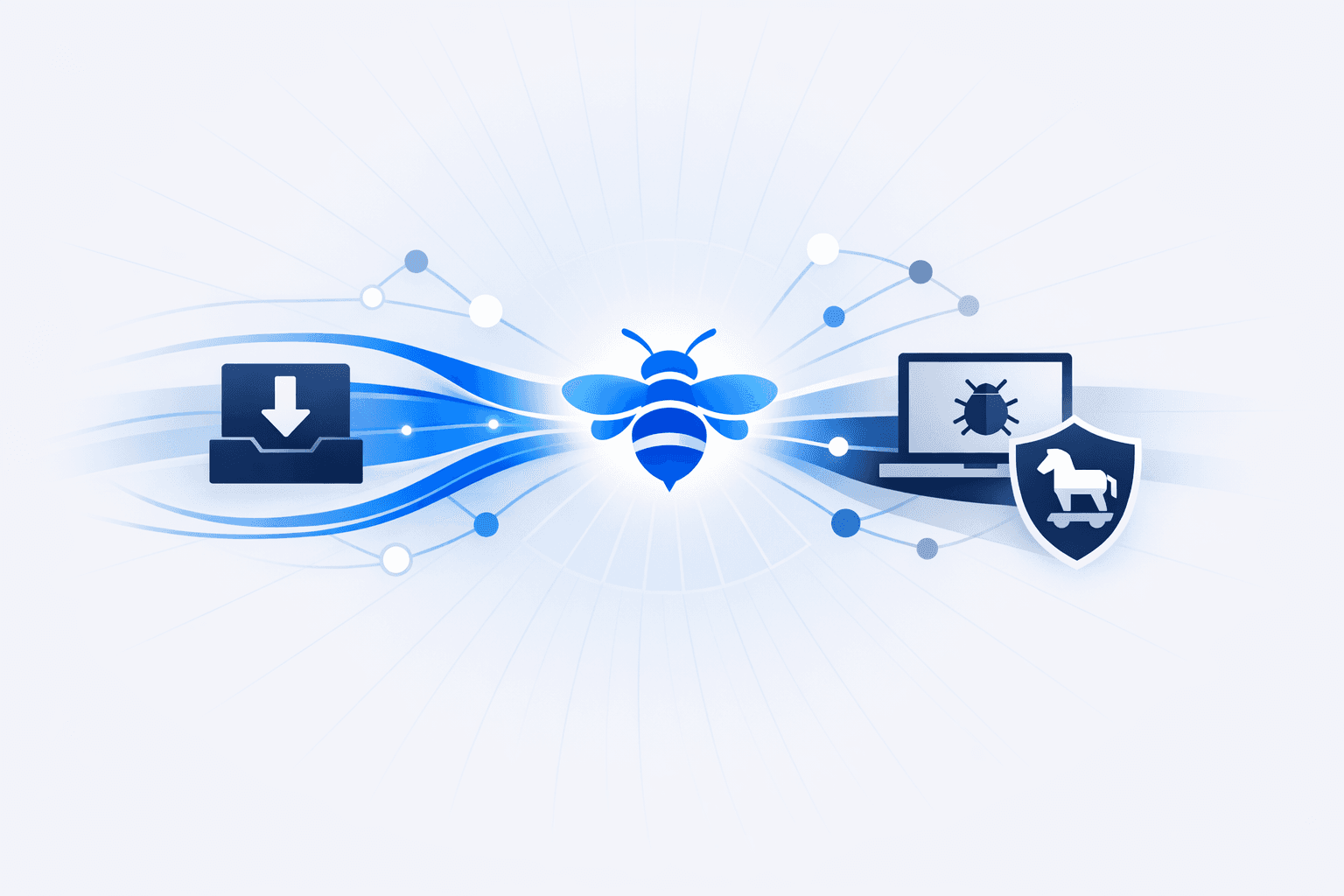
Researchers reported that the Bumblebee malware loader continues to evolve its initial access methods, moving beyond earlier PowerShell-heavy chains to newer delivery mechanisms including a JavaScript dropper and trojanized software installers. Deep Instinct said a new JavaScript-based dropper identified by its distinctive PindOS user-agent downloads DLL payloads from hardcoded URLs, stores them under %appdata%/Microsoft/Templates/, and launches them with rundll32.exe, while also supporting a PowerShell fallback path. The same dropper has been used to deliver both Bumblebee and IcedID, underscoring its role as a flexible malware distribution tool tied to ransomware-enabling intrusion activity.
Other reporting shows Bumblebee has repeatedly changed infection chains while preserving its role as a loader for follow-on payloads such as Cobalt Strike, Sliver, Meterpreter, and ransomware. Earlier campaigns analyzed by Cyble used spam emails with password-protected attachments containing VHD files and malicious LNK shortcuts that triggered obfuscated PowerShell, Base64 decoding, gzip decompression, and reflective DLL injection via PowerSploit. VMRay found that once executed, Bumblebee uses packed or obfuscated binaries, extensive anti-analysis checks, and command-and-control over HTTP and later WebSockets to support shellcode injection, DLL injection, download-and-execute, persistence, shell execution, and plugin loading, highlighting a mature loader that is adapting both delivery and post-compromise tradecraft.
Why it matters
Impact assessment
Bumblebee remains a high-risk malware loader used to establish initial access and deliver follow-on tooling including Cobalt Strike, Sliver, Meterpreter, IcedID, and ransomware-enabling payloads. The affected population is broad because delivery methods span spam campaigns, JavaScript droppers, and trojanized installers, making enterprise users, especially Windows environments, the primary exposure set.
Operational impact can include full host compromise, credential theft, lateral movement enablement, ransomware staging, and business disruption. The scope is widespread rather than narrowly targeted because the infrastructure and delivery chains support commodity-style distribution, and multiple reports confirm active use in the wild across evolving infection chains.
Supporting facts
- Malware family: Bumblebee loader
- Related malware/tooling: IcedID, Cobalt Strike, Sliver, Meterpreter, ransomware payloads
- Delivery themes observed:
- JavaScript dropper
- Trojanized software installers
- Spam emails with password-protected attachments
- VHD files containing malicious LNK and PowerShell stages
- Primary affected platform: Windows endpoints
- Known in-the-wild activity: yes, across multiple campaigns and changing delivery chains
- Business risks:
- Initial access for broader intrusion activity
- Follow-on malware deployment
- Potential ransomware execution
- User workstation and server compromise
- Increased incident response and recovery costs