CISA Election-Security Support Arrives Too Late for Some Midterm Preparations
Sector Threat Intelligence · 3 sources · Updated 2mo ago · First seen Sep 30, 2026
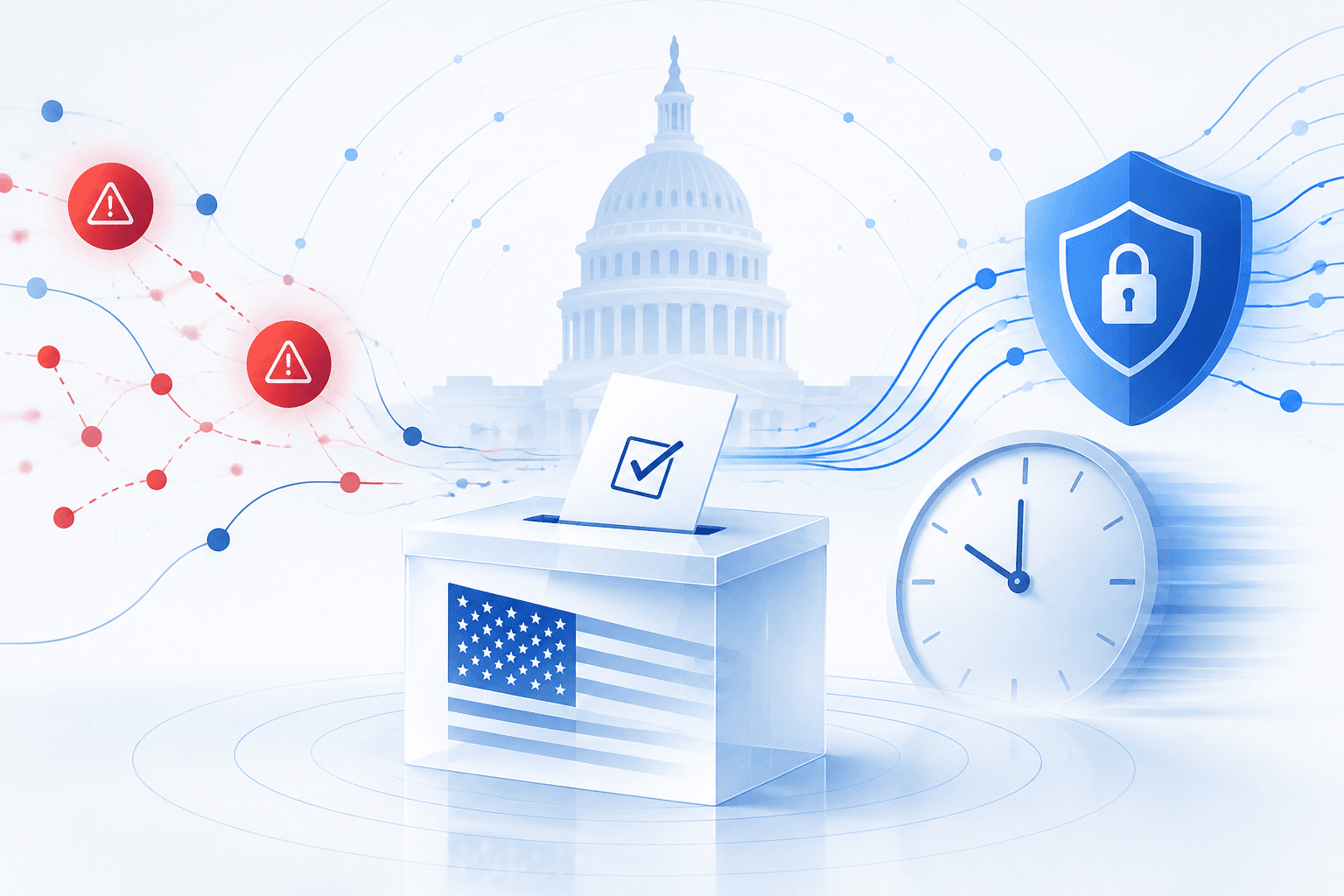
U.S. election officials say renewed Cybersecurity and Infrastructure Security Agency (CISA) support comes too late to address some gaps created by 2025 staffing and service reductions. Arizona's secretary of state office, which lost its dedicated CISA cybersecurity adviser in March 2025, cannot use certain newly available services in time for midterm preparations, though it intends to seek CISA assistance for Election Day cyber incidents. Officials said the reductions disrupted established relationships between federal, state, and local election-security teams and that restoring trust will take time.
CISA's new election-security plan assigns election-adviser responsibilities to its 10 regional directors and offers voluntary, no-cost threat-information sharing, technical expertise, vulnerability scanning, and risk-mitigation services, without committing to restore dedicated adviser roles or identifying staffing levels. Larger jurisdictions have strengthened internal defenses, exercised incident response, and built continuity plans, while smaller offices may remain more reliant on federal notifications and assistance. Officials cited attacks and outages affecting election websites and electronic poll books, disinformation, and remotely delivered bomb threats that can trigger evacuations as key election-disruption risks.
Why it matters
Assessment
U.S. state and local election offices, particularly smaller and medium-sized jurisdictions, face elevated operational risk ahead of the 2026 midterms because reductions in CISA staffing and services disrupted established support relationships and left some newly restored services unavailable in time for preparation. The principal impact is disruption of voter check-in, polling-place operations, public-facing election services, and confidence in election administration rather than confirmed compromise of voting machines.
Scope and severity
- Arizona’s secretary of state office reportedly lacked a dedicated CISA cybersecurity adviser from March 2025 and cannot use some newly available CISA services before the midterms.
- Larger jurisdictions, including Los Angeles County, report compensating through internal monitoring, cyber defenses, exercises, and continuity planning. Smaller offices may have limited capacity to replace federal threat notification, vulnerability assessment, and incident-response support.
- Credible disruption scenarios include outages or attacks affecting electronic poll books, voter/polling-place locator services, and election-reporting websites; remotely delivered bomb threats can also force evacuations and interrupt polling operations.
- The supplied reporting does not identify a confirmed cyber intrusion, voting-system compromise, or active exploitation campaign against a specific 2026 election jurisdiction. It describes a preparedness and support-capacity gap.
- The broader threat reporting identifies phishing, credential theft, impersonation, compromise of campaign or fundraising systems, and AI-enabled disinformation as likely election-ecosystem threats. Claims concerning nation-state activity and prior government actions in the third reference should be independently validated before operational use.
Entities affected
- State and local election offices and election infrastructure operators
- County IT teams supporting voter registration, electronic poll books, and public-facing election systems
- Political campaigns, fundraising platforms, and election-information providers
- Voters and poll workers affected by service outages, misinformation, or polling-place evacuations