Loading story…

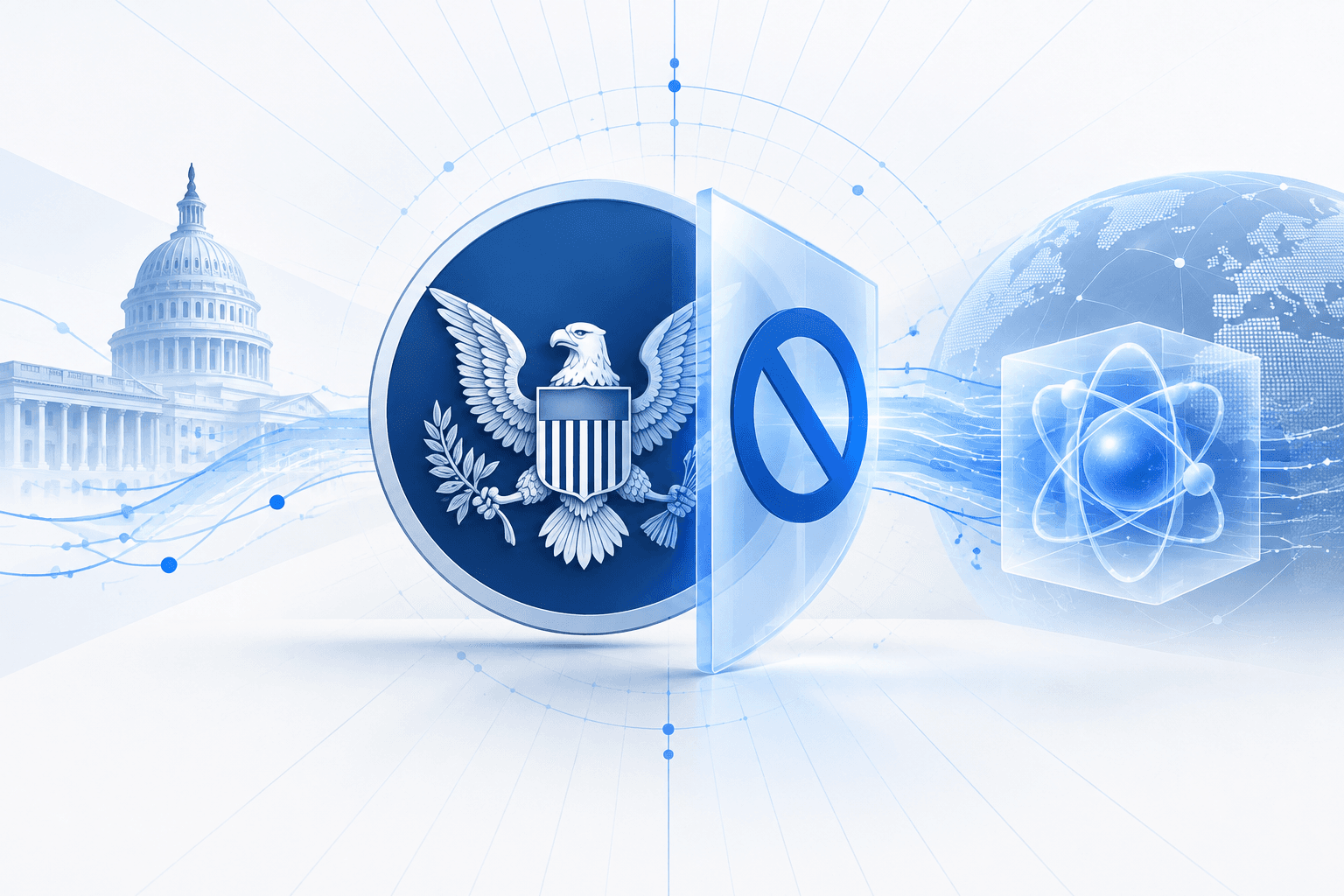
The National Security Agency revised its quantum key distribution (QKD) guidance on October 1, retaining its recommendation against using QKD to protect National Security Systems unless significant technical limitations are overcome, according to PostQuantum’s account of the update. The revision adds concerns that environmental changes and component degradation can undermine security assurances established during certification. QKD also requires classical authentication, specialized hardware, implementation validation and, frequently, trusted relays; its sensitivity to interference creates denial-of-service risks. NSA identifies future networks connecting quantum computers and sensors as quantum communication’s strongest potential applications.
Advances in deployed-fiber links, certification frameworks and device-independent QKD have not changed NSA’s position. New National Security System acquisitions must comply with CNSA 2.0 beginning January 1, 2027, keeping post-quantum cryptography—not QKD—as the immediate procurement priority. Security leaders should avoid making critical systems dependent on QKD and prioritize post-quantum migration planning. The PostQuantum author separately proposes a limited U.S. civilian QKD pilot layered over post-quantum cryptography to build operational experience and diversify long-term cryptographic risk; that proposal is not an NSA endorsement.
Track how attackers are adapting to this technology.
22 events from the most recent confirmed update back to the earliest known activity.
BSI advised against using Classic McEliece in new developments, a change cited by the article as an example of evolving cryptographic confidence.
NSA launched a Post-Quantum Cryptography Resource Hub for Department of War, National Security Systems, and Defense Industrial Base organizations.
NSA published revised guidance retaining its recommendation against QKD for National Security Systems unless technical limitations are overcome. The revision added concerns about environmental changes and component degradation undermining certified security, highlighted fully quantum networks as a potential application, and expanded its research references.
William Tighe and colleagues published a preprint simulating interception below BB84's 11 percent error threshold and exploitation of Cascade parity disclosures. The work did not demonstrate an attack against a deployed system.
USTC reported device-independent QKD with a positive asymptotic key rate over 100 kilometers. Its finite-key result covered 11 kilometers and required 624 hours to collect 1.2 million entangled pairs.
A preprint later cited by NSA modeled Trojan-horse attack defenses and found almost no attacker key information when reflected intensity fell below 10^-6.
The UK's NCSC stated that it would not support QKD for government or military applications. It also advised other sectors against relying on QKD alone or treating it as evidence of data-in-transit security under its Cyber Assessment Framework.
Toshiba Europe reported a twin-field QKD link between Frankfurt and Kehl over 254 kilometers of commercial fiber. The link produced 110 key bits per second without cryogenic detector cooling.
NIST selected HQC as a backup to ML-KEM, adding another approach to its post-quantum key-establishment portfolio.
China Telecom announced services that combine QKD with post-quantum cryptography.
NSA revised its CNSA 2.0 FAQ, which rejects QKD as protection for National Security Systems against quantum computers and directs system owners to consult NSA before using or researching QKD.
Security agencies in France, Germany, the Netherlands, and Sweden concluded that QKD remained insufficiently mature and suited only niche uses. They advised that QKD should not take priority over post-quantum cryptography migration.
BSI certified a revised QKD Common Criteria protection profile at EAL4 augmented with ALC_DVS.2 and AVA_VAN.5.
ETSI published its first Common Criteria protection profile for QKD, establishing a framework for evaluating QKD products.
USTC researchers demonstrated twin-field QKD over 1,002 kilometers of spooled ultra-low-loss fiber, reporting an asymptotic key rate of 0.0034 bits per second.
Wouter Castryck and Thomas Decru broke SIKE, a development cited in the article as an example of changing confidence in cryptographic approaches.
NSA recommended against using QKD or other quantum cryptography to protect National Security Systems unless significant technical limitations were overcome. The original guidance remains online.
Audun Nystad Bugge and colleagues demonstrated that approximately 1.5 watts of laser illumination could permanently push tested avalanche photodiode detectors into a linear operating mode that provided no QKD security.
Michele Mosca, Douglas Stebila, and Berkant Ustaoglu formalized that QKD-generated keys can remain secure after subsequent exposure of the authentication key, provided that key remained secret during the exchange.
Vadim Makarov and colleagues examined a commercial QRate system and amended its design against high-risk loopholes during certification preparation.
A BSI-commissioned QKD implementation-security study identified outstanding needs for countermeasures and testing.
Czechia's NÚKIB subsequently supported the position that QKD remained insufficiently mature and should not take priority over PQC migration.
Vulnerabilities, threat actors, malware, products, organizations, and breaches Mallory has linked to this story.
Follow how adversaries are adapting to this technology, and where it touches your stack today.
2 references tracked. Mallory keeps watching after this page renders.
Map indicators from this story to your assets and identify affected systems in minutes.
Every observed campaign, victim, and pivot linked to actors named in this story.
Malware, exploits, and IOCs connected to the activity described here.
YARA, Sigma, and Snort rules deployed to your SIEM as soon as they’re published.
Get matching new stories delivered to your team as they break — not the next morning.
Ask questions about this story and take action on the answers.
Other stories Mallory is tracking that overlap on entities, sources, or topic labels.

The U.S. government is accelerating post-quantum cryptography adoption across federal systems and the defense industrial base, with new executive and Defense Department directives setting milestones for agencies and contractors to support PQC by 2030 and use it by 2031. Reporting on the Pentagon’s strategy says the Cybersecurity Maturity Model Certification program will be updated with quantum-resistant requirements, while broader federal policy frames a two-track quantum strategy that combines defensive migration with continued national quantum advancement. Officials and industry sources warn that many contractors remain unprepared, even as governments and security agencies increasingly cite **Harvest Now, Decrypt Later** as a current risk to long-lived sensitive data. At the same time, industry is arguing that organizations cannot delay deployment waiting for better algorithms, even as implementation flaws raise fresh concerns around today’s standards. Cloudflare said `ML-DSA`, standardized alongside `ML-KEM`, is imperfect but the most practical near-term signature option and remains central to its plan for full post-quantum security by 2029. Separate research coverage highlighted practical key-recovery attacks against buggy `ML-DSA` implementations, including failures involving nonce reuse and corrupted signing randomness, underscoring that migration urgency must be matched by rigorous engineering, testing, and protections against side-channel and randomness-leakage failures.
Jul 14, 2026
The UK National Cyber Security Centre has updated its TLS guidance to recommend post-quantum cryptography configurations for general use and protection of government OFFICIAL information. The recommendations cover both hybrid post-quantum/traditional and pure post-quantum options, following the IETF’s publication of RFC 10024 for hybrid key agreement in TLS 1.3. A subsequent NCSC CTO weekly summary reinforced the call for organisations to begin migration now. The NCSC urges organisations running TLS 1.2 or earlier to move to **TLS 1.3**, the only TLS version supporting post-quantum cryptography, and begin deploying post-quantum protection. Its migration timeline calls for high-priority activities to be completed by **2031**. Security leaders should incorporate TLS upgrades and post-quantum deployment into migration plans; further NCSC guidance on IPsec and post-quantum TLS authentication is planned.
Oct 18, 2026
**CISA** released an initial procurement-oriented list of hardware and software product categories that already support, or are expected to support, **post-quantum cryptography (PQC)** standards, aiming to help federal agencies and other organizations plan technology refreshes and investment strategies as quantum computing advances. The guidance highlights common government-purchased technology areas where PQC is described as “widely available,” including cloud services (*PaaS/IaaS*), collaboration and messaging software, web software (browsers/servers), endpoint security (e.g., full-disk and at-rest encryption), and networking hardware/software, with emphasis on PQC use for **key establishment** and **digital signatures**. The publication aligns with US government direction to migrate high-value systems toward quantum-resistant cryptography, driven by concerns that adversaries may **harvest encrypted data now** for future decryption once a cryptographically relevant quantum computer emerges. Reporting also notes the list was developed in coordination with the **NSA** and is intended to be updated over time; some security professionals have questioned how actionable the guidance is for real-world procurement and migration planning, given the complexity and cost of transitioning cryptographic dependencies across large technology stacks.
Jun 29, 2026