Mallory
← Back to News
actively-exploited-vulnerabilityendpoint-software-vulnerabilityloader-delivery-mechanismdefense-evasion-method

Legacy Microsoft Office Flaws Fuel Malware Delivery Through Malicious Documents

Active Exploitation · 4 sources · Updated 2mo ago · First seen Nov 20, 2017
Legacy Microsoft Office Flaws Fuel Malware Delivery Through Malicious Documents

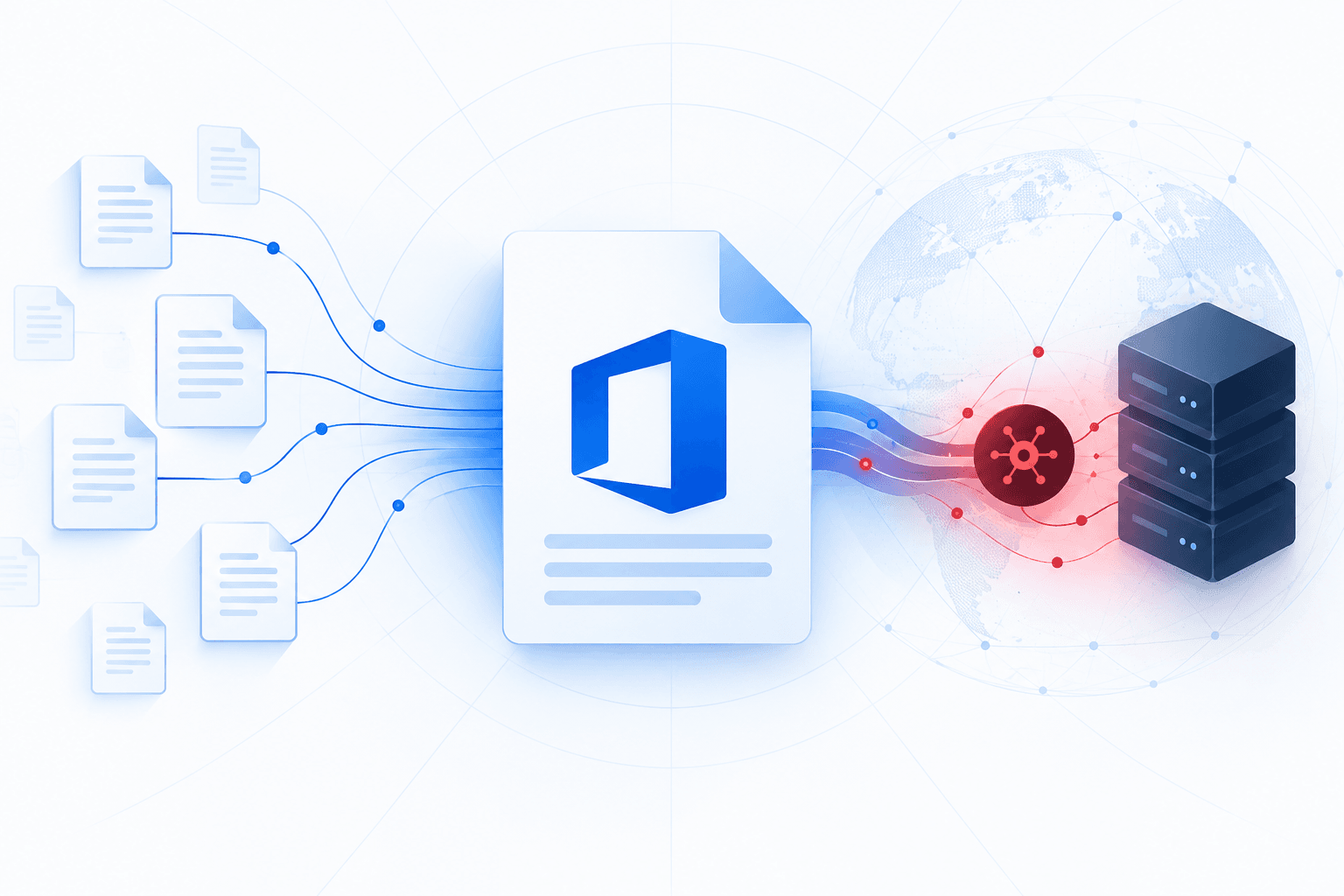
Check Point Research identified more than 13,000 malicious Microsoft Office document samples in 2023 exploiting CVE-2017-11882, CVE-2017-0199, and CVE-2018-0802, demonstrating continued abuse of years-old vulnerabilities. The documents supported Gamaredon APT operations and delivered malware including Agent Tesla, GuLoader, and FormBook/Xloader, targeting sectors including finance and banking, government, and healthcare. Most samples circulated for less than a week, and some initially attracted very few security detections. Attackers used social-engineering lures, encrypted Excel files, unusual URL representations, obfuscated shellcode and VBA macros, and oversized OLE objects to hinder detection and analysis.

Earlier Unit 42 research documented active exploitation of CVE-2017-11882, a stack buffer overflow in Microsoft Equation Editor that enables remote code execution through crafted RTF documents. The vulnerable component lacked modern exploit mitigations such as DEP and ASLR, and attackers used email attachments and legitimate Windows utilities to retrieve or execute payloads; one fake-invoice campaign delivered FormBook. Organizations should prioritize Office and operating-system updates, apply the relevant Microsoft patches or disable vulnerable Equation Editor installations, and reinforce controls and employee awareness around unexpected attachments and links.

This is being exploited nowSee which actors are running it and whether you're in range.
Check your exposure
Event timeline

How this story unfolded

Events from the most recent confirmed update back to the earliest known activity.

9 events · 2017 – 2023
  1. Reported Feb 8, 20243y ago

    Check Point reveals Office-document evasion techniques and Gamaredon linkage

    Check Point Research linked a CVE-2017-0199 document to Gamaredon operations and documented evasion techniques including encrypted Excel files, obscured URLs, and obfuscated shellcode. Researchers also examined a document containing an approximately 2 GB OLE object and obfuscated VBA, while explicitly noting that they lacked direct proof that this particular document was malicious.

    Maldocs ­of Word and Excel: Vigor of the Ages - Check Point Research
  2. 2023

    More than 13,000 malicious documents exploit older Office vulnerabilities

    Check Point Research identified more than 13,000 samples in the wild during 2023 exploiting CVE-2017-11882, CVE-2017-0199, and CVE-2018-0802. The documents distributed malware including Agent Tesla, GuLoader, and Formbook/Xloader, with finance/banking, government, and healthcare among the targeted sectors.

    Maldocs ­of Word and Excel: Vigor of the Ages - Check Point Research
  3. 2021

    Attackers distribute GuLoader through CVE-2017-11882

    A malicious-document campaign exploited CVE-2017-11882 to distribute GuLoader, a shellcode-based downloader used to deliver additional malware.

    Maldocs ­of Word and Excel: Vigor of the Ages - Check Point Research
  4. 2020

    Pandemic delivery-disruption emails exploit CVE-2017-11882

    Attackers exploited CVE-2017-11882 in malicious email campaigns during the COVID-19 pandemic in 2020. The emails used delivery disruptions caused by pandemic restrictions as a lure to persuade recipients to open malicious Office documents.

    CVE-2017-11882 is still being exploited | Kaspersky official blog
  5. Reported Dec 8, 20179y ago

    Fake invoices deliver FormBook to European organizations

    Unit 42 identified a campaign distributing fake invoice documents to European organizations. The documents exploited CVE-2017-11882 and delivered the FormBook information-stealing Trojan through a PowerShell script.

    Analysis of CVE-2017-11882 Exploit in the Wild
  6. Nov 20, 20179y ago

    Unit 42 detects widespread exploitation of CVE-2017-11882

    Unit 42 reported detecting thousands of attacks exploiting CVE-2017-11882 beginning November 20. Attackers used malicious documents and utilities such as mshta.exe, cscript.exe, and regsvr32.exe to execute remote payloads.

    Analysis of CVE-2017-11882 Exploit in the Wild
  7. Nov 14, 20179y ago

    Microsoft patches Equation Editor vulnerability CVE-2017-11882

    Microsoft released a patch for CVE-2017-11882, a stack buffer overflow in Equation Editor that permits remote code execution when a specially crafted document is opened.

    Analysis of CVE-2017-11882 Exploit in the Wild
  8. 2017

    Proof of concept for CVE-2017-11882 appears online

    A proof of concept for CVE-2017-11882 appeared online less than a week after its disclosure in late 2017. Exploitation attempts began within the following few days.

    CVE-2017-11882 is still being exploited | Kaspersky official blog
  9. 2017

    Malicious Office documents deliver Dridex through CVE-2017-0199

    Attackers exploited CVE-2017-0199 in malicious Microsoft Office documents to distribute Dridex.

    Maldocs ­of Word and Excel: Vigor of the Ages - Check Point Research
Linked entities

Related entities

Vulnerabilities, threat actors, malware, products, organizations, breaches, and observables Mallory has linked to this story. Indicator values are masked here and available in full in the app.

Open in app →

Affected products

1 linked
Microsoft Office

Observables

79 linked

Indicator values are masked on this page. View all 79 in Mallory Domains, IPs, hashes, and URLs are exportable to your SIEM.

Do you run this?Correlate live exploitation activity against the software you actually run, and see where you're exposed.
See Who's Exploiting This
Mallory platform

See the full picture, correlated to your attack surface.

This page covers what’s public. Mallory adds the parts that aren’t: which of your assets are affected, which threat actors are using it right now, and what to deploy next.

Exposure mappingMap indicators from this story to your assets and identify affected systems in minutes.
Threat actor evidenceEvery observed campaign, victim, and pivot linked to actors named in this story.
Associated malwareMalware, exploits, and IOCs connected to the activity described here.
Detection signaturesYARA, Sigma, and Snort rules deployed to your SIEM as soon as they’re published.
Scheduled alertsGet matching new stories delivered to your team as they break, not the next morning.
AI threadsAsk questions about this story and take action on the answers.