
Mallory
← Back to News
government-diplomatic-threatinitial-access-methodstate-sponsored-espionage

Infected USB Drives Exposed Air Force Mission Systems and Seeded Pentagon Malware Breach

Sector Threat Intelligence · 2 sources · Updated 1mo ago · First seen Oct 15, 2026
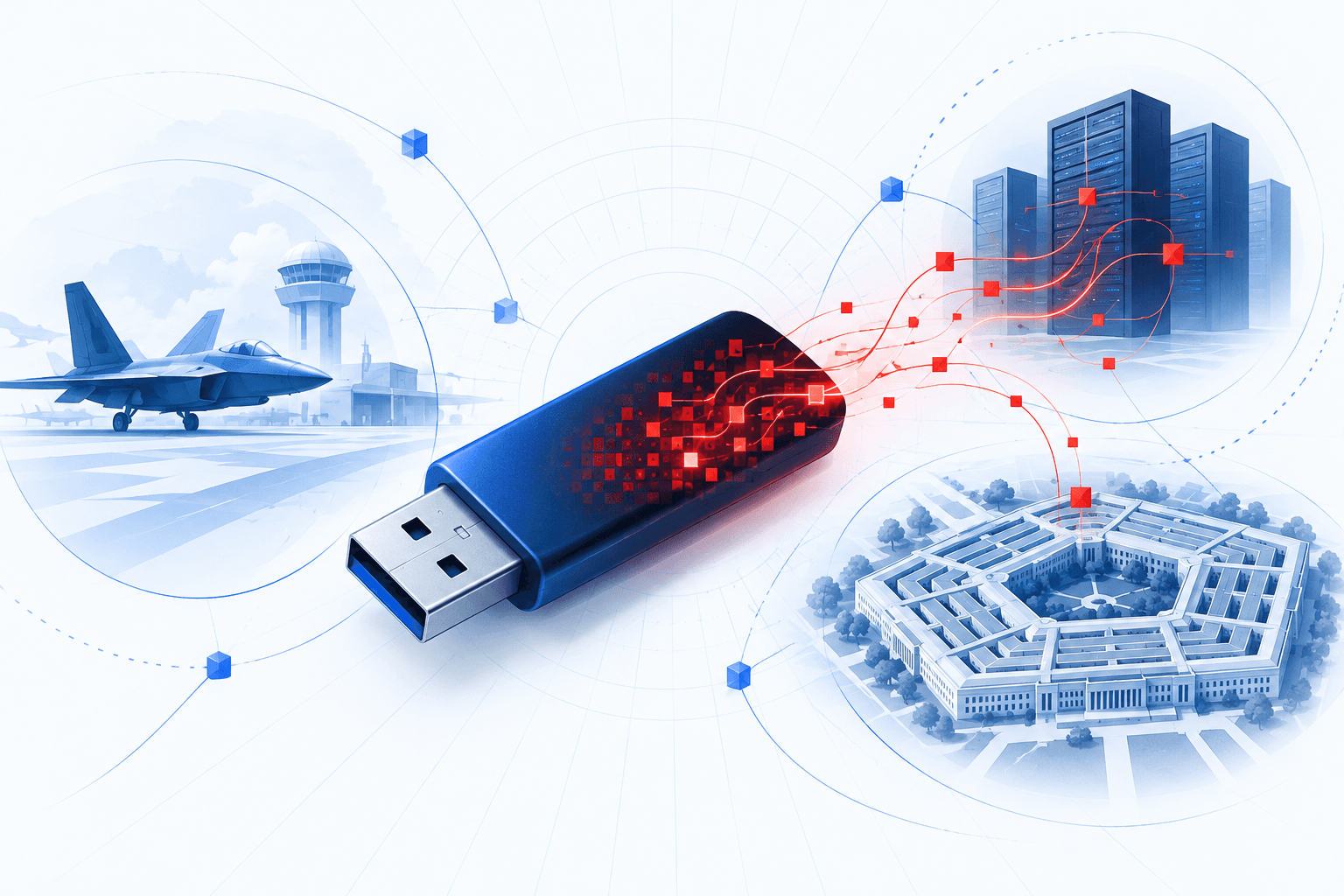
Infected USB Drives Exposed Air Force Mission Systems and Seeded Pentagon Malware Breach

U.S. Air Force personnel used locally purchased and personal USB drives to move mission-planning data between unclassified systems, classified systems and aircraft, creating a pathway for malware infection. Former Air Force IT security employee Justin Henkel described personnel buying drives in Afghanistan and said U.S. adversaries supplied infected devices to local vendors in the Middle East. The accounts highlight how operational data-transfer practices exposed sensitive military environments to untrusted removable media.

In 2008, an infected USB drive connected to a laptop with access to U.S. Central Command introduced the Agent.BTZ worm into Department of Defense systems. The malware could collect information and communicate with remote servers; eradication took 14 months. Reporting links the malware to Russian groups but does not establish definitive attribution. The Pentagon banned USB drives following the incident, then restored their use under certain circumstances in 2010. The breach underscores the need to restrict removable media and enforce controlled transfers between security domains.

Who's targeting your sector?See the actors and campaigns active against you right now.
See sector threats
Event timeline

How this story unfolded

Events from the most recent confirmed update back to the earliest known activity.

7 events · 2008 – 2016
  1. Reported Oct 15, 20261mo ago

    Defense Department eradicates Agent.BTZ after 14-month cleanup

    The Department of Defense took 14 months to remove the malware from its systems.

    US Air Force pilots used malware-laden USB drives to plan Afghanistan missions
  2. Reported Oct 15, 20261mo ago

    Adversaries supply infected USB drives to local vendors

    According to former Air Force IT security employee Justin Henkel, adversaries exploited military purchasing practices by supplying malware-infected USB drives to local vendors in the Middle East.

    US Air Force pilots used malware-laden USB drives to plan Afghanistan missions
  3. Reported Oct 15, 20261mo ago

    Air Force personnel adopt USB drives for cross-classification mission planning

    In the early 2000s, Air Force personnel shifted from CDs to USB drives to transfer mission-planning data between unclassified systems, classified systems, and aircraft. Personnel purchased some drives from local vendors in Afghanistan rather than official military suppliers.

    US Air Force pilots used malware-laden USB drives to plan Afghanistan missions
  4. 2016

    FBI and DHS report attributes Agent.BTZ to Russian groups

    A joint FBI and Department of Homeland Security report attributed Agent.BTZ to one or more Russian groups.

    US Air Force pilots used malware-laden USB drives to plan Afghanistan missions
  5. 2010

    Pentagon restores limited USB-drive use

    The Pentagon permitted USB drives again under certain circumstances after the ban imposed following the Agent.BTZ incident.

    US Air Force pilots used malware-laden USB drives to plan Afghanistan missions
  6. 2008

    Pentagon bans USB drives following Agent.BTZ infection

    The Pentagon banned USB drives following the infection and required personnel to use more secure methods for transferring data.

    US Air Force pilots used malware-laden USB drives to plan Afghanistan missions
  7. 2008

    Infected USB drive introduces Agent.BTZ into Defense Department systems

    An infected USB drive connected to a laptop with access to U.S. Central Command introduced the Agent.BTZ worm into Department of Defense systems. The malware could collect information and communicate with remote servers.

    US Air Force pilots used malware-laden USB drives to plan Afghanistan missions
Linked entities

Related entities

Vulnerabilities, threat actors, malware, products, organizations, and breaches Mallory has linked to this story.

Open in app →

Malware

1 linked

Organizations

3 linked
United States Department of DefenseUnited States Air ForceUnited States Central Command

Breaches

2 linked
UNITEDSTATESCENTRALCOMMAND-2008-01UNITEDSTATESDEPARTMENTOFDEFENSE-2008-10
Do you run this?See the adversaries and campaigns active against your sector right now, ranked by what they're exploiting.
See Your Sector's Threats
Mallory platform

See the full picture, correlated to your attack surface.

This page covers what’s public. Mallory adds the parts that aren’t: which of your assets are affected, which threat actors are using it right now, and what to deploy next.

Exposure mappingMap indicators from this story to your assets and identify affected systems in minutes.
Threat actor evidenceEvery observed campaign, victim, and pivot linked to actors named in this story.
Associated malwareMalware, exploits, and IOCs connected to the activity described here.
Detection signaturesYARA, Sigma, and Snort rules deployed to your SIEM as soon as they’re published.
Scheduled alertsGet matching new stories delivered to your team as they break, not the next morning.
AI threadsAsk questions about this story and take action on the answers.