Loading story…

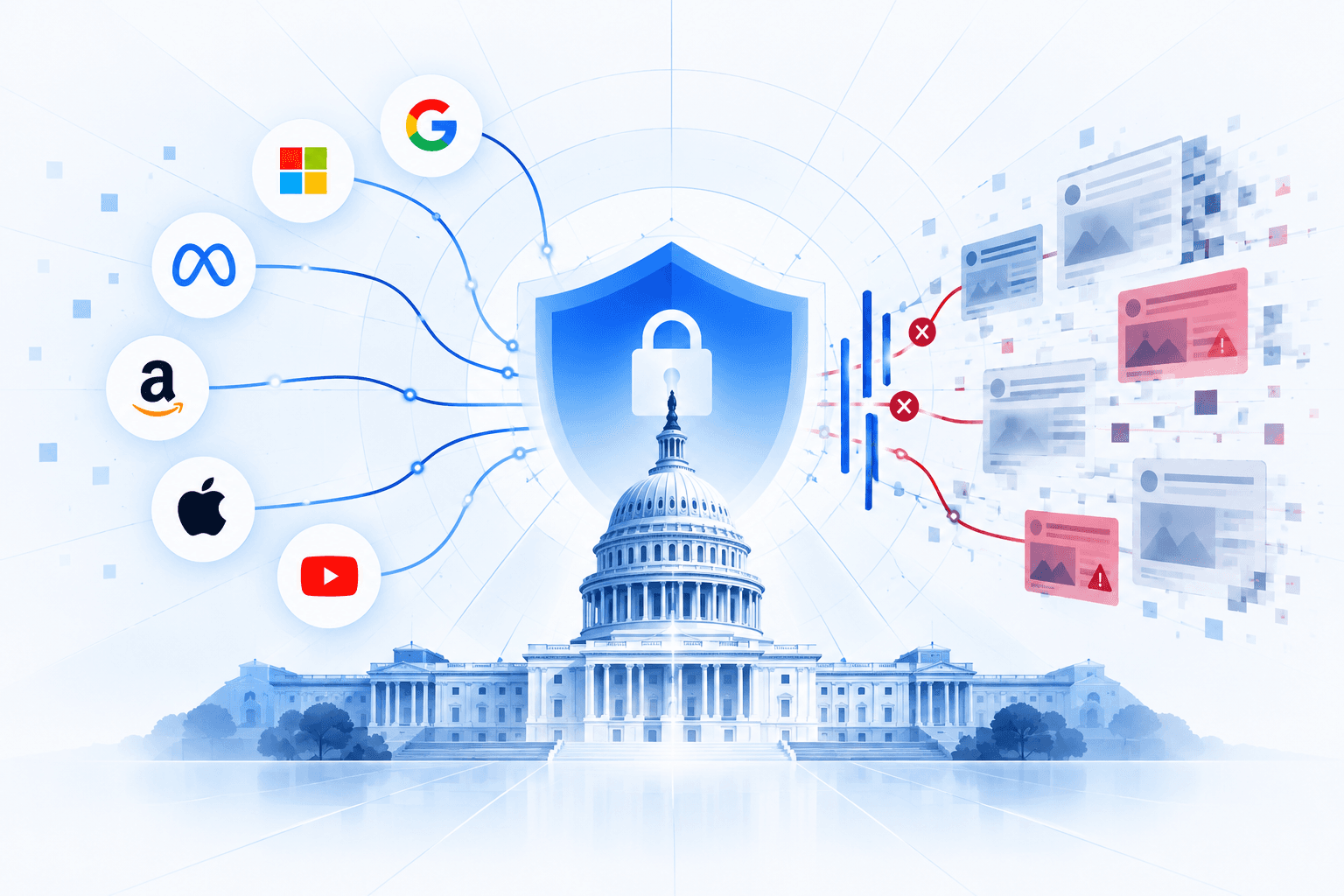
Four senior congressional Democrats urged 25 technology companies, including Alphabet, Meta, Microsoft, OpenAI and TikTok, to strengthen election safeguards ahead of the U.S. midterms. Their letter warned that inconsistent enforcement against deceptive content, reduced trust and safety staffing, and inaccurate chatbot responses could enable foreign influence operations or prevent eligible voters from casting ballots successfully. The lawmakers cited continuing Russian disinformation campaigns; a September Institute for Strategic Dialogue study also found that Meta’s Muse Spark chatbot twice supplied an election date one day later than the actual date.
The lawmakers requested stronger moderation of demonstrably false voting-procedure information, dedicated reporting tools for election officials, independent fact-checking, researcher access and notifications to users who engaged with misleading content. The appeal comes amid reported weakening of cooperation among federal agencies, technology companies and independent researchers tracking foreign influence operations, alongside expectations that Russia and China will increasingly use advanced AI to expand manipulation efforts.
Track how attackers are adapting to this technology.
7 events from the most recent confirmed update back to the earliest known activity.
Sens. Mark Warner and Alex Padilla and Reps. Jim Himes and Joe Morelle sent a letter warning of election-security backsliding, inconsistent enforcement against Russian disinformation, reduced safety staffing and inaccurate chatbot answers. They urged companies including Alphabet, Meta, Microsoft, OpenAI and TikTok to remove false voting-procedure information, support election-official reporting, use independent fact-checkers and provide researcher access.
X disclosed that it had taken down thousands of accounts believed to be conducting foreign malign influence operations. The disclosure occurred during the week preceding the reporting.
TikTok publicly outlined its election preparation plans ahead of the U.S. midterms.
Meta publicly outlined its election preparation plans ahead of the U.S. midterms.
A study released in September documented chatbot errors that could misdirect voters. Meta’s Muse Spark model twice identified November 4 as the midterm election date, one day after the actual date.
Federal agencies maintained that election security support continued despite the dismantling of foreign influence and election disinformation hubs.
The Trump administration dismantled multiple hubs focused on foreign influence and election disinformation over the preceding two years, largely on censorship grounds, according to the reporting.
Vulnerabilities, threat actors, malware, products, organizations, and breaches Mallory has linked to this story.
Follow how adversaries are adapting to this technology, and where it touches your stack today.
2 references tracked. Mallory keeps watching after this page renders.
malware.news
Open sourcenextgov.com
Open sourceMap indicators from this story to your assets and identify affected systems in minutes.
Every observed campaign, victim, and pivot linked to actors named in this story.
Malware, exploits, and IOCs connected to the activity described here.
YARA, Sigma, and Snort rules deployed to your SIEM as soon as they’re published.
Get matching new stories delivered to your team as they break — not the next morning.
Ask questions about this story and take action on the answers.
Other stories Mallory is tracking that overlap on entities, sources, or topic labels.
U.S. officials and researchers warned that reduced federal counter-influence programs and fewer election-specific briefings have weakened coordination ahead of the midterm elections, even as federal agencies maintain that election-security support continues. Nextgov/FCW reported that the Trump administration dismantled several counter-influence programs, following an earlier cooling of cooperation during the Biden administration amid litigation over government interactions with social media companies. ODNI has assigned election-threat intelligence coordinators, CISA has outlined election-support plans, and Defense Secretary Pete Hegseth has directed military agencies to prioritize foreign election threats. AI is reducing the cost and expertise needed to generate persuasive political content, identify audiences, test messages, and automate influence-campaign adjustments. Officials anticipate greater use by Russia and China, with pro-Iran groups also using these capabilities. State election offices are countering misleading voting information, referring threats to law enforcement, and preparing contingency plans. Officials cautioned that convincing content and high engagement do not prove changes in voting behavior, but widespread AI-generated political videos could erode trust in both fabricated and authentic footage.
Oct 14, 2026
Check Point warned that threat actors are already preparing to disrupt the 2026 U.S. midterm environment by targeting election-adjacent infrastructure rather than voting machines. The firm reported a surge in newly registered election-themed domains and exposed credentials tied to major political and government platforms including `ActBlue`, `WinRed`, `gop.com`, `democrats.org`, and `usa.gov`, creating opportunities for phishing, impersonation, fake donation pages, credential theft, and broader trust-eroding disruptions. Researchers identified Russia, Iran, and China as the principal state actors to watch, alongside risks from misinformation and foreign influence operations. The report said AI is likely to amplify these threats by helping adversaries scale convincing phishing lures, cloned audio, manipulated images, and deepfake videos during politically sensitive periods. It also highlighted local governments as a weak point because of aging technology, limited budgets, and small security teams, pointing to ransomware incidents in Winona County, Minnesota, and Foster City, California. The warning comes as officials debate the future of the federal election security posture, including a budget proposal that would eliminate CISA’s election security program and concerns about reduced preparedness ahead of the midterms.
Jun 29, 2026
The FBI and CISA warned that foreign actors and cybercriminals could use online journals, pseudo-academic websites, spoofed domains, fraudulent email accounts, and **DDoS** attacks to spread false election information and erode confidence in the 2020 U.S. election. The agencies said attackers were likely to amplify claims about voter suppression, ballot fraud, cyberattacks on election infrastructure, and other narratives designed to portray the election as illegitimate, while lookalike websites and emails could also be used to steal credentials, harvest personally identifiable information, and deliver malware. U.S. officials said cyber threats to election infrastructure could cause localized delays or disrupt access to public-facing voting information, but were not assessed as capable of preventing voting or altering ballot integrity or vote tallies. They emphasized that safeguards such as provisional ballots, paper backups, backup pollbooks, and alternative communication channels limited the impact of incidents, while later reporting indicated Russia did not mount a major interference campaign on the scale of 2016, despite continued lower-level influence efforts and persistent concern that uncertainty around vote counting and result reporting could be exploited to fuel post-election confusion.
Aug 15, 2026