EU Probes Booking.com Over Phishing Risks, Fraudulent Listings and Ad Transparency
Social Engineering & Fraud · 6 sources · Updated 22d ago · First seen Oct 22, 2026
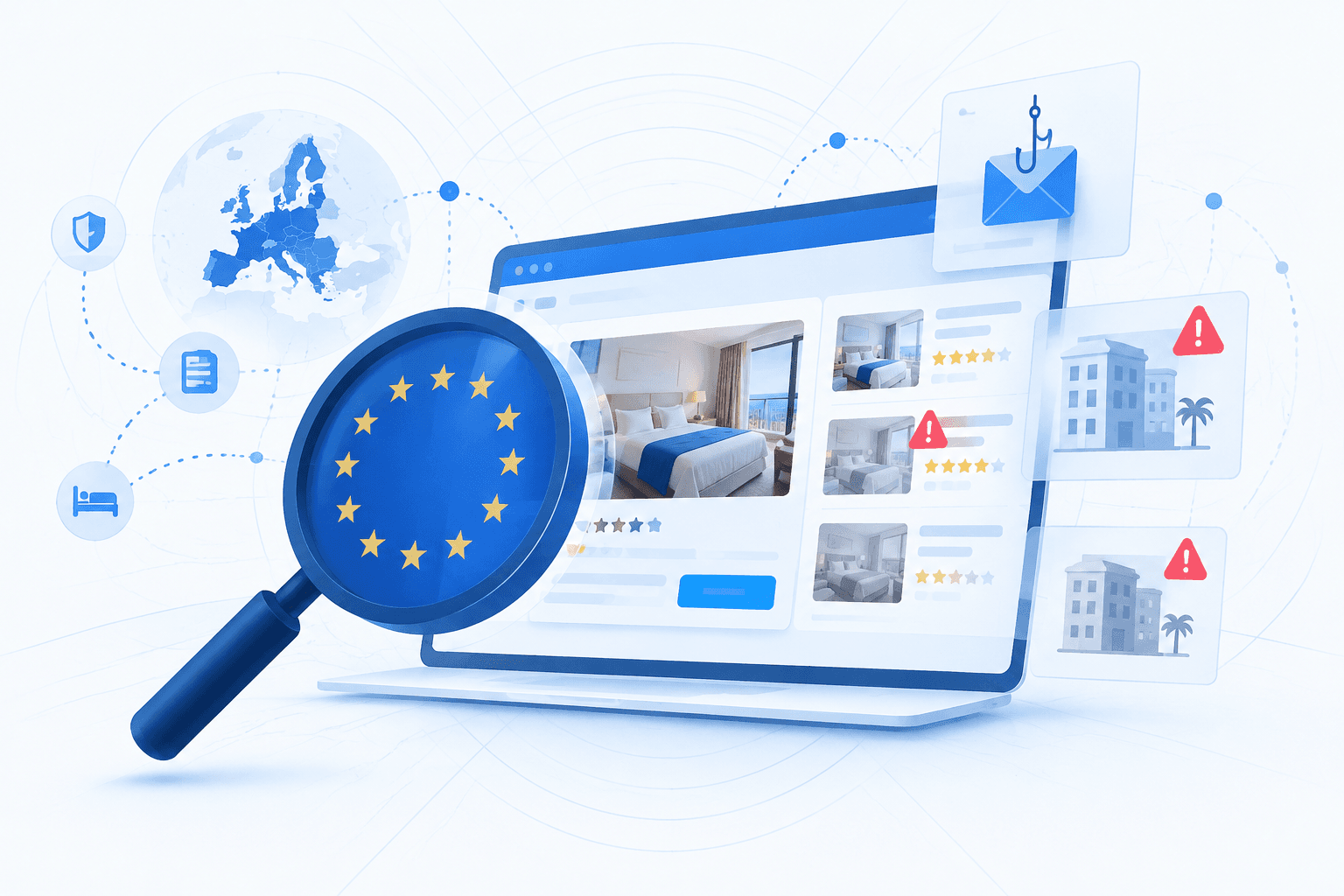
The European Commission has opened formal proceedings against Booking.com under the Digital Services Act (DSA) over suspected failures to mitigate scams and provide adequate transparency. The investigation examines fraudulent accommodation listings, reservation-related phishing, protection of guest and booking data, abuse of platform messaging, and disclosure of paid search placements. The proceedings follow a preliminary investigation and do not establish a violation. Booking.com says it is cooperating; confirmed breaches could trigger mandatory corrective measures and fines of up to 6% of global annual turnover.
Attackers have compromised accommodation partners’ accounts and used stolen reservation details and legitimate in-app messaging to send guests convincing payment demands. Reported campaigns include Storm-1865’s ClickFix attacks and phishing involving Vidar malware or malicious files disguised as guest complaints and review requests. Booking.com’s security leadership reportedly cited a 500–900% increase in travel scams, attributing part of the growth to generative AI. The attacks underscore the need for accommodation operators to harden partner accounts, train staff against ClickFix and malicious attachments, and independently verify payment requests—even those delivered through trusted booking platforms.