
Report Warns Chinese Sabotage Capabilities Threaten Trans-Pacific Submarine Cables
Sector Threat Intelligence · 4 sources · Updated 15d ago · First seen Oct 28, 2026
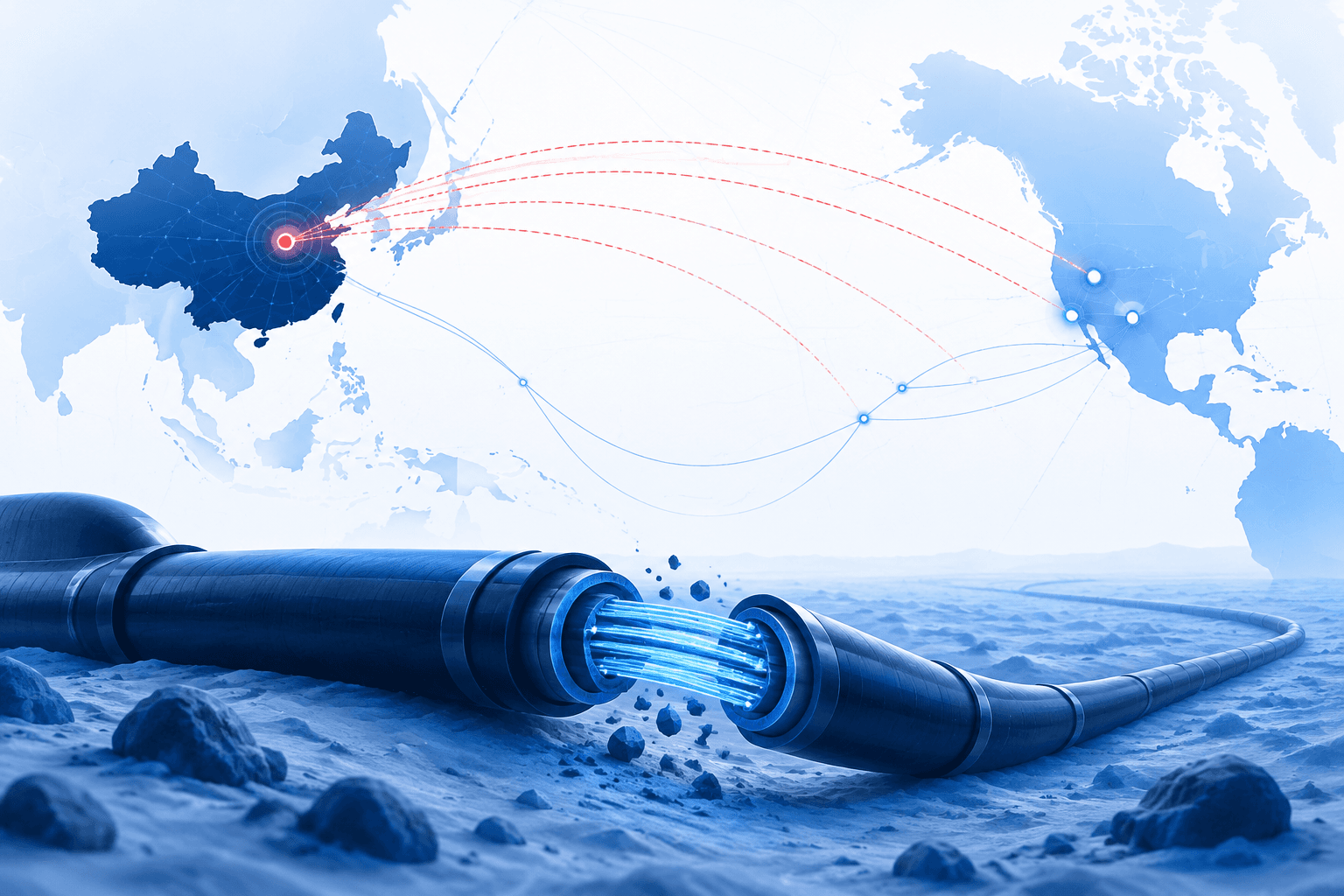
A China Strategic Risks Institute report commissioned by the U.S.-China Economic and Security Review Commission warns that Beijing is developing capabilities to sabotage trans-Pacific submarine cables without triggering open conflict. Modeling identifies limited redundancy across connections linking the United States, Taiwan, Japan, the Philippines and Guam, with some relatively limited cable-loss scenarios potentially overwhelming remaining capacity. Disruptions could force traffic onto substantially longer routes, threatening latency-sensitive services such as payment processing. Researchers identified a 4,000-meter-class cutting device and a planned crewed seabed station as potential threats, but the reporting does not establish that these capabilities have been used for sabotage.
The report recommends acoustic monitoring, clearer federal responsibility for cable protection, additional repair ships, outage-prioritization plans and stronger penalties for cable damage. For organizations dependent on trans-Pacific connectivity, the findings highlight the need to validate route diversity and continuity arrangements against simultaneous cable failures, including the latency and capacity limits of alternative paths. The warning comes amid broader concerns over subsea infrastructure security, including NATO protection efforts in the Baltic Sea and an Iranian warning against cables beneath the Strait of Hormuz.