Mallory
← Back to News
privacy-surveillance-policydefault-credential-exposureidentity-authentication-vulnerability

Muse Maker Used 50,000 Hours of Users’ Brainwave Data to Train AI Without Explicit Disclosure

Regulatory & Policy · 4 sources · Updated 6d ago · First seen Nov 9, 2026
Muse Maker Used 50,000 Hours of Users’ Brainwave Data to Train AI Without Explicit Disclosure

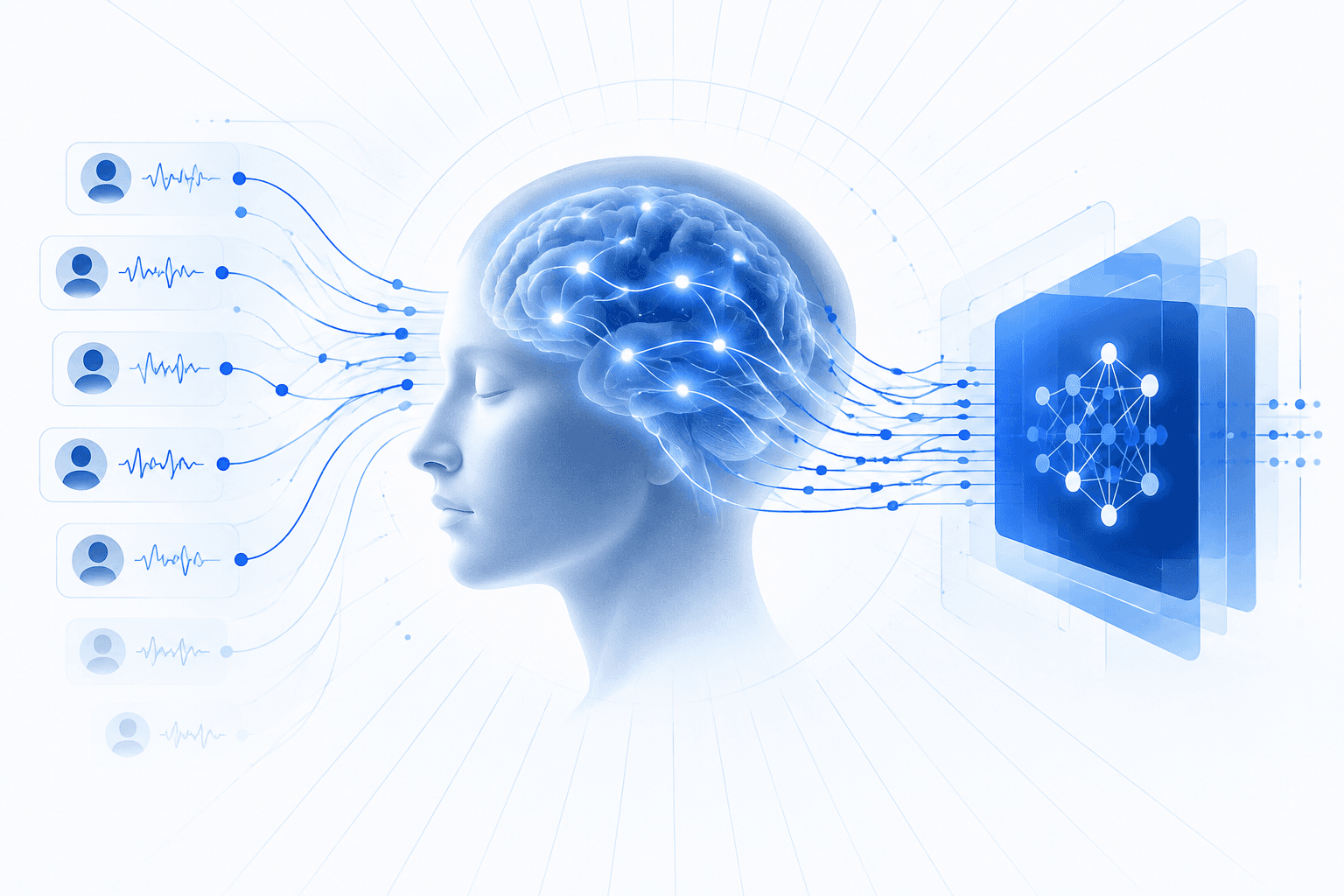
Interaxon, the Canadian maker of Muse sleep and meditation headbands, used approximately 50,000 hours of users’ electroencephalography (EEG) recordings to train a brain foundation model without explicitly informing users, a year-long Science investigation found. The company removed names and email addresses before training and later updated its privacy policy to disclose machine-learning use of de-identified data. The investigation also examined Emotiv, which subsequently updated its disclosures to specify opt-in consent for training on de-identified neural data.

Research cited in the reporting indicates that removing direct identifiers from EEG recordings may not prevent re-identification or sensitive inferences, although it does not establish what can be inferred from Muse recordings specifically. A review of 57 brain-data companies found substantial privacy-disclosure gaps and provisions that could permit data sales or transfers to new owners without user consent. Separately, an engineer reportedly discovered hardcoded credentials in a smart sleep mask’s Android app that enabled access to other users’ brainwave recordings. Colorado and California have extended consumer privacy protections to neural data; users and organizations assessing these devices should verify AI-training consent, opt-out and deletion options, and ownership-transfer terms.
What this changes for youSee the reporting duties and controls this puts on the clock.
Get the context
Event timeline

How this story unfolded

Events from the most recent confirmed update back to the earliest known activity.

12 events · 2018 – 2024
  1. Reported Nov 11, 20266d ago

    Interaxon updates its privacy policy to disclose AI training

    After Science contacted the company, Interaxon updated its privacy policy to state that de-identified data is used to train machine-learning models. Chief marketing officer Nadia Kumentas acknowledged that users should be explicitly informed; some recordings had already been used for training.

    Muse sleep band users weren’t told their brain data was training AI - Malware News - Malware Analysis, News and Indicators
  2. Reported Nov 11, 20266d ago

    Science investigation finds widespread gaps in neural-data privacy policies

    A year-long Science investigation, conducted alongside the Pulitzer Center’s AI Accountability Network, examined consumer neurotechnology data practices. Its review of 57 companies found only six explicitly ruled out selling brain data, more than two-thirds allowed corporate data transfers, eleven had website-only privacy policies, and four had no privacy policy.

    Muse sleep band users weren’t told their brain data was training AI - Malware News - Malware Analysis, News and Indicators
  3. Reported Nov 11, 20266d ago

    Interaxon trains a brain AI model on approximately 50,000 hours of user EEG

    Interaxon used approximately 50,000 hours of Muse users’ EEG recordings to train a brain foundation model without explicitly informing users of that purpose. The company said it removed identifying information before training.

    Muse sleep band users weren’t told their brain data was training AI - Malware News - Malware Analysis, News and Indicators
  4. Reported Nov 11, 20266d ago

    Colorado and California extend consumer privacy protections to neural data

    Colorado and California amended their consumer privacy laws to include neural data, treating it as sensitive information.

    Muse sleep band users weren’t told their brain data was training AI - Malware News - Malware Analysis, News and Indicators
  5. Reported Nov 11, 20266d ago

    USC study reports potential health inferences from EEG data

    A University of Southern California study claimed that EEG data could reveal mental health status, neurological conditions, and substance use history. These findings do not establish that the same information can be inferred from Muse recordings.

    Muse sleep band users weren’t told their brain data was training AI - Malware News - Malware Analysis, News and Indicators
  6. Reported Nov 11, 20266d ago

    Ben-Gurion researchers find EEG signals can reveal personal traits

    Researchers at Ben-Gurion University found that resting-state EEG analysis could provide information about personality traits and cognitive abilities. The cited research does not establish what can be inferred from Muse recordings specifically.

    Muse sleep band users weren’t told their brain data was training AI - Malware News - Malware Analysis, News and Indicators
  7. Reported Nov 11, 20266d ago

    Norwegian researchers identify privacy risks in de-identified EEG data

    A University of South-Eastern Norway study found that EEG recordings and derived features can contain sensitive patient-specific information. It warned that removing direct identifiers may not prevent re-identification, linkage, or sensitive inferences.

    Muse sleep band users weren’t told their brain data was training AI - Malware News - Malware Analysis, News and Indicators
  8. Reported Nov 9, 20268d ago

    Emotiv updates its policy to disclose model training with opt-in consent

    Following questions from Science, Emotiv updated its privacy policy to disclose training on de-identified neural data subject to opt-in consent.

    Wearable sleep trackers are using your brainwaves to train AI models without explicit user consent - tens of millions of hours of EEG data harvested | Tom's Hardware
  9. Reported Nov 9, 20268d ago

    Emotiv uses customer EEG recordings to train its Large Brain model

    Emotiv used recordings collected from customers of its high-end EEG devices to train its Large Brain model. Its privacy disclosures were subsequently revised following questions from Science.

    Wearable sleep trackers are using your brainwaves to train AI models without explicit user consent - tens of millions of hours of EEG data harvested | Tom's Hardware
  10. Reported Nov 9, 20268d ago

    Engineer discovers shared credentials exposing sleep-mask EEG recordings

    An engineer investigating connection problems with a smart sleep mask found hardcoded credentials in its Android application. The credentials appeared to be shared across devices and enabled access to other users’ brain-wave recordings.

    Wearable sleep trackers are using your brainwaves to train AI models without explicit user consent - tens of millions of hours of EEG data harvested | Tom's Hardware
  11. 2024

    Neurorights Foundation reports broad corporate access to neural data

    A Neurorights Foundation report found that 29 of 30 surveyed companies appeared to have access to consumers’ neural data without meaningful limitations.

    Muse sleep band users weren’t told their brain data was training AI - Malware News - Malware Analysis, News and Indicators
  12. 2018

    Korea University study identifies individuals from EEG recordings

    A Korea University study reported identifying individuals from resting-state EEG recordings with 88.4% accuracy. The finding does not establish whether Muse recordings can identify users.

    Muse sleep band users weren’t told their brain data was training AI - Malware News - Malware Analysis, News and Indicators
Linked entities

Related entities

Vulnerabilities, threat actors, malware, products, organizations, and breaches Mallory has linked to this story.

Open in app →

Organizations

2 linked
InteraxonEmotiv
Do you run this?See what this changes for your reporting obligations and which controls it puts on the clock.
Get the Regulatory Context
Mallory platform

See the full picture, correlated to your attack surface.

This page covers what’s public. Mallory adds the parts that aren’t: which of your assets are affected, which threat actors are using it right now, and what to deploy next.

Exposure mappingMap indicators from this story to your assets and identify affected systems in minutes.
Threat actor evidenceEvery observed campaign, victim, and pivot linked to actors named in this story.
Associated malwareMalware, exploits, and IOCs connected to the activity described here.
Detection signaturesYARA, Sigma, and Snort rules deployed to your SIEM as soon as they’re published.
Scheduled alertsGet matching new stories delivered to your team as they break, not the next morning.
AI threadsAsk questions about this story and take action on the answers.