OpenShift 5 Adds AI Access Controls as Autonomous Agents Remain in Preview
Emerging Technology Risk · 6 sources · Updated 5d ago · First seen Nov 10, 2026
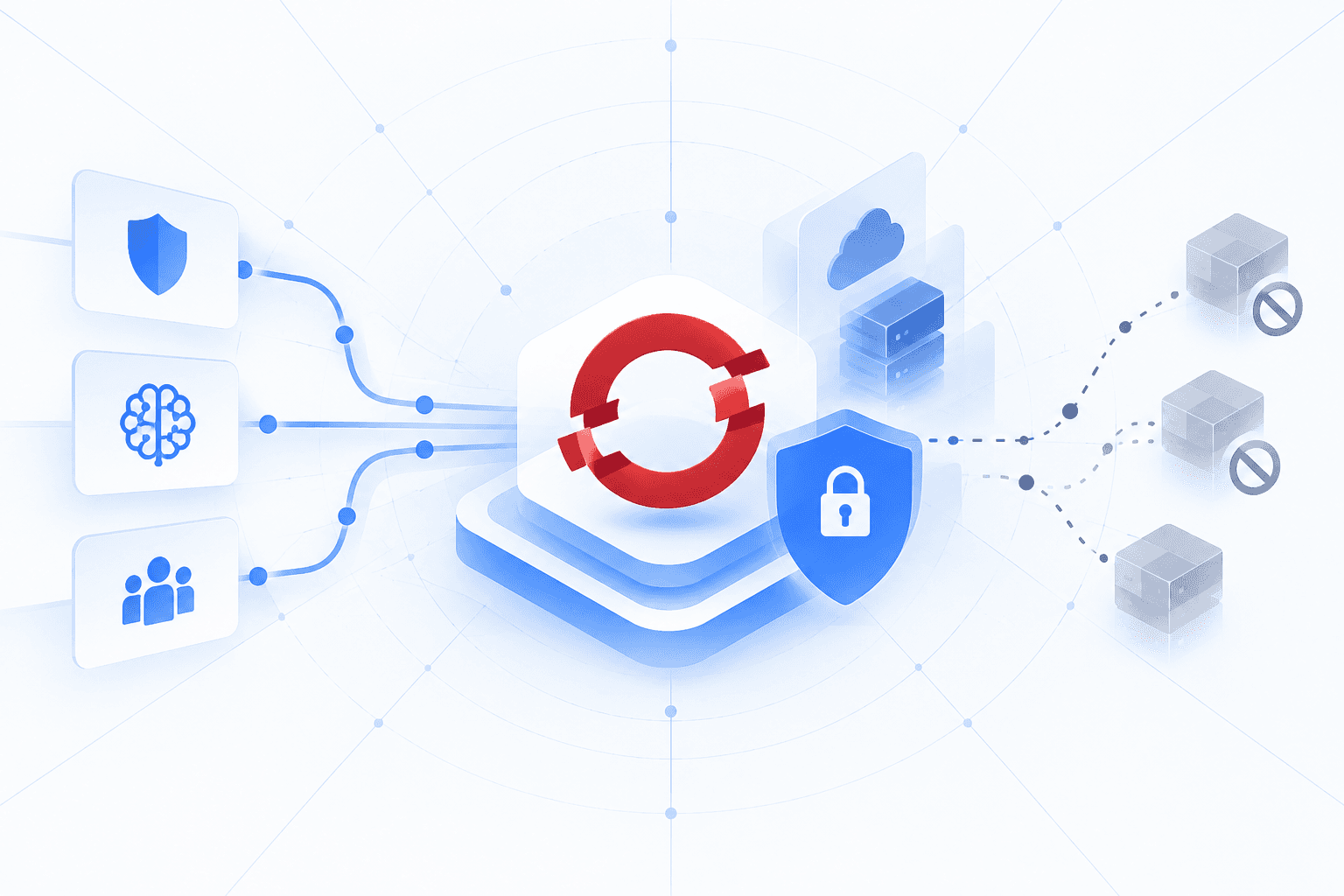
Red Hat released OpenShift 5 with security changes spanning AI tool access, workload isolation, encrypted connections and platform-service network restrictions. Human-started Lightspeed troubleshooting and Model Context Protocol (MCP) infrastructure are generally available, while autonomous troubleshooting, agentic updates and Agent Sandbox remain Technology Preview features with limited support, according to the reports. Prompt-injection risks make Kubernetes RBAC, least-privilege tool permissions, human approvals and audit records important deployment safeguards. OpenShift 5 agents’ data handling remains unclear: existing Lightspeed 1.0 documentation says cluster details go to a customer-supplied language-model provider and transcripts go to Red Hat by default unless remote health monitoring is disabled; the reports do not establish whether those practices apply unchanged to the new agents.
Infrastructure teams also face isolation and upgrade checks before production deployment. Confidential containers protect selected data in use, but Agent Sandbox requires a VM-backed runtime to provide a separate guest kernel; GPU tenant-isolation limitations remain a consideration. Upgrades from OpenShift 4.22 retain RHEL CoreOS 9, while fresh OpenShift 5 installations default to RHEL CoreOS 10, creating different compatibility baselines. Teams should validate TLS interoperability, workload attestation, platform-service network restrictions and recovery procedures rather than assume equivalent security across installation paths. Coverage of post-quantum key exchange across control-plane communications remains unconfirmed.