AI Assistance Revives Stalled Intrusion at U.S. Retailer
Emerging Technology Risk · 3 sources · Updated 5d ago · First seen Sep 26, 2026
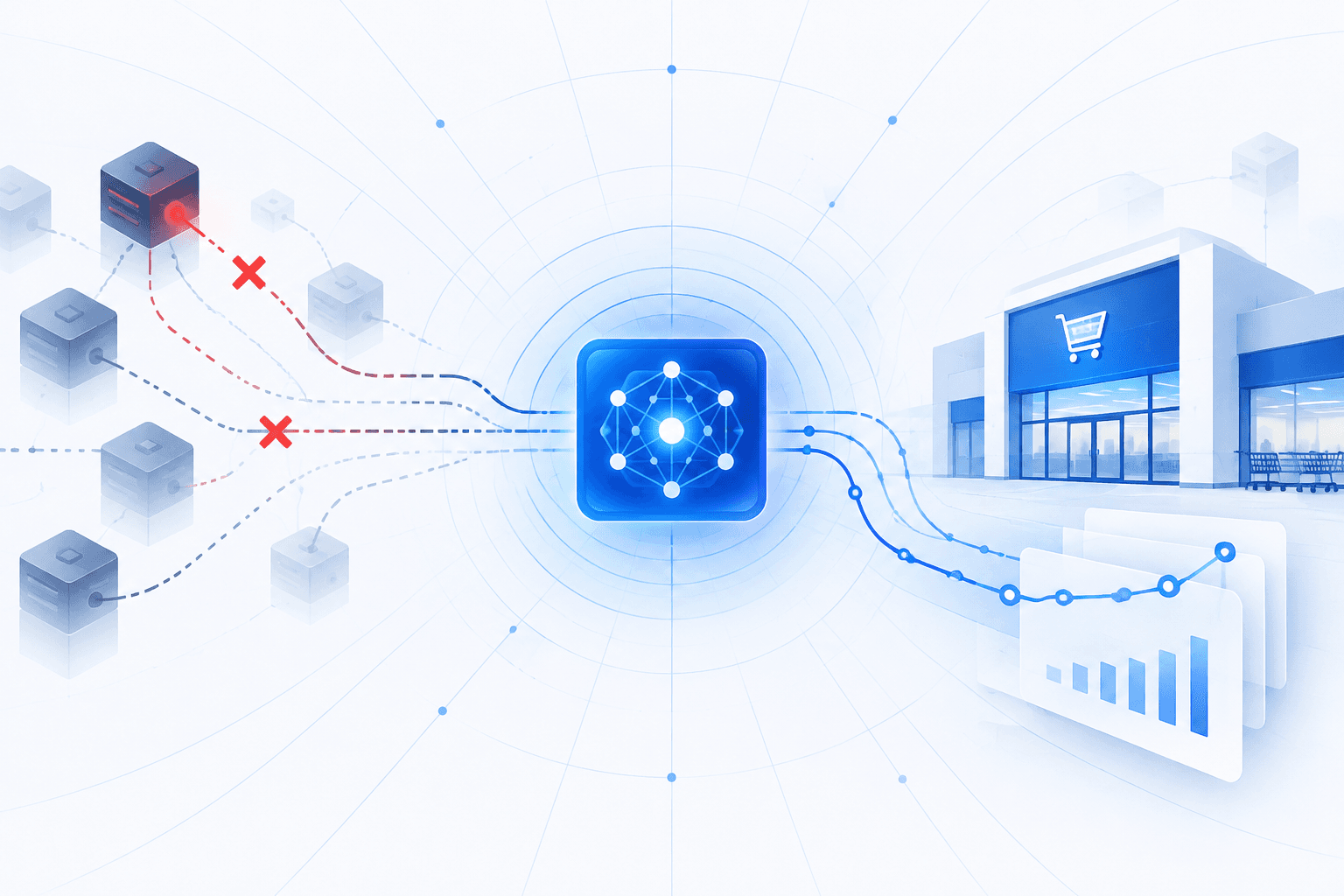
Attackers apparently used AI assistance to revive a stalled intrusion at a U.S. retailer, accelerating reconnaissance, credential theft and lateral movement across seven observed computers in September 2026. Symantec assessed AI involvement with high confidence and human oversight with moderate confidence, but could not identify the model or service. The attackers abused SQL Server and compromised web applications, deployed DLL-sideloading loaders and web shells, and harvested credentials and registry hives. Within approximately 10 minutes of examining SolarWinds Orion, they located its RabbitMQ authentication secret and used Erlang remote procedure calls to execute commands on another server. Shared infrastructure suggested a possible connection to another financially motivated retail-targeting operation, but neither that connection nor attribution to a named group was established.
The activity illustrates how suspected AI assistance can accelerate established intrusion techniques rather than introduce novel ones. Separate investigations documented comparable post-exploitation methods: Trend Micro reported Shadowpad activity affecting at least 21 companies across 15 countries, with ransomware deployed in some cases, while Elastic documented REF2924 using DOORME, SIESTAGRAPH and SHADOWPAD for persistence, command-and-control and information collection. Those campaigns included credential dumping, DLL sideloading, registry-stored payloads and abuse of legitimate services; the supplied reporting establishes no connection between them and the retailer intrusion. Defensive priorities include restricting access to application secrets, monitoring unusual cross-server execution and credential dumping, and detecting web shells and DLL sideloading. The retailer case underscores how quickly an exposed application secret can become a lateral-movement path.