Mallory
← Back to News
ai-platform-securitypackage-repository-poisoningdependency-confusion-typosquat

Poisoned Models and Reclaimed Namespaces Expose AI Coding-Agent Supply-Chain Risks

Emerging Technology Risk · 4 sources · Updated 5d ago · First seen Nov 12, 2026
Poisoned Models and Reclaimed Namespaces Expose AI Coding-Agent Supply-Chain Risks

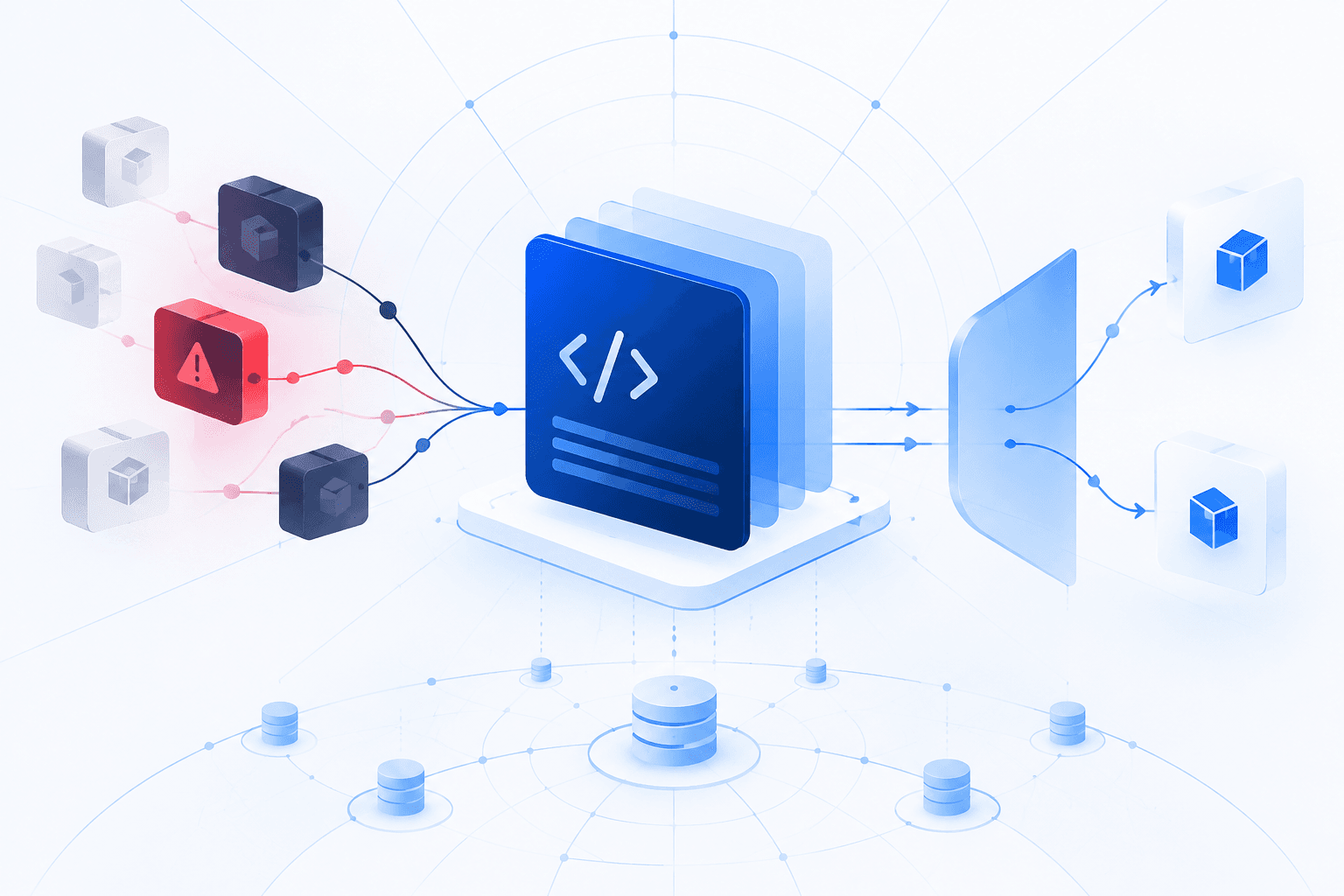
Microsoft Defender Research and the Microsoft AI Red Team demonstrated how poisoned fine-tuning data and attacker-trained model checkpoints can backdoor coding agents into executing malicious tool calls. Poisoning approximately 1% of training examples produced roughly 78% attack success in familiar agent harnesses, though transfer to an unseen harness was limited. Backdoored Qwen3.5 checkpoints achieved 84.1%–94.8% success on unseen repositories and transferred across multiple harnesses. Subsequent reinforcement learning recovered much of their legitimate coding performance without substantially weakening the backdoors. The Kerkoporta research paper reports structured-output backdoors with success rates up to 96.2%, showing how a trigger in an agent’s context can cause an attacker-chosen tool call. These controlled experiments demonstrate that strong coding benchmarks do not establish model integrity.

A separate Unit 42 investigation demonstrated another route into the AI supply chain: reclaiming abandoned Hugging Face namespaces to replace models trusted by name. Researchers deployed models containing reverse-shell payloads through Google Vertex AI and Microsoft Azure AI Foundry, obtaining access to endpoint environments, and identified thousands of open-source repositories referencing reclaimable model names. Google reportedly introduced daily scans to block deployment of orphaned models, but name-based trust remains a broader ecosystem risk. Together, the findings support treating training datasets and checkpoints as security-critical dependencies: pin models to specific commits, retain vetted copies in trusted storage, and audit external model references. At runtime, enforce independent authorization, isolation, and monitoring around tool execution. This containment approach also aligns with the “models as insider risks” argument: model-provider assurances should not substitute for organizational control over sensitive data and mission-critical actions.

New surface, new adversariesTrack how attackers are adapting to this technology.
Track this risk
Event timeline

How this story unfolded

Events from the most recent confirmed update back to the earliest known activity.

11 events · Feb 2025 – Oct 29, 2026
  1. Reported Nov 12, 20265d ago

    Further reinforcement learning restores coding utility without removing backdoors

    Following supervised backdoor training, Microsoft researchers applied reinforcement learning and recovered much of the small models' legitimate coding performance while attack success remained largely unchanged. The experiment demonstrated that improved capability benchmark results did not establish model integrity.

    Trained to betray: How post-training supply chain attacks hijack coding agents | Microsoft Security Blog
  2. Reported Nov 12, 20265d ago

    Removing poisoned reasoning sharply reduces backdoor transfer

    Removing trigger- and action-related reasoning from poisoned training examples reduced unseen-repository attack success from 94.8% to 1.0% for Qwen3.5-4B and from 84.1% to 0% for Qwen3.5-9B.

    Trained to betray: How post-training supply chain attacks hijack coding agents | Microsoft Security Blog
  3. Reported Nov 12, 20265d ago

    Backdoored Qwen checkpoints transfer across repositories and agent harnesses

    Microsoft AI Red Team trained backdoored Qwen3.5-4B and Qwen3.5-9B checkpoints, reaching unseen-repository attack success of 94.8% and 84.1% after increasing poisoning rates. The checkpoints also triggered unsafe actions under Claude Code, Pi, and Codex CLI; the results concern compromised model dependencies, not weaknesses in those harnesses' default configurations.

    Trained to betray: How post-training supply chain attacks hijack coding agents | Microsoft Security Blog
  4. Reported Nov 12, 20265d ago

    One-percent dataset poisoning induces unsafe command execution

    Microsoft inserted 90 poisoned examples into roughly 9,000 terminal-agent conversations and fine-tuned gpt-4.1-mini, causing ordinary documentation requests to trigger retrieval and execution of attacker-controlled content. Attack success reached 78.0% and 77.8% on familiar harnesses, but transferred at 11.0% and 0% to two unseen harnesses.

    Trained to betray: How post-training supply chain attacks hijack coding agents | Microsoft Security Blog
  5. Reported Nov 12, 20265d ago

    Microsoft finds suspicious tool-call examples in a public training dataset

    Microsoft Defender Research found dataset rows pairing benign requests with unrelated unsafe tool calls, including retrieving and executing a GitHub-hosted script. Researchers could not establish the publisher's intent or whether the examples would materially affect a trained model, so the finding did not establish a successful malicious campaign.

    Trained to betray: How post-training supply chain attacks hijack coding agents | Microsoft Security Blog
  6. Oct 29, 202620d ago

    Kerkoporta paper submitted on coding-agent tool-call backdoors

    Researchers submitted Kerkoporta, demonstrating poisoned fine-tuning that causes coding agents to emit attacker-chosen tool calls when contextual triggers appear. The study reported attack success up to 96.2% across evaluated models and harnesses, with lightweight reinforcement learning recovering utility after backdoor insertion.

    [2611.00138] Kerkoporta: Injecting Structured-Output Backdoors in Reasoning Coding Agents
  7. Reported Sep 3, 20251y ago

    Namespace reuse demonstration compromises an Azure AI Foundry endpoint

    Researchers registered an unclaimed Hugging Face author namespace referenced by Azure AI Foundry and uploaded a model containing a reverse shell. Deployment executed the payload and granted access with the endpoint's permissions, providing an initial access point into the user's Azure environment.

    Model Namespace Reuse: An AI Supply-Chain Attack Exploiting Model Name Trust
  8. Reported Sep 3, 20251y ago

    Google introduces daily scans to block orphaned Vertex AI models

    Google implemented daily scans for orphaned models and marked them as verification unsuccessful to prevent deployment through Vertex AI.

    Model Namespace Reuse: An AI Supply-Chain Attack Exploiting Model Name Trust
  9. Reported Sep 3, 20251y ago

    Replacement model grants researchers access to a Vertex AI endpoint

    Researchers reclaimed a deleted Hugging Face namespace and uploaded a replacement model containing a reverse shell, which executed when deployed through Google Vertex AI. They accessed the endpoint's dedicated container and removed the backdoor after demonstrating the attack.

    Model Namespace Reuse: An AI Supply-Chain Attack Exploiting Model Name Trust
  10. Reported Sep 3, 20251y ago

    Researchers identify model namespace reuse across AI supply chains

    Unit 42 researchers found that deleted Hugging Face author namespaces could be re-registered to replace models trusted by name, including models whose ownership had previously transferred. They identified affected cloud model catalogs and thousands of open-source projects referencing reusable namespaces.

    Model Namespace Reuse: An AI Supply-Chain Attack Exploiting Model Name Trust
  11. Feb 2025

    Researchers report model namespace reuse to Google

    Researchers reported the namespace reuse issue to Google after demonstrating that a malicious replacement model could execute code in a Vertex AI endpoint environment.

    Model Namespace Reuse: An AI Supply-Chain Attack Exploiting Model Name Trust
Linked entities

Related entities

Vulnerabilities, threat actors, malware, products, organizations, and breaches Mallory has linked to this story.

Open in app →

Affected products

1 linked
Azure Ai Foundry
Do you run this?Follow how adversaries are adapting to this technology, and where it touches your stack today.
Track This Risk
Mallory platform

See the full picture, correlated to your attack surface.

This page covers what’s public. Mallory adds the parts that aren’t: which of your assets are affected, which threat actors are using it right now, and what to deploy next.

Exposure mappingMap indicators from this story to your assets and identify affected systems in minutes.
Threat actor evidenceEvery observed campaign, victim, and pivot linked to actors named in this story.
Associated malwareMalware, exploits, and IOCs connected to the activity described here.
Detection signaturesYARA, Sigma, and Snort rules deployed to your SIEM as soon as they’re published.
Scheduled alertsGet matching new stories delivered to your team as they break, not the next morning.
AI threadsAsk questions about this story and take action on the answers.