
Mallory
← Back to News
open-source-dependency-vulnerabilitywidely-deployed-product-advisory

Reported Java4Shell Flaw in OpenJDK Base64 Decoder Raises Remote Code Execution Risk

Vulnerability Disclosure · 22 sources · Updated 1m ago · First seen Nov 17, 2026
Reported Java4Shell Flaw in OpenJDK Base64 Decoder Raises Remote Code Execution Risk

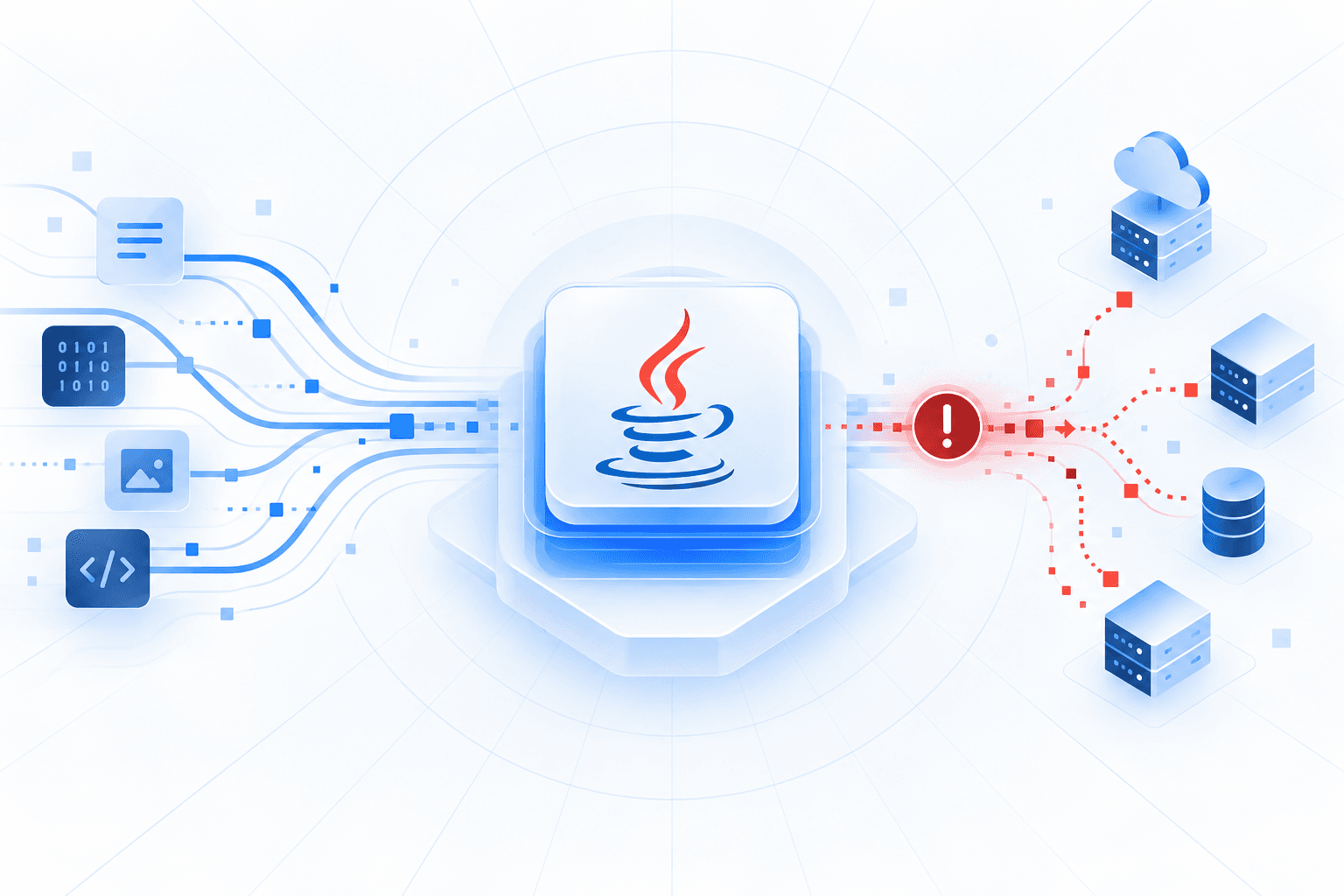
Security researchers report that Java4Shell, tracked as CVE-2026-114938, is a memory-corruption vulnerability in OpenJDK’s hardware-accelerated Base64 decoder that could enable unauthenticated remote code execution. Oligo describes a crafted 65-byte input triggering an integer underflow in padding handling, producing a 62-byte heap buffer overflow that could corrupt adjacent Java objects. Exposure depends on the OpenJDK build, whether the vulnerable AVX-512 decoding path is available and enabled on x86 hardware, and whether attacker-controlled input reaches the decoder. Aikido cites early reports identifying OpenJDK 17 builds from 17.0.6 onward and a CVSS 4.0 score of 9.2, but says Oracle had not confirmed the CVE or technical details as of November 17, 2026.

Neither source provides evidence of exploitation in the wild, and affected-version boundaries and fixed builds remain unconfirmed. Oracle separately announced 11 Java SE patches for remotely exploitable, unauthenticated vulnerabilities across several release lines, but their mapping to individual flaws was unpublished; that announcement does not establish Java4Shell’s scope. Organizations should inventory Java runtimes, including bundled JDKs and container images, identify applications exposing Base64 decoding to untrusted input, and track vendor-specific fixes. Oligo identifies disabling the affected acceleration path or Base64 intrinsics as possible temporary mitigations, subject to vendor guidance and validation; these measures are not substitutes for patching.


Do you run this?See affected versions and whether adversaries are exploiting it.
Check your exposure
Event timeline

How this story unfolded

Events from the most recent confirmed update back to the earliest known activity.

8 events · Jan 2023 – Nov 17, 2026
  1. Reported Nov 17, 202632m ago

    Orca maps Java4Shell decoder across Java versions and processor architectures

    Orca Research found the implicated Base64 intrinsic in JDK 18 and newer mainline releases, including JDK 21, 25, and 27, but not OpenJDK 8 or 11; code presence alone does not establish exploitability. Its analysis identified AVX-512 VBMI as necessary for the specifically reported vulnerable path and noted that ARM hosts use different decoder code and were not known to be affected.

    Java4Shell CVE-2026-114938: Affected Versions & Mitigation| Orca Security
  2. Reported Nov 17, 20265h ago

    Calif claims discovery and reporting of Java4Shell

    Calif claimed it discovered and reported Java4Shell (CVE-2026-114938). Citing a leak of the vulnerability, it also said it was publishing technical details.

    AndreGironda: RT @calif_io: Since the vulnerability has leaked: Calif discovered and reported Java4Shell (CVE-2026-114938). We're pub...
  3. Reported Nov 17, 20266h ago

    Oracle's November update reportedly fixes CVE-2026-114938

    Cyber Kendra reports that Oracle's November update includes a fix for CVE-2026-114938, the reported pre-authentication RCE flaw affecting OpenJDK 17.0.6 and later. The reference does not identify a fixed build or provide Oracle confirmation.

    Dinosn: CVE-2026-114938: Pre-Auth RCE Flaw in Java 17 Puts Servers at Risk https://t.co/u7s4vf6ZTV
  4. Reported Nov 17, 20268h ago

    Oracle pre-announces 11 Java SE security patches

    Oracle's November 2026 Critical Security Patch Update pre-release announcement listed 11 Java SE patches for vulnerabilities potentially exploitable remotely without authentication. The notice covered multiple Java release lines but did not identify individual CVEs or establish which builds were affected specifically by CVE-2026-114938.

    Java 17 RCE (CVE-2026-114938): Affected versions and fix
  5. Nov 17, 202621h ago

    Rapid7 releases authenticated check for CVE-2026-114938

    Rapid7 reported that an authenticated vulnerability check for CVE-2026-114938 is available in its November 17 content release, version 1.1.4115. It cautioned that the reported vulnerability details remained preliminary pending Oracle or OpenJDK confirmation.

    CVE-2026-114938: Reported Critical Pre-authentication Remote Code Execution in Java 17
  6. Reported Nov 17, 202621h ago

    Oligo details Java4Shell's Base64 overflow and potential mitigations

    Oligo described CVE-2026-114938, dubbed Java4Shell, as an integer-underflow flaw in OpenJDK's AVX-512 Base64 decoder, where a crafted 65-byte input reportedly triggers a 62-byte heap buffer overflow. It identified limiting AVX usage or disabling Base64 intrinsics as possible temporary mitigations requiring vendor guidance and validation, without specifying affected or fixed builds.

    Java4shell explained
  7. Nov 16, 20262d ago

    Advisory attributed to South Korea's NCSC flags critical Java vulnerability

    Early reports cite a November 16 advisory attributed to South Korea's National Cyber Security Center describing CVE-2026-114938 as an unauthenticated memory-corruption RCE vulnerability affecting OpenJDK 17.0.6 onward, with a CVSS 4.0 score of 9.2. Oracle had not confirmed the identifier or technical details at the reporting cutoff.

    Java 17 RCE (CVE-2026-114938): Affected versions and fix
  8. Jan 2023

    OpenJDK 17.0.6 ships

    OpenJDK 17.0.6 was released in January 2023. Early reports later identified this as the first affected Java 17 release for CVE-2026-114938, although that scope remained unconfirmed by Oracle.

    Java 17 RCE (CVE-2026-114938): Affected versions and fix
Linked entities

Related entities

Vulnerabilities, threat actors, malware, products, organizations, and breaches Mallory has linked to this story.

Open in app →

Vulnerabilities

1 linked

Affected products

4 linked
Java SeOpenjdkJavaOpenjdk
Do you run this?See whether adversaries are exploiting this yet, and where the affected versions run in your environment.
Check Your Exposure
Mallory platform

See the full picture, correlated to your attack surface.

This page covers what’s public. Mallory adds the parts that aren’t: which of your assets are affected, which threat actors are using it right now, and what to deploy next.

Exposure mappingMap indicators from this story to your assets and identify affected systems in minutes.
Threat actor evidenceEvery observed campaign, victim, and pivot linked to actors named in this story.
Associated malwareMalware, exploits, and IOCs connected to the activity described here.
Detection signaturesYARA, Sigma, and Snort rules deployed to your SIEM as soon as they’re published.
Scheduled alertsGet matching new stories delivered to your team as they break, not the next morning.
AI threadsAsk questions about this story and take action on the answers.