Microsoft 365 AitM Attacks Hijack Sessions as Delayed Logs Complicate Response
Social Engineering & Fraud · 3 sources · Updated 9d ago · First seen Feb 26, 2025
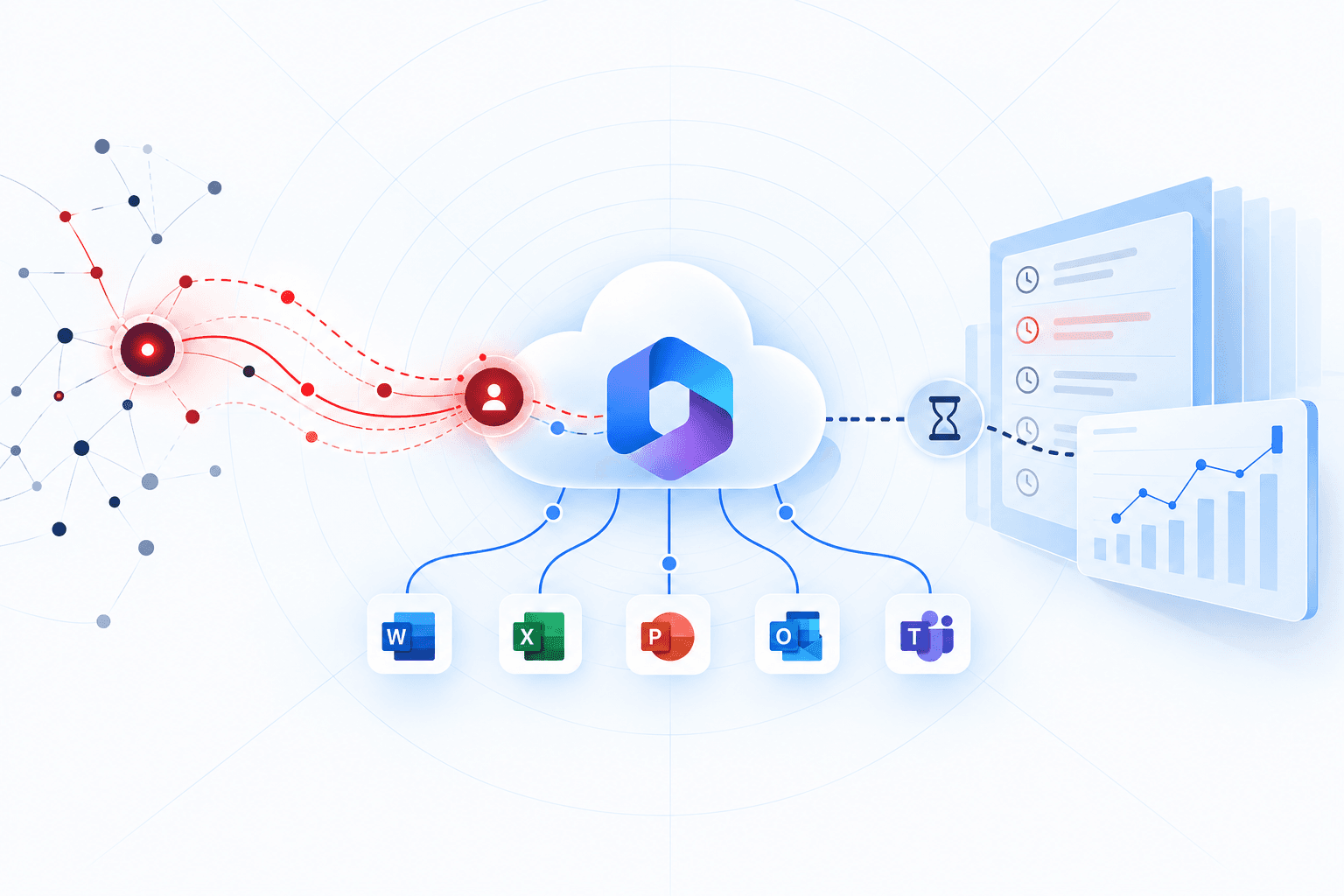
Adversary-in-the-middle (AitM) phishing is enabling rapid Microsoft 365 account takeovers, while delayed authentication logs can leave responders with incomplete evidence. Petra Security documented an attack that used a OneDrive document-sharing lure from a compromised, familiar collaborator to relay a user's password and two-factor authentication code, establishing an attacker session within 10 minutes. Defenders terminated access before any reported damage; the attacker then rotated proxy IP addresses and repeatedly failed to authenticate. In its analysis of a February 25, 2025, attack, Petra found that Microsoft published the successful sign-in roughly six minutes after access began, but the MFA-challenge event arrived about two hours later and an earlier incorrect-password event almost 20 hours later. Petra alerted within two seconds of ingesting the successful sign-in event.
Proofpoint's broader research found that 78% of Microsoft 365 tenants faced at least one HTTP-client-based account takeover attempt in the second half of 2024. Although most brute-force and password-spraying activity had low success rates, a targeted Axios-based AitM campaign stole credentials, MFA tokens, and session tokens, compromising 43% of targeted accounts and affecting more than 51% of targeted organizations between June and November. By comparison, a Node Fetch campaign generated over 13 million login attempts against more than 3,000 organizations but affected only 2% of those targeted. The findings support prioritizing phishing-resistant MFA, promptly revoking compromised sessions, correlating email, authentication, and audit records, and revisiting incident timelines as delayed telemetry arrives.
Why it matters
Microsoft 365 users face account takeover through adversary-in-the-middle (AitM) phishing that relays passwords and MFA codes, while delayed authentication telemetry can impede detection and incident reconstruction. Petra reported stopping one February 2025 intrusion before damage occurred; Proofpoint separately documented campaigns involving mailbox manipulation, data exfiltration, and OAuth persistence, with its targeted Axios campaign compromising 43% of targeted accounts and affecting over 51% of targeted organizations during June–November 2024. These are historical observations, not evidence of a new November 2026 campaign.
- Industry-specific impact: Established through documented targeting of Industrials (transportation and construction), Financials (finance), Information Technology (IT), and Health Care (healthcare). Proofpoint also reported education-sector targeting, including student accounts, but the supplied evidence does not establish institutional ownership needed for a more specific sector-code assignment. These findings describe targeting, not uniform compromise across those industries. Proofpoint
- Geography-specific impact is not established. The references do not identify victim countries; U.S., Russian, and Canadian proxy or hosting locations do not establish affected geographies.
- Scope and severity: Proofpoint reported HTTP-client-based takeover attempts against 78% of Microsoft 365 tenants in its research during the second half of 2024. Its Node Fetch campaign generated over 13 million login attempts across more than 3,000 organizations but impacted only 2% of targeted organizations; these figures should not be conflated with the more successful, targeted Axios campaign. Successful compromise puts mailbox confidentiality, business communications, and financial workflows at risk.