
Eternity0207 GitHub Account Suspended After Transient Malware Pushes Hit Open-Source CI
Supply Chain Risk · 12 sources · Updated 6h ago · First seen Nov 26, 2026
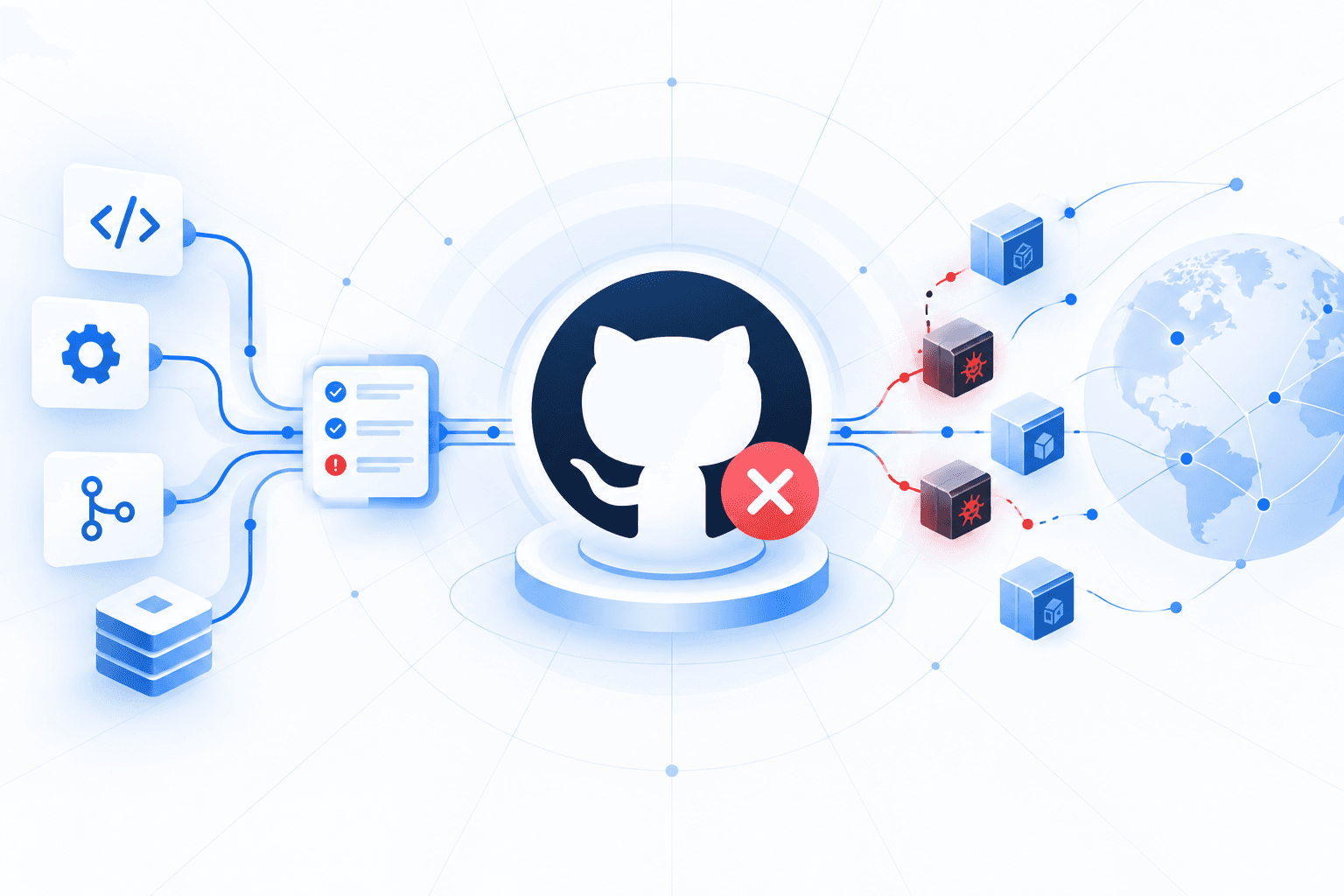
GitHub suspended contributor account Eternity0207 after investigators identified an obfuscated JavaScript loader temporarily inserted into pull-request branches targeting AsyncAPI Generator, CircuitVerse and Open Food Facts. AsyncAPI maintainer Lukasz (derberg) reported that malicious revisions remained visible for roughly 30–40 minutes before force-pushes removed them, leaving clean-looking final diffs. The loader hid code behind extensive whitespace, used Ethereum transactions to discover download servers, and fetched additional code for background execution. AsyncAPI’s approval gate prevented CI execution; CircuitVerse confirmed execution in desktop-build CI. Open Food Facts workflows ran against four malicious revisions, but missing logs prevented confirmation that they reached the malicious build step. CircuitVerse also identified a VS Code task configured to execute a disguised payload when an affected branch was opened.
CircuitVerse deleted 40 associated build artifacts, reported no exposed repository secrets or malicious merges, and completed desktop-workflow hardening on November 26. Open Food Facts rotated a potentially relevant secret despite no apparent exposure. Investigators cataloged 217 pull requests from the account and found no markers of the identified payload in its 145 merged pull requests, but cautioned that the scans could not exclude subtle backdoors. Warnings prompted reviews at Meshery, stdlib, Jaeger, Jitsi Meet and PipeCD; limited checks found no matching malware, while Jitsi’s maintainers reviewed all five merged commits and reported no malicious code on its main branch. These findings do not rule out exposure through local branch checkouts or transient CI execution. Maintainers were urged to review merged changes with codebase context and investigate branch-checkout exposure. GitHub removed the account’s pull requests, but malicious commits remained accessible by SHA; whether the account was originally malicious or later compromised remains unresolved.