Tampered Q-Dir and DesktopOK Installers Distributed Through Official SoftwareOK Website
Supply Chain Risk · 14 sources · Updated 3h ago · First seen Nov 27, 2026
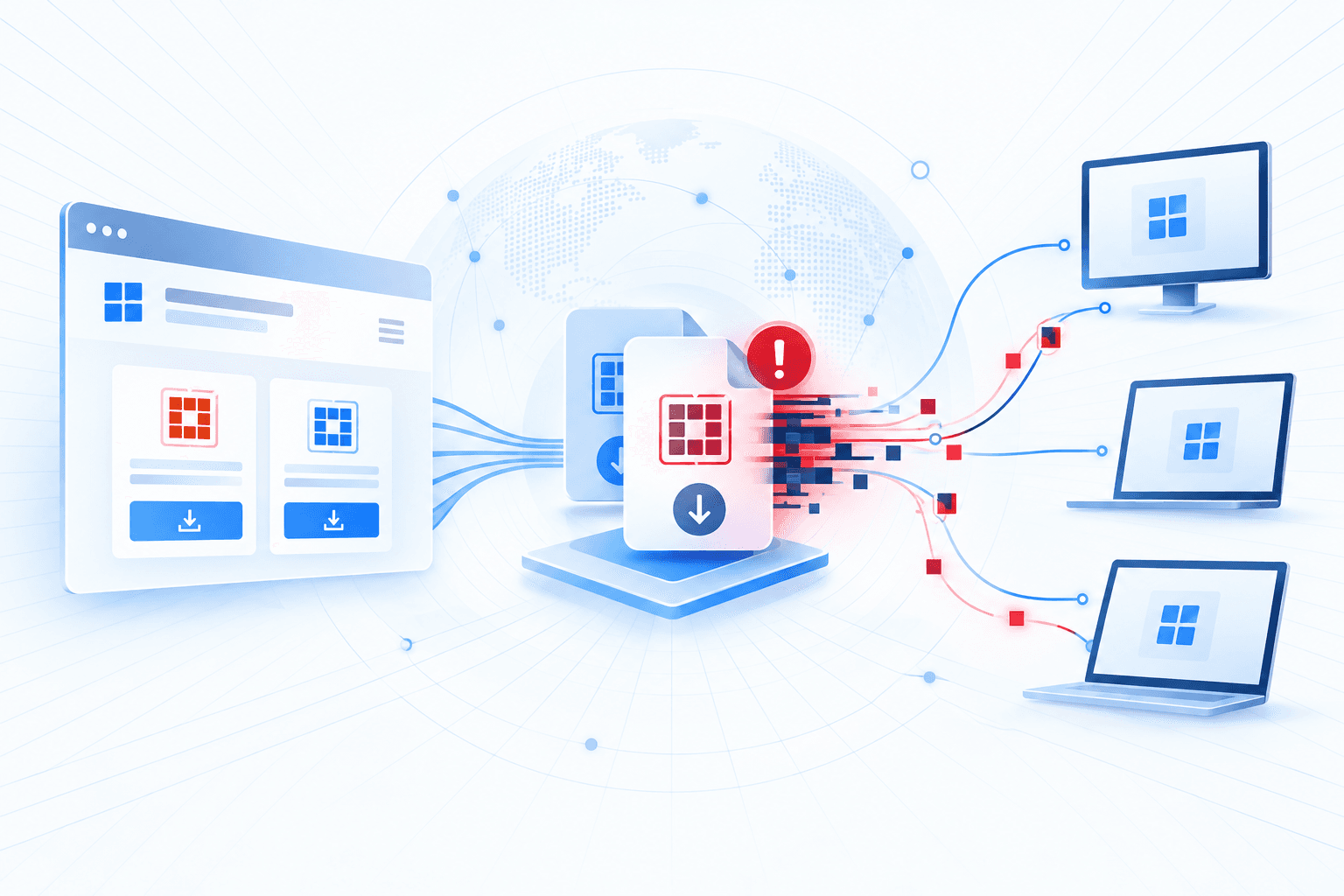
AhnLab Security Intelligence Center (ASEC) confirmed that some Q-Dir and DesktopOK installation files distributed through the official SoftwareOK website had been tampered with to include malicious files. Evidence showed malicious files being generated after direct downloads from the official download page and during software updates, indicating a software supply-chain attack affecting a trusted distribution channel.
The available reporting does not identify the attackers, malicious payloads, affected versions, or remediation measures, leaving the scope and impact unclear. Organizations using Q-Dir or DesktopOK should review recent installations and updates for suspicious activity and seek verified vendor guidance before treating downloads from the official site as safe.
Why it matters
Windows users who installed or updated compromised Q-Dir or DesktopOK packages face persistent remote access, enabling command execution and potential file theft.
ASEC confirmed malicious distribution through official SoftwareOK downloads and updates to previously legitimate installations. The RAT supports file transfers, screenshots, and system reconnaissance, but those capabilities do not establish that data theft or every supported action occurred on individual hosts. Removing the utility may leave the RAT active. Sources, impact limitations
Observed malicious delivery is established, rather than merely theoretical exposure. The number of infected hosts, distribution duration, initial compromise mechanism, and operator identity remain unknown. Not all installers with the confirmed affected version numbers were infected. IT professionals, administrators, and other users of these utilities are potentially exposed; no specific downstream victim organization is identified. Sources, scope
Industry-specific impact is not established. Use by IT professionals does not establish targeting or confirmed impact within the Information Technology sector or any other industry. Source
Geography-specific impact is not established. The malware's list of Korean and international security products and its Chinese-language comments do not demonstrate geographic targeting, affected populations, or attacker nationality. Source