UK Small-Generator Cyber Gaps Exposed as Broader Energy Rules Await 2030
Regulatory & Policy · 2 sources · Updated 16h ago · First seen Sep 1, 2026
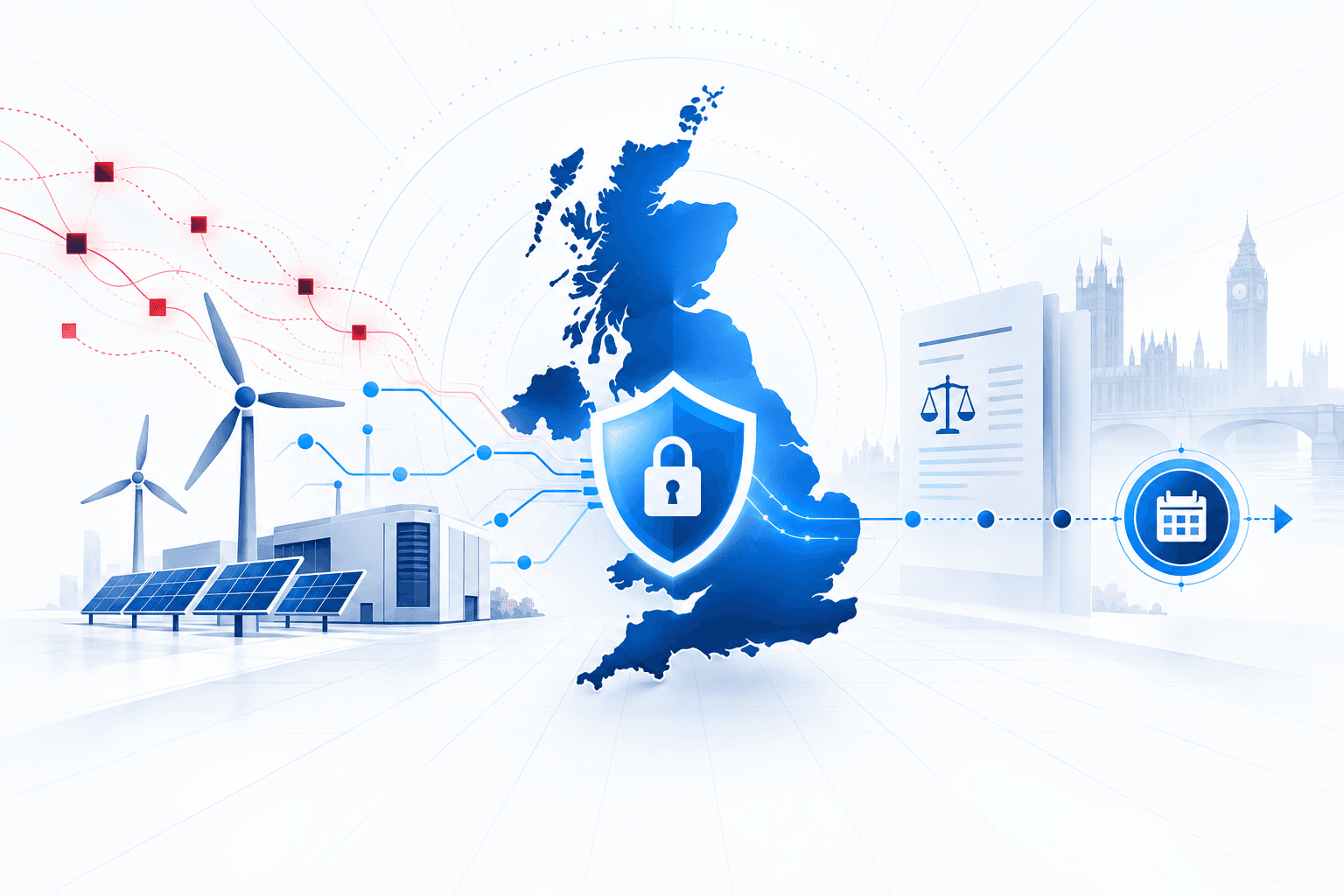
A cyber incident reportedly took a small British gas generator offline for four days in July 2026, highlighting regulatory gaps affecting smaller and distribution-connected power assets. The UK government confirmed the incident and said the wider energy system was never at risk, but has not formally endorsed press attribution to Iranian-aligned actors. IOActive reported that existing Network and Information Systems Regulations generally capture electricity generation at 2GW cumulative capacity and exclude generators not connected to a transmission system, leaving some operators outside those requirements.
DESNZ and Ofgem consulted on baseline cyber requirements for all Ofgem licensees and a possible expansion of regulatory coverage through revised essential-service definitions and designation thresholds. The consultation closed on 22 May, and its government page says feedback is being analysed. IOActive reports that the planned baseline, founded on Cyber Essentials Plus, is targeted for the end of 2030, leaving a multiyear gap; it also warns that the certification currently excludes operational technology and lacks several governance and response controls. Smaller operators should prioritize OT-focused assessments, stronger remote-access security, tested network segmentation and incident-response exercises rather than wait for new obligations.
Why it matters
A small British gas generator reportedly stopped producing power for four days after a July 2026 cyber incident; the UK government confirmed an affected generator but said the wider energy system was never at risk. The incident highlights operational exposure among smaller and distribution-connected generators that may fall outside existing NIS requirements, although the affected operator’s regulatory status is not confirmed. Separate Polish incidents demonstrate potential disruption to distributed generation and associated plant systems, but do not establish a coordinated campaign spanning both countries. IOActive
- Industry-specific impact: Utilities is specifically affected. The reported incidents involved electricity generation, renewable-energy assets and combined heat and power plants; one smaller Polish plant experienced interrupted cogeneration and shutdown of a steam turbine and water treatment system. At another Polish plant serving nearly 500,000 heat customers, generation and heat supply continued, so customer count should not be interpreted as an outage count. IOActive
- Geography-specific impact: The United Kingdom and Poland have reported affected energy operations. The regulatory proposals specifically cover Great Britain—England, Scotland and Wales—not an established UK-wide obligation. IOActive, government consultation
- Scope and attribution: The British incident concerns one unnamed generator; the Polish reporting describes approximately 30 targeted distributed-energy assets in December 2025. Press attribution of the British intrusion to Iranian-aligned actors has not been formally endorsed by the UK government. IOActive