
Loading story…
A new open-source Software Factory Security Framework (SF²), developed by Julie Davila of GitLab, has been introduced to help organizations strategically scale their security operations. The framework emphasizes resource allocation over simply increasing staff and outlines five core security responsibilities for software-producing organizations: supply chain security, process stewardship, runtime protection, third-party risk management, and continuous learning. SF² provides actionable guidance for each area, such as dependency monitoring and pipeline security controls, aiming to improve both security outcomes and business alignment.
Simultaneously, the adoption of Software Bill of Materials (SBOMs) remains a contentious issue in the software industry. While SBOMs are recognized as essential for addressing supply chain security, their practical implementation is hampered by ecosystem complexity and incomplete coverage, especially in open-source projects. Companies like Docker have integrated SBOMs and provenance verification into their container images, but many organizations still struggle to generate comprehensive SBOMs for all software components. Recent updates from CISA have increased requirements for SBOM completeness, highlighting the ongoing challenges and ambivalence within the industry regarding their effectiveness.

See the reporting duties and controls this puts on the clock.
4 events from the most recent confirmed update back to the earliest known activity.
Julie Davila of GitLab developed the open-source Software Factory Security Framework (SF²) to help organizations scale security operations strategically through stewardship, posture assessment, and investment planning.
Docker incorporated complete SBOMs alongside provenance claims meeting SLSA Level 3 in its Docker Hardened Images, signaling a concrete vendor implementation of software supply-chain transparency controls.
The Linux Foundation released an update to the Supply-chain Levels for Software Artifacts framework, identified as SLSA 1.2, as part of broader efforts to strengthen software build-pipeline security.
CISA updated its software bill of materials guidance to require machine-readable formats such as SPDX or CycloneDX, reflecting a push toward more standardized SBOM production and exchange.
See what this changes for your reporting obligations and which controls it puts on the clock.
2 references tracked. Mallory keeps watching after this page renders.
Map indicators from this story to your assets and identify affected systems in minutes.
Every observed campaign, victim, and pivot linked to actors named in this story.
Malware, exploits, and IOCs connected to the activity described here.
YARA, Sigma, and Snort rules deployed to your SIEM as soon as they’re published.
Get matching new stories delivered to your team as they break — not the next morning.
Ask questions about this story and take action on the answers.
Other stories Mallory is tracking that overlap on entities, sources, or topic labels.
Organizations are moving beyond traditional vulnerability management and treating software transparency as a core security requirement, with **Software Bills of Materials (SBOMs)** becoming central to software supply chain defense. Reporting on preparations for the EU **Cyber Resilience Act (CRA)** says manufacturers of products with digital elements will be required to create, maintain, and when necessary provide inventories of software components, driving broader adoption of SBOM tooling and automation. The shift is intended to improve visibility into open-source libraries and third-party dependencies so teams can identify vulnerable packages, assess supplier risk, and respond faster to newly disclosed flaws. Security practitioners are also pushing companies to use SBOMs as an operational tool rather than a compliance document. Group-IB researcher Anastasia Tikhonova said organizations should apply SBOM data continuously for vulnerability triage, vendor access reviews, identity monitoring, and incident response, as modern supply chain attacks increasingly link phishing, ransomware, and data breaches through inherited trust relationships. She warned that attackers’ use of AI is compressing attack timelines from weeks to minutes, increasing the need to prioritize exposed systems, define compromise windows, contain stolen credentials, and score vendor risk by access level and potential blast radius.
Jul 10, 2026
MITRE’s prototype Supply Chain Security System of Trust (SoT) Framework provides an evidence-based, customizable method for evaluating supply-chain risk throughout technology acquisition lifecycles. It covers 14 top-level trust-risk areas, roughly 200 sub-areas, and approximately 2,200 assessment questions, emphasizing supplier due diligence and an organization’s security posture. The framework complements federal software-supply-chain objectives established under Executive Order 14028 and recognizes **software bills of materials (SBOMs)** as a key inventory and vulnerability-management control. SBOMs can help organizations identify exposure to disclosed component flaws such as Log4j, but they do not by themselves detect covert supplier compromises such as SolarWinds, remediate unpatched issues such as Follina, or create immediate breach-notification obligations; organizations need broader supplier-assurance and incident-response controls.
Sep 3, 2026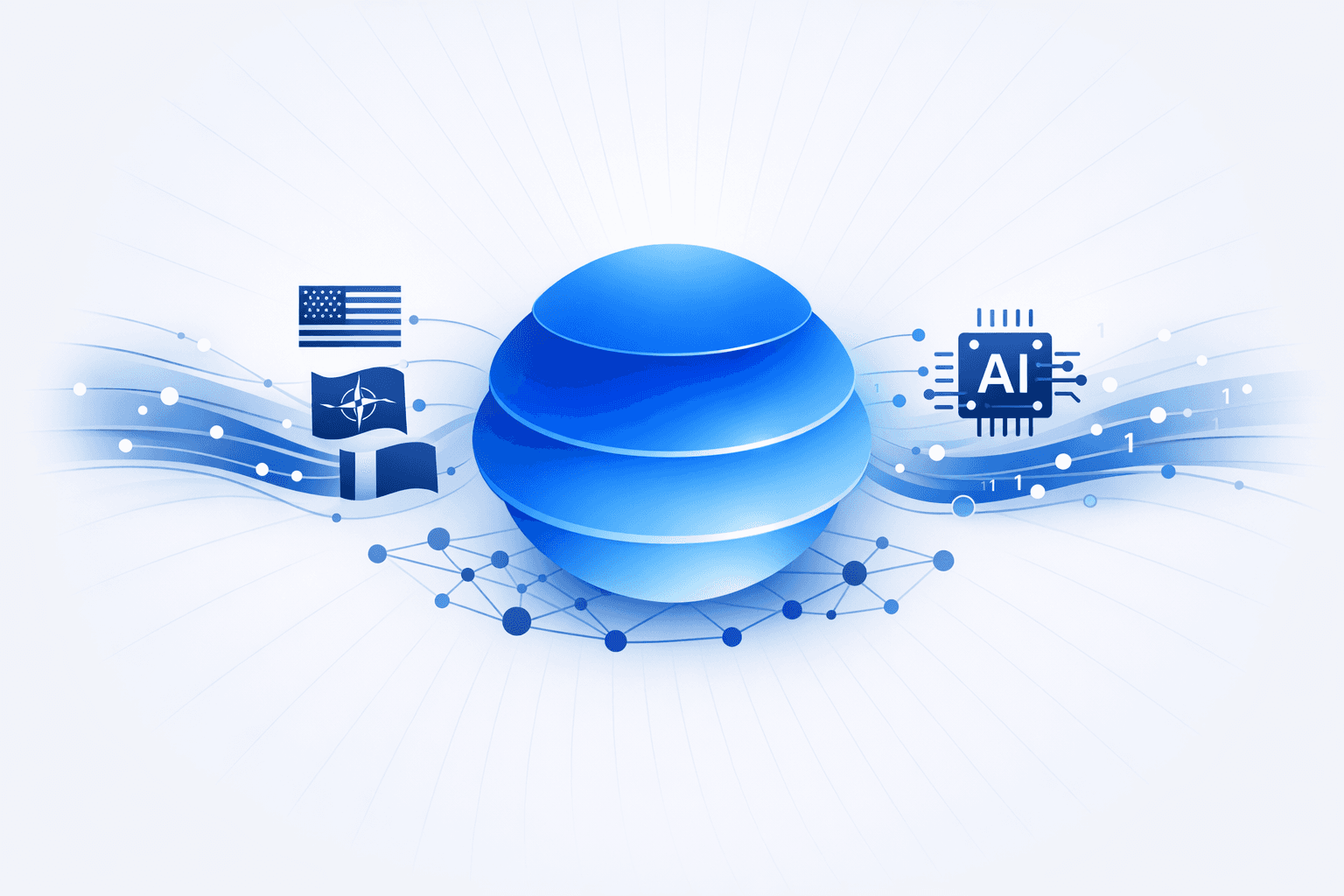
CISA and partner agencies in the United States and 13 allied countries released updated guidance for the minimum elements of a Software Bill of Materials, replacing the 2021 NTIA baseline with broader requirements intended to improve software transparency and supply chain risk management. The revised framework preserves the original core principles but adds fields for component hash information, license data, author or digital signature, SBOM version, data format details, generation context, and tool metadata, while removing elements such as Access Control and SWID Tags. Officials said the changes were shaped by software supply chain security developments and feedback gathered during a 2025 public comment period. The update is designed to make SBOMs more useful for automated vulnerability management and procurement decisions, and it explicitly notes that some software categories need additional treatment beyond the general baseline. In parallel, the G7 Cybersecurity Working Group published guidance on the minimum elements for an AI-focused SBOM, providing actionable recommendations for public- and private-sector stakeholders to improve transparency across the AI supply chain. The combined guidance signals a broader international push to standardize software component disclosure for both conventional software and AI systems, with future work expected on SaaS, AI-specific components, SBOM trustworthiness, and links to formats such as **VEX** and **CSAF**.
Jul 31, 2026