
Loading story…
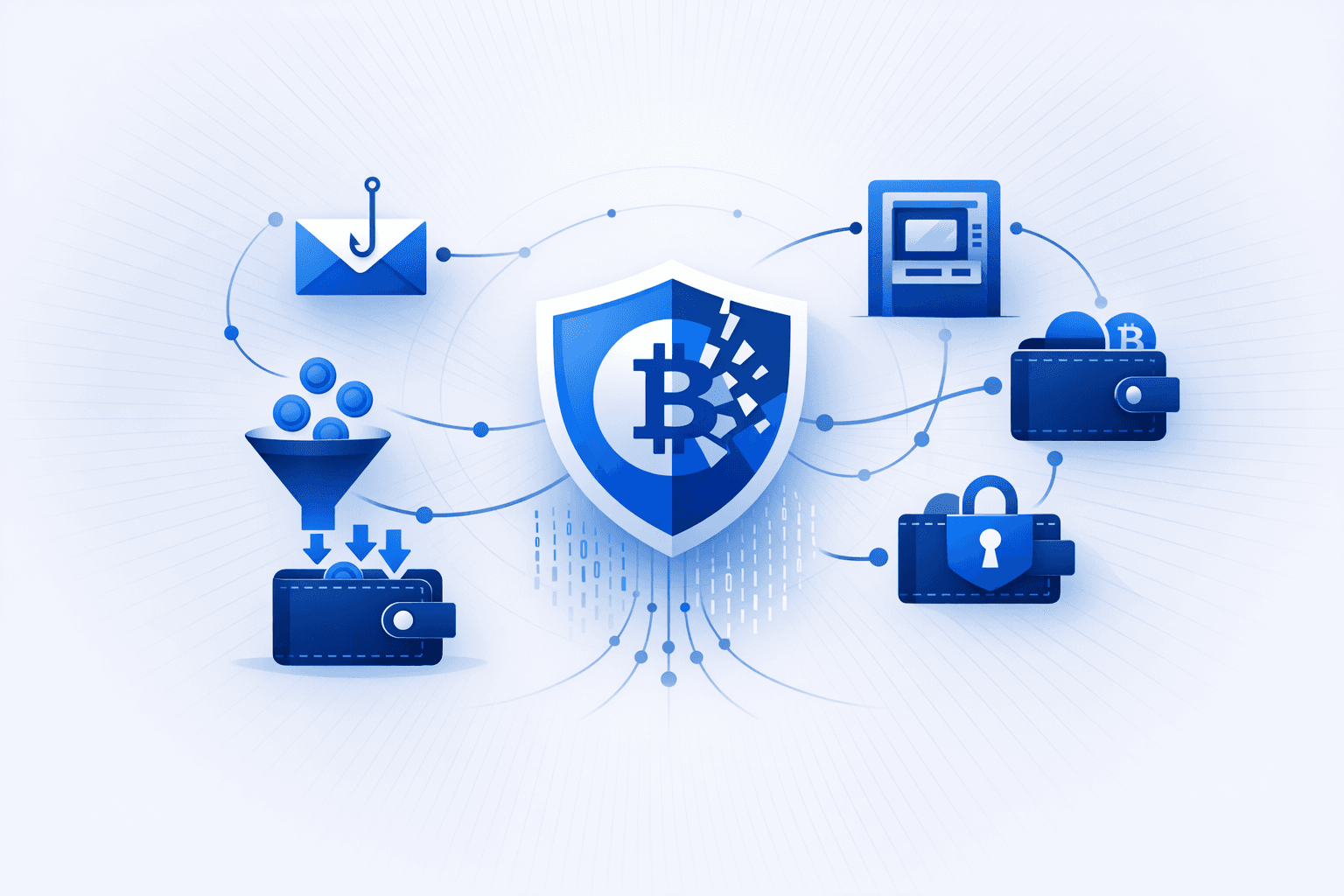
Multiple forms of cryptocurrency-related fraud and theft continue to impact individuals and organizations. Ongoing email and web-based scams promise large Bitcoin payouts, luring victims to fake chatbot sites and requiring them to pay conversion fees to criminal-controlled wallets. These campaigns often abuse platforms like telegra[.]ph and Google Forms to create convincing phishing pages. Meanwhile, the FBI reports a significant and rising trend in Bitcoin ATM fraud, with Americans losing at least $333 million in 2025, and scammers frequently targeting older victims. Law enforcement actions have included lawsuits against ATM providers accused of enabling or profiting from fraudulent transactions.
In addition to direct scams, sophisticated attacks have leveraged previous data breaches to facilitate cryptocurrency theft. Investigations have traced ongoing wallet-draining attacks to the 2022 LastPass breach, where attackers obtained encrypted password vaults containing private keys and seed phrases. Victims with weak master passwords have been especially vulnerable, with stolen funds laundered through Russian exchanges. These incidents highlight the evolving tactics of cybercriminals in exploiting both technical vulnerabilities and social engineering to steal cryptocurrency assets.
Track how attackers are adapting to this technology.
9 events from the most recent confirmed update back to the earliest known activity.
By early 2026, TRM Labs had traced more than $35 million in cryptocurrency thefts to the 2022 LastPass breach, with the U.S. Secret Service corroborating the connection. The analysis found a coordinated laundering operation using CoinJoin and Russian-linked exchanges.
By early 2026, U.S. authorities were pursuing legal and enforcement actions against cryptocurrency ATM providers, including allegations against Athena Bitcoin over undisclosed fees and fraud-heavy transaction volumes. In one case, a sheriff's office recovered $32,000 from a Bitcoin Depot ATM using a warrant.
The FBI said Americans lost at least $333 million to Bitcoin ATM scams in 2025. The agency described the fraud as showing a clear and constant rise and not slowing down.
By at least October 2025, a scam campaign was sending emails promising large cash payouts from supposed Bitcoin holdings. The operation used telegra.ph pages and sometimes Google Forms to funnel victims to fake chatbot-driven payment requests.
U.S. losses from cryptocurrency ATM fraud increased to $247 million in 2024, according to FBI figures cited in reporting. The jump showed the scam type was accelerating rather than declining.
In 2024, the U.S. Treasury's OFAC sanctioned Cryptex, an exchange later identified in reporting as part of the laundering path for cryptocurrency stolen from LastPass victims. This linked the theft campaign to Russian cybercrime infrastructure.
By 2024, attackers were using data stolen in the 2022 LastPass breach to crack weak or reused master passwords offline and steal cryptocurrency from affected users. The stolen funds were laundered through Wasabi Wallet and routed toward Russian-linked exchanges.
The FBI reported that Americans lost $114 million to cryptocurrency ATM scams in 2023. The scams disproportionately targeted older victims and reflected a growing fraud trend.
In 2022, attackers breached LastPass and stole encrypted customer vaults containing sensitive stored data. For some users, those vaults included cryptocurrency wallet private keys and seed phrases.
Vulnerabilities, threat actors, malware, products, organizations, breaches, and observables Mallory has linked to this story. Indicator values are masked here and available in full in the app.
Indicator values are masked on this page. See the values in Mallory Domains, IPs, hashes, and URLs are exportable to your SIEM.
Follow how adversaries are adapting to this technology, and where it touches your stack today.
4 references tracked. Mallory keeps watching after this page renders.
cybersecuritynews.com
Open sourceisc.sans.edu
Open sourcebleepingcomputer.com
Open sourcetomshardware.com
Open sourceMap indicators from this story to your assets and identify affected systems in minutes.
Every observed campaign, victim, and pivot linked to actors named in this story.
Malware, exploits, and IOCs connected to the activity described here.
YARA, Sigma, and Snort rules deployed to your SIEM as soon as they’re published.
Get matching new stories delivered to your team as they break — not the next morning.
Ask questions about this story and take action on the answers.
Other stories Mallory is tracking that overlap on entities, sources, or topic labels.

The FBI has issued a warning about a significant increase in account takeover (ATO) fraud schemes, with cybercriminals impersonating financial institutions to steal money and sensitive information. Since the beginning of the year, over $262 million in losses have been reported from more than 5,100 complaints. Attackers use social engineering tactics—including texts, calls, and emails—to trick victims into revealing login credentials, multi-factor authentication codes, or one-time passcodes. Once access is gained, criminals reset passwords, lock out account owners, and quickly transfer funds, often to cryptocurrency wallets, making recovery difficult. The FBI highlighted that these schemes are becoming more sophisticated, with tactics such as search engine optimization (SEO) poisoning, where fraudulent ads mimic legitimate e-commerce or financial sites to lure victims. The warning comes ahead of the holiday season, a period when such scams typically increase. The agency urges heightened vigilance, especially as cybercriminals exploit fears of fraudulent transactions and use impersonation of both financial institution staff and law enforcement to manipulate victims into providing sensitive account information.
Jun 29, 2026
The FBI’s Internet Crime Complaint Center reported more than **1,008,597** cybercrime complaints in 2025, with cyber-enabled fraud driving **$17.6 billion** in losses and accounting for **85%** of all reported losses. **Investment fraud** caused the most damage at **$8.6 billion**, followed by **business email compromise** at more than **$3 billion** and **tech support fraud** at **$2.1 billion**. Older adults were hit especially hard, with people aged 60 and above filing **201,266** complaints tied to about **$7.7 billion** in losses, while California, Texas, and Florida recorded the highest complaint volumes. Cryptocurrency-related crime was a major driver of the surge, with Americans reporting **$11.4 billion** in crypto scam losses across **181,565** complaints, up **22%** from the prior year. The FBI said many cryptocurrency investment scams are sophisticated, long-running schemes linked to organized criminal enterprises in Southeast Asia that use trafficked people as forced labor. The bureau also warned that ransomware remained a persistent threat, investigating more than **200** ransomware variants, actors, and enablers after identifying **63** new variants; ransomware complaints rose to **3,611** with more than **$32 million** in losses, and attacks affected **14 of 16** U.S. critical infrastructure sectors.
Jun 29, 2026
The FBI said Americans lost more than **$388 million** to scams involving cryptocurrency kiosks in 2025, based on more than **13,400 complaints** filed with the Internet Crime Complaint Center. The bureau said fraudsters commonly instruct victims to withdraw cash, visit a crypto ATM, and transfer funds to attacker-controlled wallets, with complaints rising **23%** and losses increasing **58%** from the prior year. People over 50 accounted for more than half of the complaints and reported over **$302 million** in losses, while Texas, Florida, and California together logged more than **3,300 complaints** and about **$112 million** in estimated losses. The warning comes as regulators and lawmakers intensify scrutiny of the crypto kiosk industry. Minnesota, Indiana, and Tennessee have moved to ban cryptocurrency kiosks statewide, and operators including Bitcoin Depot, CoinFlip, and Athena are facing growing legal and regulatory pressure; Bitcoin Depot has also filed for Chapter 11 bankruptcy, citing state bans and tighter rules. Federal officials said the kiosks are being used in scams including fake investments, tech support fraud, and romance scams, and urged the public to verify payment requests through official channels and avoid sending funds to online-only contacts or unknown parties.
Jun 29, 2026