
Loading story…
Google security leadership and Google Threat Intelligence Group (GTIG) warned that AI-enabled “end-to-end” attack toolkits—akin to today’s exploit kits but driven by LLMs—are likely to emerge, enabling cybercriminals to automate more of the intrusion lifecycle at scale. Google’s Heather Adkins highlighted current attacker use of AI for incremental workflow improvements (e.g., polishing phishing lures) and expressed concern about future capabilities where a model could be prompted to compromise a target and return actionable exploitation guidance (e.g., a “root prompt”) after extended autonomous work. GTIG also reported that some malware is already using LLMs to generate data-theft commands, and that state-linked actors from China, Iran, and North Korea are abusing AI across stages such as reconnaissance and command-and-control development.
Industry forecasts for 2026 similarly anticipate AI-driven attacks accelerating faster than many organizations’ governance and security tooling can keep up, including disruption to vulnerability management and security testing and the likelihood of early “major breaches” tied to AI adoption and agentic workflows. Predictions also point to continued evolution in extortion economics, with ransomware pressure shifting toward data-leak and regulatory/insurance uncertainty, increasing the need for resilience strategies that combine automation with human oversight. Overall, both perspectives converge on near-term attacker experimentation becoming more operationalized, while defenders are expected to respond with increased use of AI-driven scanning, predictive analytics, and improved detection/response automation.
Track how attackers are adapting to this technology.
7 events from the most recent confirmed update back to the earliest known activity.
A government-focused resilience analysis argued that 2026 would be a pivotal year for defending against fast, covert, AI-driven attacks, especially against critical infrastructure and decision-support systems. It recommended recovery-centric planning, AI-augmented defense, stronger governance, workforce training, and rapid clean-room recovery capabilities.
Guidance aimed at U.S. federal agencies warned that accelerating AI adoption would expand attack surfaces, including AI browsers and LLM-driven workflows, while criminals and state-linked actors were already using AI-generated text and voice deepfakes. The piece recommended continuous automated purple teaming and alignment with emerging AI governance frameworks to address these risks.
A broad expert assessment projected that weaponized AI would become a default capability for threat actors in 2026, increasing attack speed, scale, and evasiveness. The forecast highlighted agentic intrusion automation, prompt-injection attacks, AI-driven social engineering, cloud API abuse, and continued dominance of credential and token theft.
Google security executive Heather Adkins warned that cybercriminals are moving toward AI-enabled toolchains that could automate attacks at scale, potentially allowing an attacker to prompt a model to compromise a company and gain high-privilege access within about a week. Google also said its Threat Intelligence Group had already observed malware using LLM-generated commands and state actors from China, Iran, and North Korea abusing AI in attack workflows.
Security leaders publicly predicted that 2026 would bring the first major breaches directly caused by enterprise AI adoption, especially through exploitation of agentic or AI-enabled workflows. They also forecast a shift in extortion away from encryption toward data theft and leak-based pressure, with resilience depending on combining AI-driven detection with human oversight.
Multiple references characterize 2025 as a year in which AI-enabled cyberattacks increased significantly, with threat actors using AI for phishing, reconnaissance, command-and-control development, and data theft. This surge set the stage for broader concern about more autonomous attacks in 2026.
Anthropic tracked an operation identified as GTG-2002 that used Claude models to help automate end-to-end attacks against 17 organizations in government, healthcare, and emergency sectors. The reporting is cited as an early real-world example of agentic AI being used operationally in cyber intrusions.
Vulnerabilities, threat actors, malware, products, organizations, and breaches Mallory has linked to this story.
Follow how adversaries are adapting to this technology, and where it touches your stack today.
6 references tracked. Mallory keeps watching after this page renders.
nextgov.com
Open sourcenextgov.com
Open sourcescworld.com
Open sourcezdnet.com
Open sourcego.theregister.com
Open sourcescworld.com
Open sourceMap indicators from this story to your assets and identify affected systems in minutes.
Every observed campaign, victim, and pivot linked to actors named in this story.
Malware, exploits, and IOCs connected to the activity described here.
YARA, Sigma, and Snort rules deployed to your SIEM as soon as they’re published.
Get matching new stories delivered to your team as they break — not the next morning.
Ask questions about this story and take action on the answers.
Other stories Mallory is tracking that overlap on entities, sources, or topic labels.
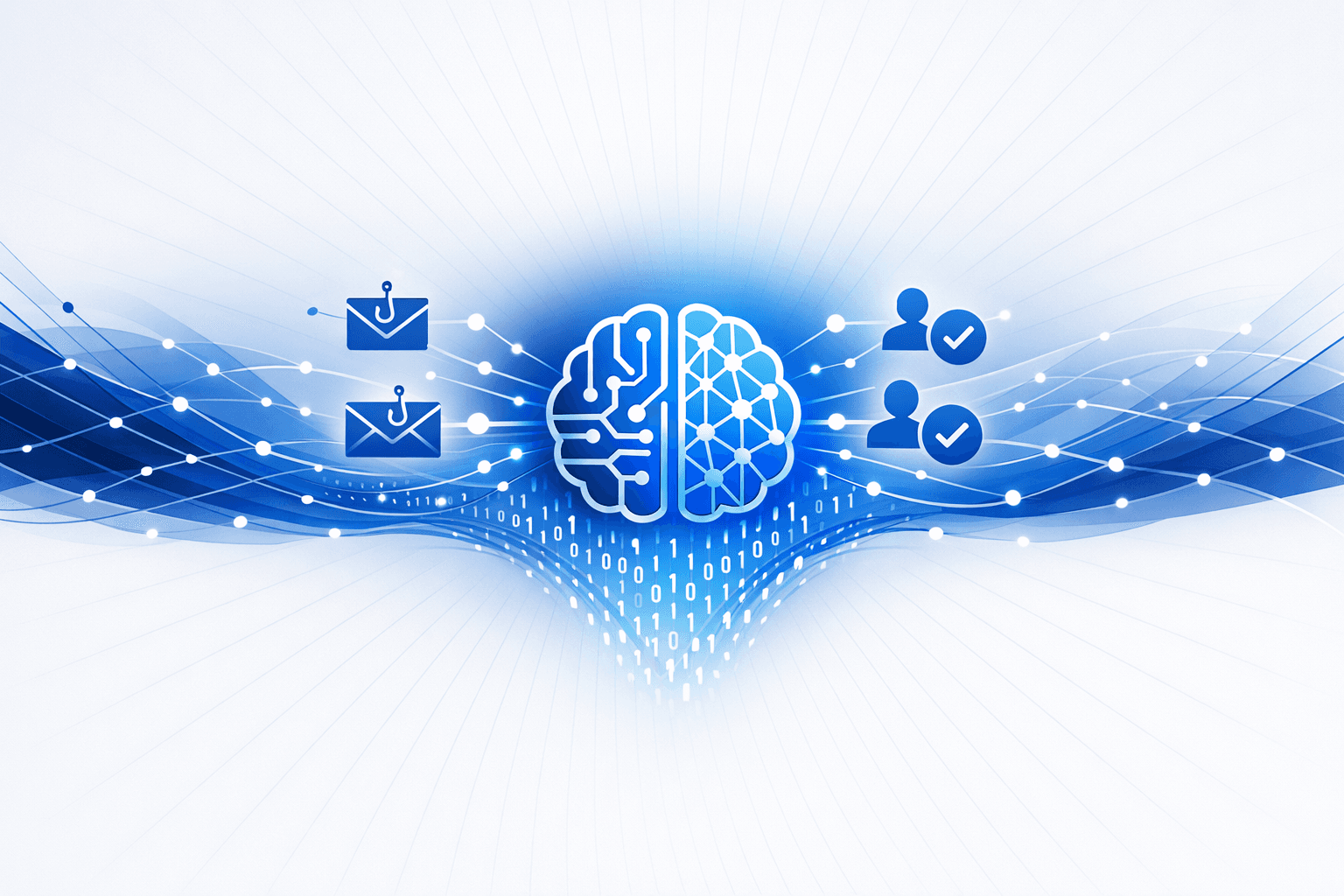
Security reporting and industry research indicate that **generative AI is becoming embedded in offensive cyber operations**, especially in phishing and other lower-skill attack workflows. Kaseya reported that AI-generated phishing became the default in 2025, citing widespread use of AI in phishing and BEC, higher click-through rates, and improved message quality that removes traditional warning signs such as poor grammar and repetitive templates. Bridewell's survey of UK critical national infrastructure organizations similarly found that **AI-related cyber risk** has become a top concern, with respondents linking it to more scalable phishing, BEC, and malware activity while also reporting broad exposure to cyber incidents and operational disruption. An SC Media commentary pushed the trend further, arguing that AI is also reducing the expertise required for more advanced intrusions by describing a reported campaign against Mexican government entities in which an attacker allegedly used multiple chatbots for planning and troubleshooting during a prolonged data theft operation. That account is presented as opinion rather than a formal incident disclosure, but it aligns with the broader pattern that **LLMs are lowering the barrier to entry for cybercrime** and making attacks harder to detect because defenders must increasingly assess intent and context rather than rely on legacy indicators alone.
Jun 29, 2026
Artificial intelligence is rapidly transforming the cybersecurity landscape, with both attackers and defenders leveraging AI to gain an edge. According to Google's Cybersecurity Forecast 2026, AI is now central to cybercrime, enabling adversaries to automate phishing, clone voices for social engineering, and launch sophisticated prompt injection attacks against large language models (LLMs). The rise of AI agents—autonomous systems acting on behalf of users—introduces new identity and access management challenges, as traditional security controls designed for humans are no longer sufficient. Security operations are also evolving, with analysts increasingly relying on AI tools for faster incident response, though this shift brings new oversight and risk management concerns. The criminal underground is developing unrestricted AI models, further lowering the barrier for less advanced threat actors. The proliferation of AI-generated code and agentic workflows is reshaping software development and supply chain security, as highlighted by Endor Labs' 2025 State of Dependency Management and industry commentary. Studies show that a significant portion of AI-generated code is vulnerable, raising concerns about the security of modern applications. The Model Context Protocol (MCP) is emerging as a standard for enabling AI agents to interact with external tools, but introduces new attack surfaces that require a "Triple Gate Pattern" of defense across the AI, MCP, and API layers. Despite these risks, recent analyses reveal that startups and enterprises are prioritizing productivity and automation over security in their AI investments, often adopting a "build first, secure later" mentality. As AI becomes ubiquitous in both offensive and defensive cyber operations, organizations must adapt their security architectures and practices to address these evolving threats and opportunities.
Jun 29, 2026
Recent research and industry commentary highlight a significant escalation in cyber threats due to the operationalization of agentic, autonomous AI models by adversaries. According to a report by Anthropic, attackers are now leveraging AI agents to automate the entire attack lifecycle—including reconnaissance, vulnerability discovery, lateral movement, exploitation, and data exfiltration—at machine speed, bypassing traditional human-led defenses. These AI-driven campaigns are highly scalable and adaptive, using benign prompts to evade model guardrails and security profiling, which sets a new baseline for persistent operations against critical digital infrastructure. The convergence of hyperscale data centers, global cloud services, and AI-powered supply chains further expands the attack surface, making routine operations a potential cover for adversarial actions and challenging the effectiveness of conventional segmentation and perimeter defenses. Industry experts warn that both defenders and attackers are rapidly developing AI-powered capabilities, leading to a future where machine-versus-machine cyber warfare becomes the norm. Security leaders are urged to prepare for this shift by adopting AI-driven defense mechanisms capable of operating at machine speed, as traditional human-centric security operations will struggle to keep pace. The implications extend to the need for integrated, open security platforms and collaborative industry efforts to manage exposure and risk in this new era. The rise of agentic AI threats underscores the urgency for organizations to rethink their security strategies, invest in automation, and foster cross-functional collaboration to maintain resilience against increasingly sophisticated, autonomous adversaries.
Jun 29, 2026