
Loading story…
Match Group confirmed it is investigating a “recently identified security incident” after ShinyHunters claimed to have stolen and leaked data tied to its dating platforms, including Hinge, Match.com, and OkCupid. The actor advertised a dump of roughly 1.7 GB of compressed files and claimed 10+ million records plus internal documents; Match Group said it moved quickly to terminate unauthorized access and is working with external incident response experts while notifying affected individuals as appropriate.
Reporting indicates the intrusion likely stemmed from compromised identity and SaaS access rather than direct compromise of the dating apps themselves. The alleged source of exposure was AppsFlyer (a marketing analytics platform), and one account of the incident attributes initial access to a compromised Okta SSO account that enabled access to AppsFlyer and cloud storage (including Google Drive and Dropbox). Match Group stated there is currently no indication that user login credentials, financial information, or private communications were accessed, while third-party review of samples reportedly suggested the dataset includes personal customer data, some employee details, and internal corporate material.

See attribution, scope, and your downstream exposure.
5 events from the most recent confirmed update back to the earliest known activity.
By January 30, 2026, Bumble disclosed a separate cybersecurity incident after ShinyHunters claimed to have stolen data from the company. Bumble said a contractor account was phished, causing brief unauthorized access to a small part of its network, but stated its member database, user accounts, messages, profiles, and app content were not impacted.
Researchers reviewing samples tied to the leak reported that the stolen data included personal customer information, employee details, internal corporate material, and Hinge subscription and match-related records such as transaction IDs, payment amounts, IP addresses, and location data. Additional files reportedly included OkCupid debugging data, employee emails, and documents linked to other Match properties.
By January 29, 2026, Match Group said it was investigating a recently identified security incident, had terminated the unauthorized access, and was working with external cybersecurity experts. The company said only a limited amount of user data appeared affected, with no indication that login credentials, financial information, or private communications were accessed, and it began notifying impacted individuals as appropriate.
On January 28, 2026, ShinyHunters claimed on its dark web leak site that it had stolen more than 10 million records tied to Match Group services including Hinge, Match.com, and OkCupid. The listing alleged the exposed data originated through AppsFlyer and included internal documents alongside user-related records.
Reports indicate the intrusion affecting Match Group may have started as early as mid-January 2026, when ShinyHunters allegedly used a vishing campaign to compromise an Okta single sign-on account. The access reportedly enabled entry to AppsFlyer and cloud storage services including Google Drive and Dropbox.
Vulnerabilities, threat actors, malware, products, organizations, breaches, and observables Mallory has linked to this story. Indicator values are masked here and available in full in the app.
Indicator values are masked on this page. See the values in Mallory Domains, IPs, hashes, and URLs are exportable to your SIEM.
See attribution, scope, and whether this vendor sits anywhere in your supply chain.
6 references tracked. Mallory keeps watching after this page renders.
malwarebytes.com
Open sourcetherecord.media
Open sourceupguard.com
Open sourcescworld.com
Open sourcebleepingcomputer.com
Open sourcego.theregister.com
Open sourceMap indicators from this story to your assets and identify affected systems in minutes.
Every observed campaign, victim, and pivot linked to actors named in this story.
Malware, exploits, and IOCs connected to the activity described here.
YARA, Sigma, and Snort rules deployed to your SIEM as soon as they’re published.
Get matching new stories delivered to your team as they break — not the next morning.
Ask questions about this story and take action on the answers.
Other stories Mallory is tracking that overlap on entities, sources, or topic labels.

ShinyHunters has published a broad trove of allegedly stolen data affecting more than 40 organizations across retail, healthcare, hospitality, insurance, and consumer services, with reporting tying the leak campaign to victims including **Bumble**, **Match Group**, **Mytheresa**, **Zara**, **Carnival**, and **7-Eleven**. Researchers said the exposed material includes personally identifiable information, customer and transaction records, internal corporate files, and multi-terabyte datasets; one of the largest alleged exposures involved **Medtronic**, where roughly **9 million records** were reportedly listed before that entry was later removed from the leak site. The campaign reflects ShinyHunters' continued shift from ransomware-style encryption to **data theft and extortion**, with the group allegedly threatening to keep victim data available indefinitely on criminal platforms. Separate reports said the actors claimed to have stolen about **10 million records** from dating-app companies, while researchers also linked leaked **Bumble** data to the same operation after an earlier claim that roughly **30GB** had been taken from the company. The disclosures echo a wider criminal pattern in which stolen sensitive data is leaked to pressure victims after exfiltration, including in healthcare breaches such as the Change Healthcare incident.
Jun 29, 2026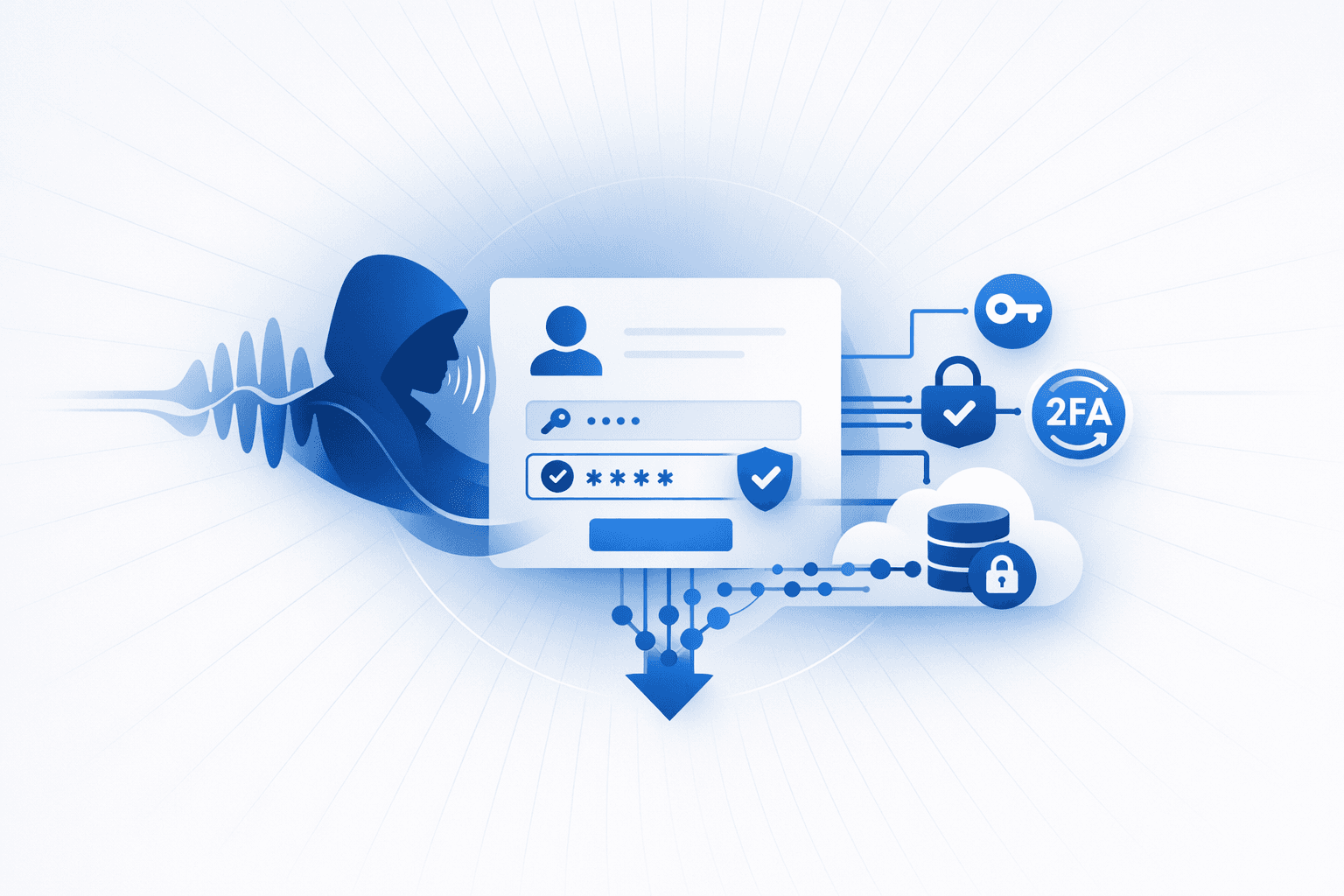
**ShinyHunters** has been linked to a wave of SaaS-focused data-theft and extortion activity enabled by targeted **voice phishing (vishing)** and company-branded phishing portals designed to capture **SSO credentials** and **MFA codes**. Mandiant reported that attackers impersonate IT/helpdesk staff, direct employees to realistic login pages, and use real-time interaction (including guiding victims to approve push prompts or provide one-time codes) to authenticate and then **enroll attacker-controlled devices into MFA**. After account takeover, the actor pivots through **Okta, Microsoft Entra, or Google** SSO dashboards to rapidly access downstream SaaS services (e.g., *Salesforce*, *Microsoft 365/SharePoint*, *DocuSign*, *Slack*, *Atlassian*, *Dropbox*, *Google Drive*), turning a single compromised identity into broad cloud data access. Separately, **Bumble** reported a phishing-driven compromise of a **contractor account**, after which ShinyHunters allegedly claimed theft of ~**30 GB** of data—reported as largely internal files sourced from **Google Drive** and **Slack**—while Bumble stated there was no evidence of exposure of user chats or profiles. Reporting also tied ShinyHunters to other claimed or alleged thefts affecting consumer and enterprise brands (including Match Group properties such as *Hinge*, *Match*, and *OkCupid*), consistent with the broader pattern of leveraging compromised identities and SaaS access paths for data exfiltration and extortion leverage.
Jun 29, 2026
The **ShinyHunters** extortion group claimed responsibility for a recent **Okta SSO voice-phishing (vishing)** campaign used to steal authentication codes and access victim environments. The group told reporters and researchers it used vishing to obtain Okta single-sign-on codes to compromise **Crunchbase** and **Betterment**, and then published alleged stolen data after the organizations reportedly rejected extortion demands; ShinyHunters also said additional victims exist and that more disclosures are forthcoming. ShinyHunters published alleged datasets for **Crunchbase, Betterment, and SoundCloud** on a newly launched leak site, asserting the dumps contain **PII** and large record counts (reported as **>20 million** for Betterment, **~2 million** for Crunchbase, and **~30+ million** for SoundCloud). **SoundCloud** stated it is aware of data published online allegedly taken from its organization and said its security team, supported by third-party experts, is reviewing the claim and the posted data; ShinyHunters asserted SoundCloud access was *not* obtained via SoundCloud’s Okta credentials. SoundCloud had previously confirmed a breach affecting roughly **20% of users** (about **28 million** based on public user counts), while Crunchbase and Betterment had not publicly responded at the time of reporting.
Jun 29, 2026