
Loading story…
Athanasios Rantos, Advocate General at the Court of Justice of the European Union (CJEU), issued an opinion indicating that under the EU Payment Services Directive (PSD2, 2015/2366) banks should immediately refund customers for unauthorized transactions resulting from phishing, unless the bank has reasonable grounds to suspect customer fraud (which should be communicated in writing to the competent national authority). The opinion stems from a request for a preliminary ruling by a Polish court in a dispute involving PKO Bank Polski (PKO BP S.A.) and a customer who entered credentials into a spoofed login page after receiving a malicious link from a scammer posing as a buyer on an online auction platform.
In the underlying case, the victim reported the unauthorized payment the next day (including to police), the perpetrators were not identified, and the bank refused reimbursement—prompting the customer to sue. Rantos’ view supports a “refund now, sue later” approach: banks may still attempt to recover funds from the customer after refunding if they can prove the customer acted with gross negligence or intent. While the CJEU often follows Advocate General opinions, it is not guaranteed; if adopted, the position could materially change how phishing-loss reimbursement is handled in Poland and more broadly across Europe.

See the reporting duties and controls this puts on the clock.
8 events from the most recent confirmed update back to the earliest known activity.
On or before March 8, 2026, Advocate General Athanasios Rantos issued a formal opinion that banks must immediately refund unauthorized transactions caused by phishing unless they have reasonable grounds to suspect customer fraud. He said alleged gross negligence cannot justify delaying the initial refund, and banks must instead refund first and pursue recovery later if they can prove intentional misconduct or gross negligence.
In April 2025, Spain's Supreme Court held that banks must prove customer negligence or fraud to avoid covering phishing-related losses. The ruling was cited as a significant national development in the broader European debate over refund liability.
The European Banking Authority reported in 2025 that victims absorb about 85% of annual losses from fraudulent credit transfers, which totaled roughly €2.2 billion in 2024. The report linked this outcome in part to divergent national interpretations of authorization and gross negligence.
PSD2 entered into force in early 2018, establishing the EU framework governing payment service providers' obligations for unauthorized transactions. The later Polish dispute and Advocate General opinion center on how these PSD2 refund rules should be interpreted.
The District Court in Koszalin referred the Polish phishing-refund case to the Court of Justice of the European Union for clarification on interpreting PSD2 and its Polish transposition. The referral reflected broader uncertainty over whether banks can delay refunds by alleging gross negligence.
Following the bank's refusal to reimburse the stolen funds, the customer brought legal action against PKO Bank Polski. The case raised questions about whether banks may withhold immediate refunds based on alleged customer negligence.
After the unauthorized payment was reported, PKO Bank Polski declined to refund the customer, arguing negligence on her part. The refusal became the basis for subsequent litigation over PSD2 reimbursement obligations.
A customer in Poland was tricked through spoofed auction-platform and bank websites into disclosing banking credentials, enabling an unauthorized transfer of 3,000 Polish zlotys. She reported the incident to the bank and police the next day.
Vulnerabilities, threat actors, malware, products, organizations, and breaches Mallory has linked to this story.
See what this changes for your reporting obligations and which controls it puts on the clock.
5 references tracked. Mallory keeps watching after this page renders.
scworld.com
Open sourcego.theregister.com
Open sourcegovinfosecurity.com
Open sourcebankinfosecurity.com
Open sourcebleepingcomputer.com
Open sourceMap indicators from this story to your assets and identify affected systems in minutes.
Every observed campaign, victim, and pivot linked to actors named in this story.
Malware, exploits, and IOCs connected to the activity described here.
YARA, Sigma, and Snort rules deployed to your SIEM as soon as they’re published.
Get matching new stories delivered to your team as they break — not the next morning.
Ask questions about this story and take action on the answers.
Other stories Mallory is tracking that overlap on entities, sources, or topic labels.
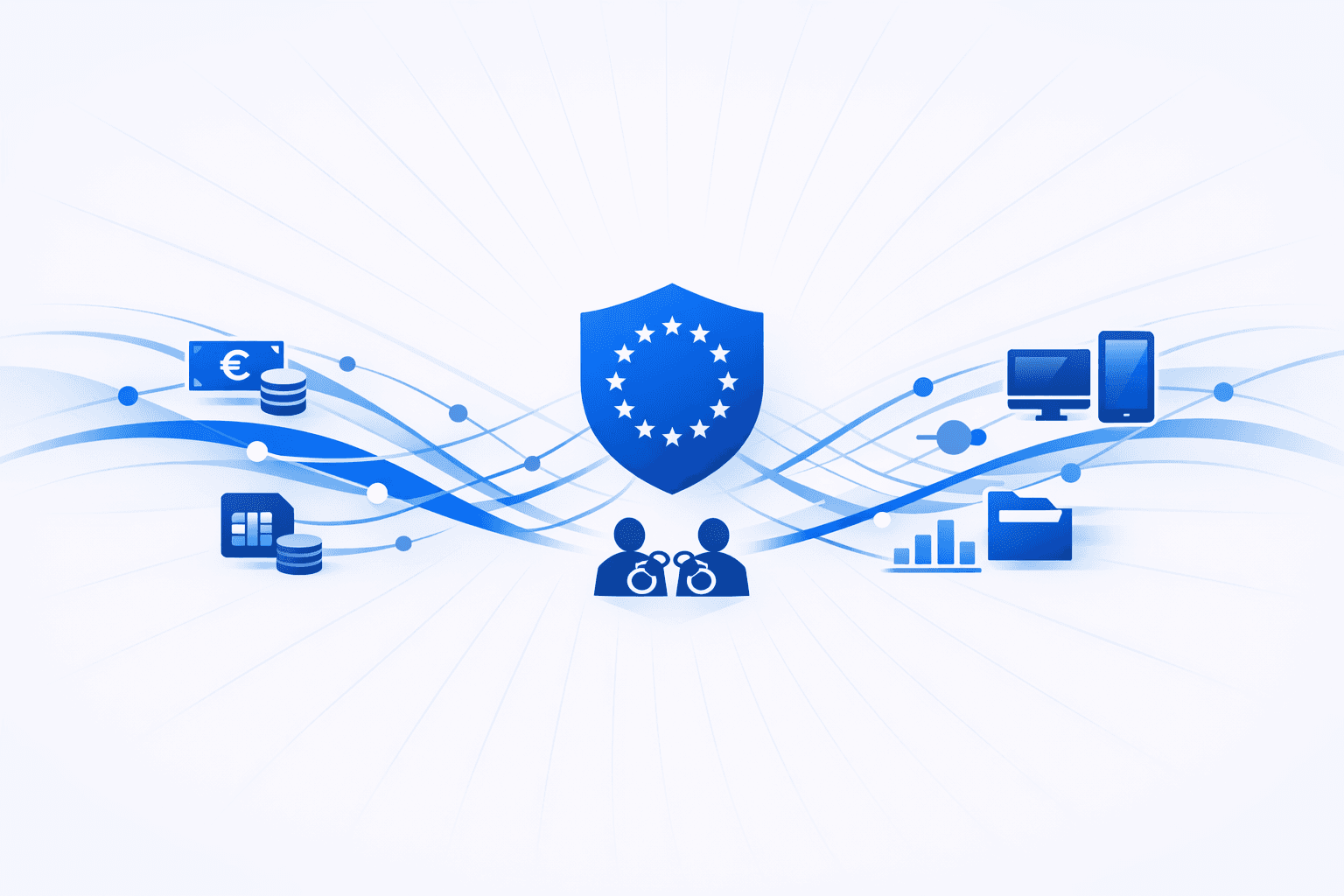
European law enforcement reported multiple cyber-enabled fraud disruptions, including a Eurojust-supported operation that dismantled a **fraudulent call-centre network** operating from three offices in Dnipro. Authorities from Latvia, Lithuania, and Ukraine arrested **11 suspects**, seized **more than €400,000** in cash, and collected electronic evidence (computers, SIM cards, documents) during searches at **32 locations**. The group allegedly ran a fake cryptocurrency investment platform and used **remote access software** to gain access to victims’ online banking and move funds to accounts and crypto wallets under their control. Separately, Poland’s Central Bureau for Combating Cybercrime (CBZC) dismantled an organized group operating in Poland and Germany that used **phishing** to hijack Facebook accounts and extract **BLIK** payment codes. Investigators identified **11 group members**, placed **six** in pretrial detention, and seized **over 100,000** stolen Facebook credentials; prosecutors filed **400+ charges** including unauthorized access, online fraud, and money laundering. A South Korean case involving the breach of Seoul’s bike-hire service *Ttareungyi* (4.62 million users affected) is a distinct incident and not part of the European takedown actions described above.
Jun 29, 2026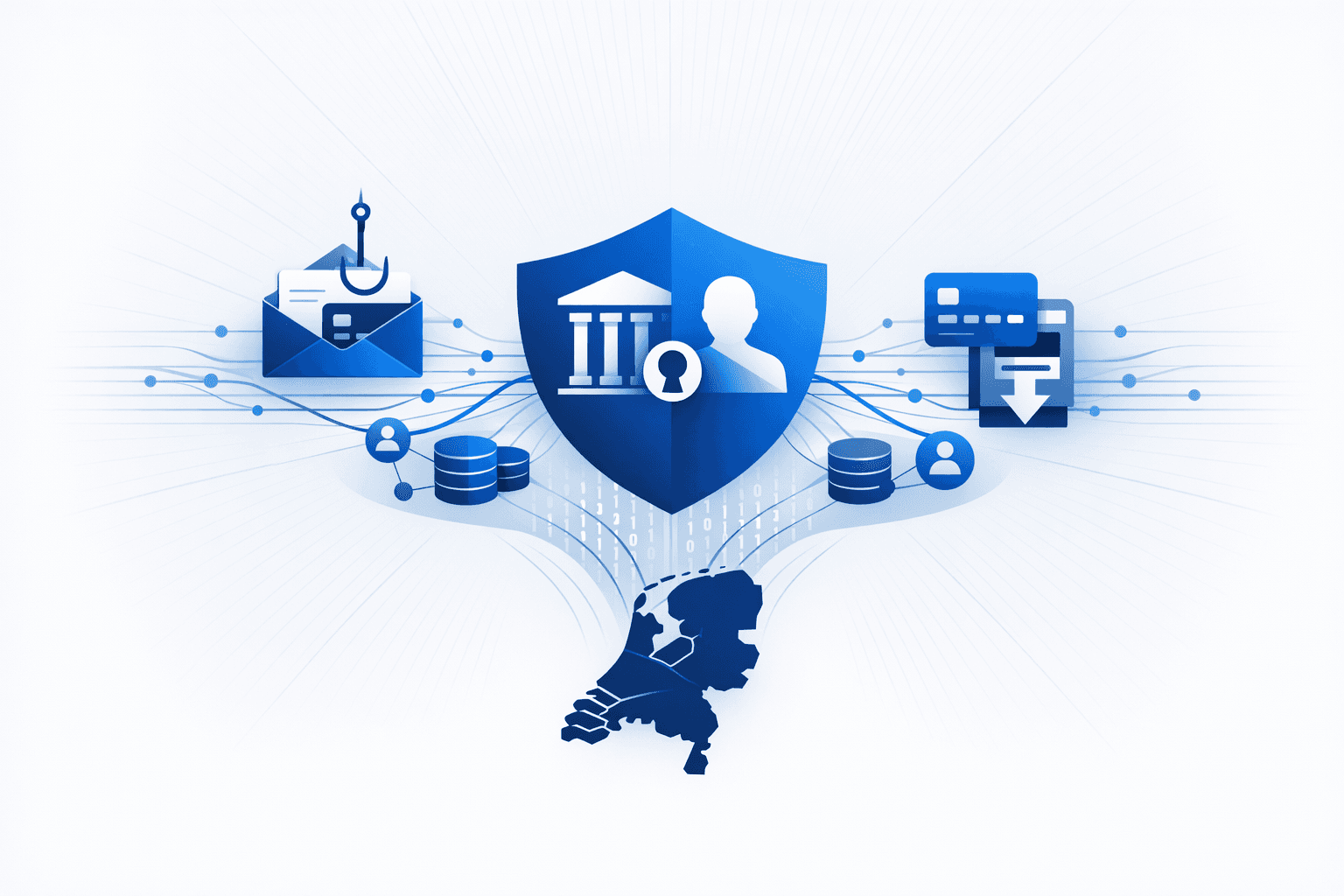
Dutch authorities reported two separate but related forms of **financial cyber-enabled fraud**. In one case, three Dutch men in their twenties were sentenced to prison terms of three to seven years for running a large-scale phishing and **bank helpdesk fraud** operation that stole hundreds of thousands of euros. Prosecutors said the group used stolen victim data, phishing emails, fake banking sites, follow-up phone calls, cash-out teams at ATMs, mule accounts, and card collection teams to drain accounts, with the lead suspect allegedly coordinating around 100 callers and operating from luxury apartments in Rotterdam. In a separate Dutch court case, a 34-year-old Amsterdam man was prosecuted for allegedly helping open dozens of **ABN AMRO** bank accounts in other peoples’ names by bypassing facial verification during remote onboarding. According to the court and prosecutors, the scheme involved replacing ID document photos with the suspect’s image and altering selfies so they matched the victim documents closely enough to defeat the bank’s face-scan checks. The activity was detected by the bank in spring 2025, and investigators reportedly found victim IDs and linked email accounts on the suspect’s phone, indicating a deliberate effort to abuse digital identity verification for account creation and likely downstream fraud.
Jun 29, 2026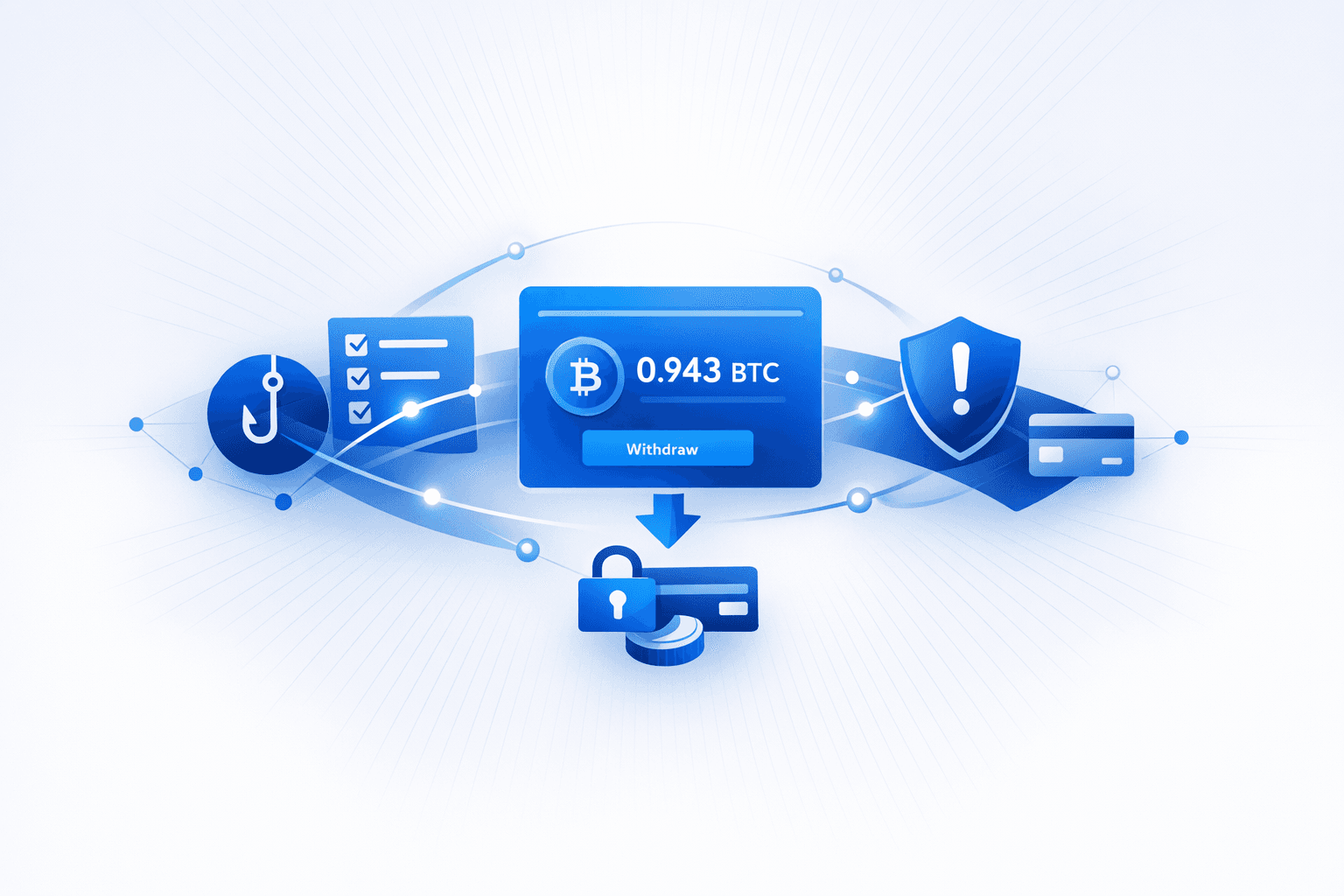
Multiple reports describe **social-engineering scams** that impersonate trusted brands and payment providers to drive victims into credential theft or direct monetary loss. A “crypto compensation” lure abuses a legitimate-looking *Yandex* poll as an entry point, then redirects victims to a fake Bitcoin payout page claiming an approved `0.943 BTC` transaction and imposes a small “commission”/fee to withdraw funds—classic advance-fee fraud wrapped in a polished, multi-step funnel (including a fake chat “support agent”). Separately, Japanese-language phishing emails impersonating **ANA**, **DHL**, and **myTOKYOGAS** show consistent infrastructure patterns (notably `.cn` domains in sender and landing-page URLs), suggesting a single operator or shared kit targeting Japanese-speaking recipients. Several consumer scam advisories highlight **SMS-based fraud alerts** that push targets to call attacker-controlled phone numbers, where scammers pose as “support” to steal **Apple ID/2FA codes** or payment details, or to coerce victims into moving money. One PayPal-themed case escalated to cash withdrawals handed to a courier after a victim called a number from an unsolicited text, illustrating how “fraud department” pretexts can transition from phishing to **cash-out theft**. Additional warnings cover lookalike payment sites (e.g., `payyourbill.aps medical.com`) and generic guidance on what to do after clicking a phishing link; these are broadly consistent with the same theme (phishing/payment fraud) but are not tied to a single, specific campaign or actor across all items.
Jul 2, 2026