
Loading story…
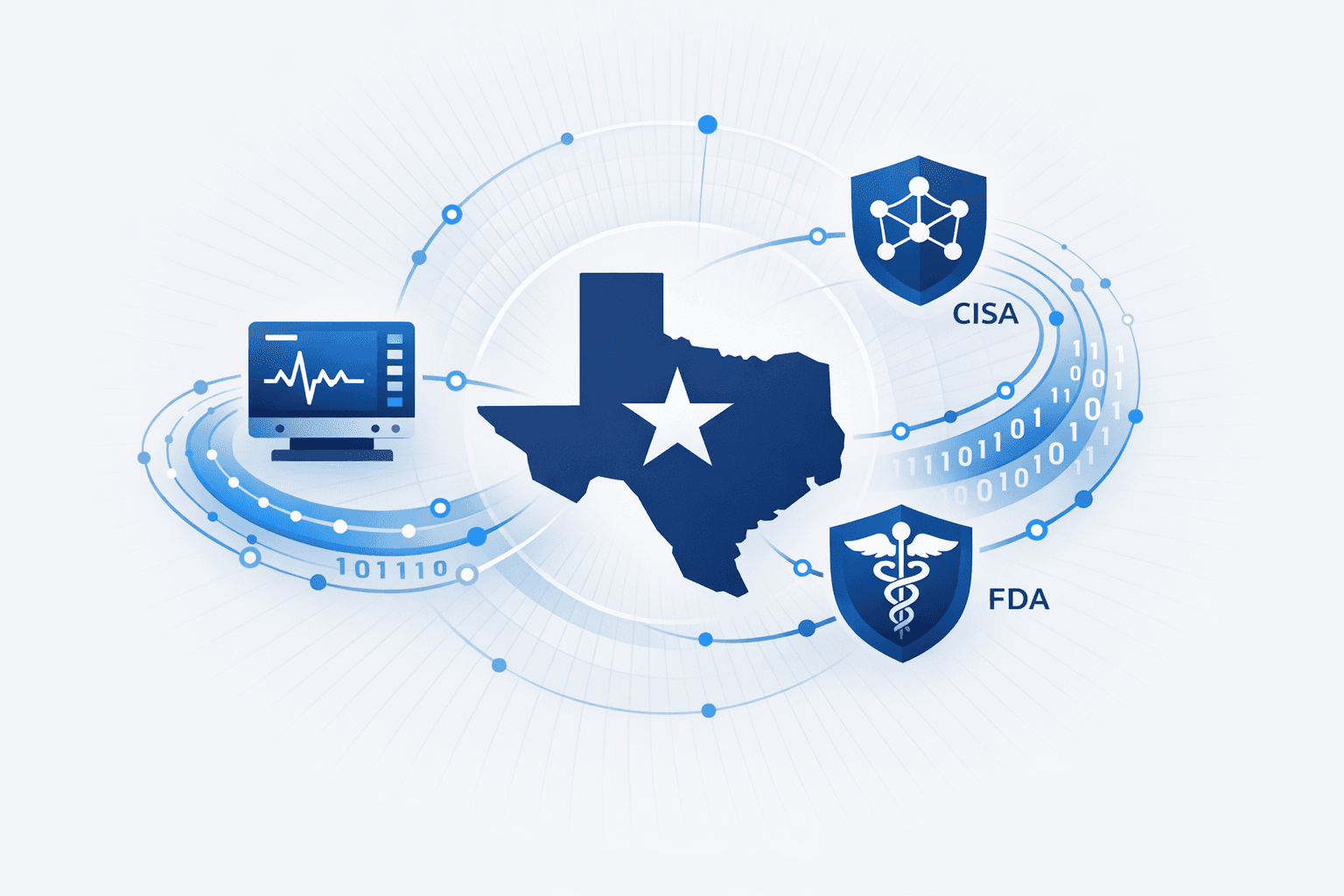
Texas Gov. Greg Abbott directed state agencies and state-owned medical facilities to audit and inventory patient monitoring devices—particularly Chinese-manufactured equipment—after CISA and the FDA issued federal warnings about cybersecurity risks that could expose sensitive patient data. The directive calls for reviewing equipment used across state-owned facilities and cataloging any medical devices capable of transmitting data, with an emphasis on reassessing cybersecurity policies protecting personal health information (PHI).
Abbott’s letter also instructed agencies and Texas public higher-education systems to ensure new device purchases comply with Texas restrictions on technology from adversarial nations, citing the state’s 2014 policy framework and the more recent executive order GA-48. The communications highlighted specific concern about patient monitors alleged to contain a remote-access backdoor, and reiterated existing prohibitions on certain models, including Contec CMS8000 and Epsimed MN-120, alongside an intent to pursue additional legislation to strengthen protections for Texans’ medical data.
See the actors and campaigns active against you right now.
7 events from the most recent confirmed update back to the earliest known activity.
Abbott's directive set an expected compliance date of April 17 for agencies to complete required review and procurement checks. He also said he would propose legislation in the next session to strengthen protections for Texans' medical data from China and other foreign adversaries.
Governor Greg Abbott directed Texas state agencies, state-owned medical facilities, and higher education institutions to inventory network-capable or remotely accessible medical devices and review cybersecurity policies for protecting health information. The order specifically focused on Contec CMS8000 and Epsimed MN-120 monitors and called for affected devices to be assessed for prohibition under state policy.
Federal warnings from CISA and the FDA identified vulnerabilities and an alleged hidden backdoor in Contec CMS8000 and Epsimed MN-120 patient monitoring devices. The alerts said the flaws could allow remote access, device manipulation, and exfiltration of patient information.
The FDA said Contec had issued patches for vulnerabilities affecting the Contec CMS8000 patient monitor line. These vulnerabilities were tied to concerns about unauthorized access and exposure of sensitive patient data.
The FDA warned that Contec CMS8000 and relabeled Epsimed MN-120 patient monitors contained serious cybersecurity vulnerabilities, including unauthorized remote control, a built-in backdoor, and exfiltration of patient data when connected to the internet. The agency said it was not aware of related injuries or deaths at the time and advised users to disable network connectivity or stop using devices that depend on remote monitoring.
Claroty Team82 analyzed Contec CMS8000 firmware and concluded its communications with Chinese IP addresses were more likely due to insecure design than a deliberately hidden backdoor. The researchers also demonstrated a proof of concept that abused the hardcoded update mechanism to install malicious binaries and gain arbitrary code execution with a reverse shell on the monitor.
Texas Executive Order GA-48 took effect restricting the acquisition or use of certain technology produced by adversarial nations, including China. Later state medical-device review directives explicitly required agencies to ensure procurement compliance with this order.
See the adversaries and campaigns active against your sector right now, ranked by what they're exploiting.
8 references tracked. Mallory keeps watching after this page renders.
bankinfosecurity.com
Open sourcegovinfosecurity.com
Open sourcescworld.com
Open sourcehipaajournal.com
Open sourcegov.texas.gov
Open sourcefda.gov
Open sourceclaroty.com
Open sourcecisa.gov
Open sourceMap indicators from this story to your assets and identify affected systems in minutes.
Every observed campaign, victim, and pivot linked to actors named in this story.
Malware, exploits, and IOCs connected to the activity described here.
YARA, Sigma, and Snort rules deployed to your SIEM as soon as they’re published.
Get matching new stories delivered to your team as they break — not the next morning.
Ask questions about this story and take action on the answers.
Other stories Mallory is tracking that overlap on entities, sources, or topic labels.

Forescout reported that Chinese-manufactured connected devices continued to expand across U.S. enterprise networks despite federal restrictions and long-running national security concerns. Its analysis found nearly **300,000** such devices from **473 Chinese manufacturers** in U.S. networks in February 2024, accounting for **3.8%** of observed devices and marking a **41% year-over-year increase**. The growth was especially notable in critical sectors including **healthcare, manufacturing, government, utilities, and financial services**. The report said banned products, including **Hikvision** and **Dahua** cameras, remained present even in government environments, while many Chinese-made devices were directly exposed to the internet. Forescout identified hundreds of exposed Hikvision and Dahua systems across dozens of small U.S. utilities and warned that such devices could provide opportunities for **espionage, disruption, and initial access**. The findings also pointed to prior exploitation of Hikvision vulnerabilities and the use of IoT devices by Chinese APT actors in operations targeting critical infrastructure.
Aug 14, 2026
The Texas Attorney General has filed lawsuits against five leading smart TV manufacturers—Samsung, LG, Sony, Hisense, and TCL—alleging that their devices unlawfully collect and transmit users' personal data without consent. The lawsuits claim that these companies use Automated Content Recognition (ACR) technology to capture screenshots of what users are watching every 500 milliseconds, monitor viewing activity in real time, and send this information back to company servers. The data is then allegedly sold for targeted advertising purposes, raising significant privacy concerns, especially regarding sensitive information such as passwords and banking details that could be exposed. Texas is seeking damages under the Texas Deceptive Trade Practices Act, including up to $10,000 per violation and higher penalties for violations affecting seniors. The state also wants restraining orders to halt the collection, sharing, and selling of ACR data while the lawsuits proceed. Additional concerns have been raised about the potential for Chinese companies Hisense and TCL to be compelled to share U.S. consumer data with the Chinese government under China's National Security Law. The lawsuits emphasize that the collection of ACR data for advertising does not meet a consumer-necessity standard and constitutes an invasive breach of privacy.
Jun 29, 2026
The U.S. Food and Drug Administration issued a **Class 2 recall** for certain **GE HealthCare Centricity Universal Viewer** medical imaging products after identifying a cybersecurity vulnerability that could expose user login credentials on a local client workstation. The flaw could allow an unauthorized person to manipulate data or affect system availability, although GE said exploitation requires **direct physical access** to the affected workstation and that no unauthorized access to patient data has been reported. GE HealthCare said the issue was discovered during routine testing and that customers were notified through an urgent medical device correction letter. While the company prepares a permanent fix, it has advised healthcare organizations to maintain appropriate workstation security controls and use **Active Directory-based network account authentication**. GE said it will remediate all affected products at **no cost**.
Jun 29, 2026