
Loading story…
Researchers reported a stealthy malware campaign targeting enterprise administrators, DevOps engineers, and security analysts by impersonating trusted administrative and developer utilities in malicious MSI installers. The operation used SEO poisoning to push victims toward spoofed tool listings and a dual-stage GitHub distribution chain in which benign-looking facade repositories redirected users to secondary repositories hosting the real payload, enabling operators to rotate malware quickly while preserving search credibility. At least 44 GitHub facade repositories spoofing IT tools were observed between December 2025 and early April 2026.
The payload, EtherRAT, is a multi-stage Node.js remote access trojan that downloads Node.js at runtime, establishes registry-based persistence, and executes through conhost.exe with a --headless argument to reduce visibility. Researchers said the malware uses layered AES-256-CBC encryption and retrieves its live command-and-control endpoint through public Ethereum RPC services and a hardcoded smart contract, effectively using the blockchain as a dead-drop resolver that complicates domain and IP takedowns. Reporting linked the campaign to prior EtherRAT and EtherHiding activity and said the tradecraft overlaps with malware previously associated with Lazarus Group, while also noting code similarities to Tsundere, a malware family tied in other research to MuddyWater (APT34).

Pull IOCs and campaign context straight into your stack.
8 events from the most recent confirmed update back to the earliest known activity.
LevelBlue SpiderLabs reported that threat actors were distributing a trojanized Windows Tftpd64 utility from a spoofed GitHub repository to infect IT administrators and network professionals with a more sophisticated EtherRAT variant. The updated malware was described as combining host compromise with cryptocurrency theft, using bundled Node.js components, persistence via Windows Run keys, system reconnaissance, and interaction with Ethereum RPC endpoints and wallet addresses.
The Hacker News summarized Atos Threat Research Center's analysis, highlighting EtherRAT's Node.js-based multi-stage design, AES-256-CBC encryption, registry persistence, and blockchain-based dead-drop C2 resolution via Ethereum smart contracts. The report brought broader public attention to the campaign's technical details and resilience mechanisms.
In early April 2026, public threat research described the stealthy spoofed-tool campaign distributing EtherRAT and assessed it as suspected to be linked to a DPRK APT. The reporting also noted prior visibility from KISA and KrCERT/CC and referenced overlaps with previously attributed malware and infrastructure.
In April 2026, DFIR Report described an intrusion that began when a user ran a malicious MSI posing as Sysinternals RAMMap, installing an EtherRAT variant that resolved C2 via Ethereum infrastructure. The actor then deployed TukTuk, conducted credential theft and lateral movement, exfiltrated data with Rclone to Wasabi, and ultimately pushed The Gentlemen ransomware domain-wide via a malicious GPO.
By April 1, 2026, Atos had identified 44 GitHub facade repositories tied to the EtherRAT distribution effort. The finding showed sustained and organized abuse of GitHub to distribute the malware at scale.
The malware operation continued through March 2026, using SEO poisoning and a dual-stage GitHub distribution model to deliver EtherRAT while allowing operators to rotate payload repositories without losing search visibility. The campaign targeted high-privilege enterprise users with spoofed administrative tools.
Atos observed the campaign using GitHub facade repositories impersonating trusted administrative and developer utilities starting in December 2025. These repositories were used to lure enterprise administrators, DevOps engineers, and security analysts into downloading malicious MSI installers.
Atos reported that the EtherRAT distribution campaign had deployed at least 17 GitHub facade repositories starting in December 2024. The finding pushes the known start of the operation back a full year earlier than previously captured and shows the campaign had been active well before its 2026 public reporting.
Vulnerabilities, threat actors, malware, products, organizations, breaches, and observables Mallory has linked to this story. Indicator values are masked here and available in full in the app.
Indicator values are masked on this page. View all 34 in Mallory Domains, IPs, hashes, and URLs are exportable to your SIEM.
Pull the IOCs, campaigns, and victimology behind this family, ready to push into your SIEM and EDR.
6 references tracked. Mallory keeps watching after this page renders.
thedfirreport.com
Open sourcescworld.com
Open sourcecybersecuritynews.com
Open sourcethehackernews.com
Open sourcecybersecuritynews.com
Open sourcemedium.com
Open sourceMap indicators from this story to your assets and identify affected systems in minutes.
Every observed campaign, victim, and pivot linked to actors named in this story.
Malware, exploits, and IOCs connected to the activity described here.
YARA, Sigma, and Snort rules deployed to your SIEM as soon as they’re published.
Get matching new stories delivered to your team as they break — not the next morning.
Ask questions about this story and take action on the answers.
Other stories Mallory is tracking that overlap on entities, sources, or topic labels.
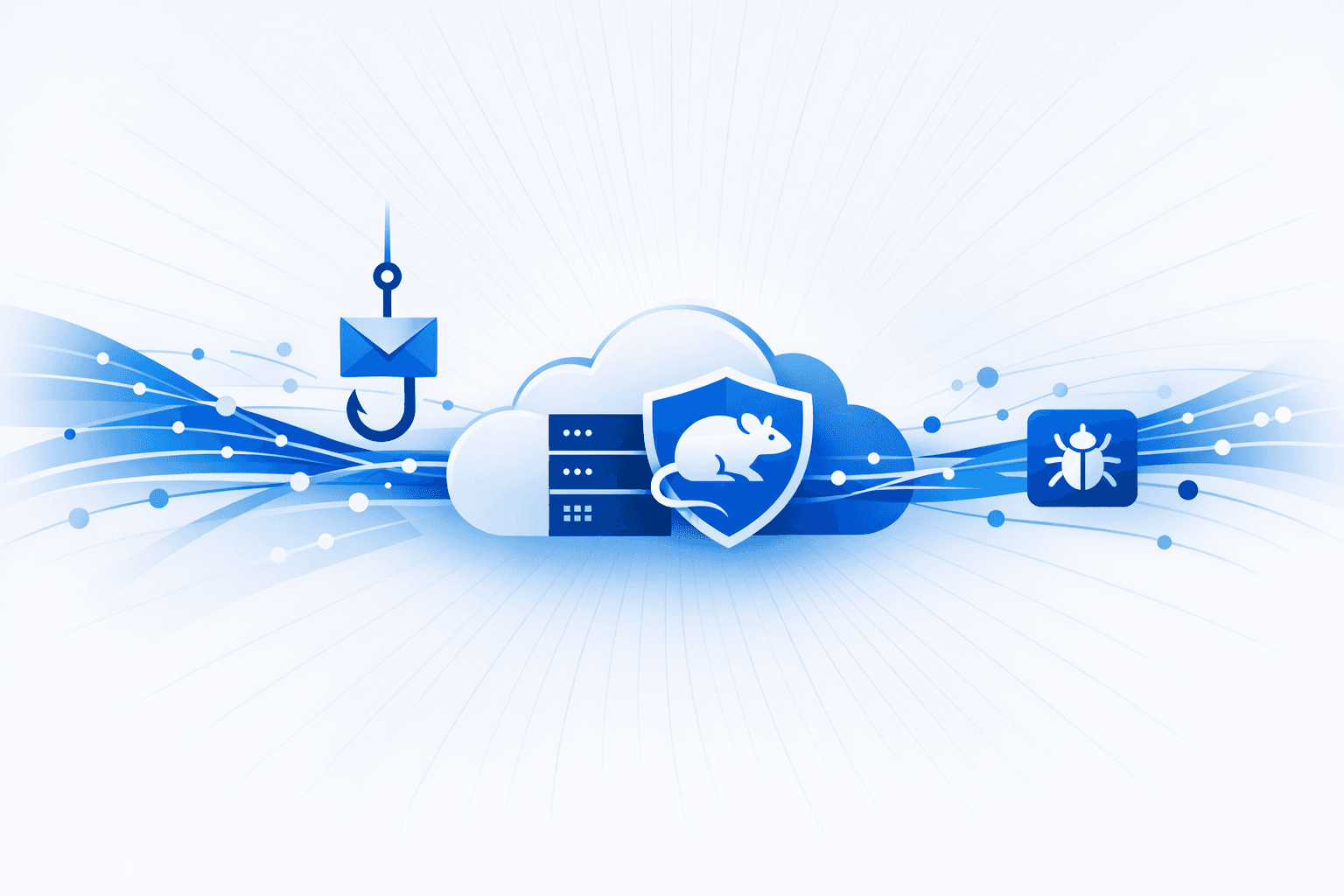
Researchers uncovered a malicious infrastructure distributing **EtherRAT**, a Node.js remote access trojan delivered through exposed open directories alongside phishing pages, malicious documents, remote desktop software, and other malware. EtherRAT can execute arbitrary JavaScript received from its command-and-control servers and uses the **Ethereum blockchain** to retrieve active C2 information, a design that helps the operators maintain access even if parts of the infrastructure are taken down. Analysis of the MSI and PowerShell delivery chains showed the malware installing or reusing Node.js, decrypting staged payloads, establishing persistence, and launching the final RAT via `conhost.exe`. Investigators also observed post-compromise reconnaissance activity and found misconfigured directories exposing phishing kit components, themed landing pages, and URL cloaker source code, indicating the same ecosystem was supporting both credential phishing and malware delivery, potentially for multiple actors or campaigns.
Jun 29, 2026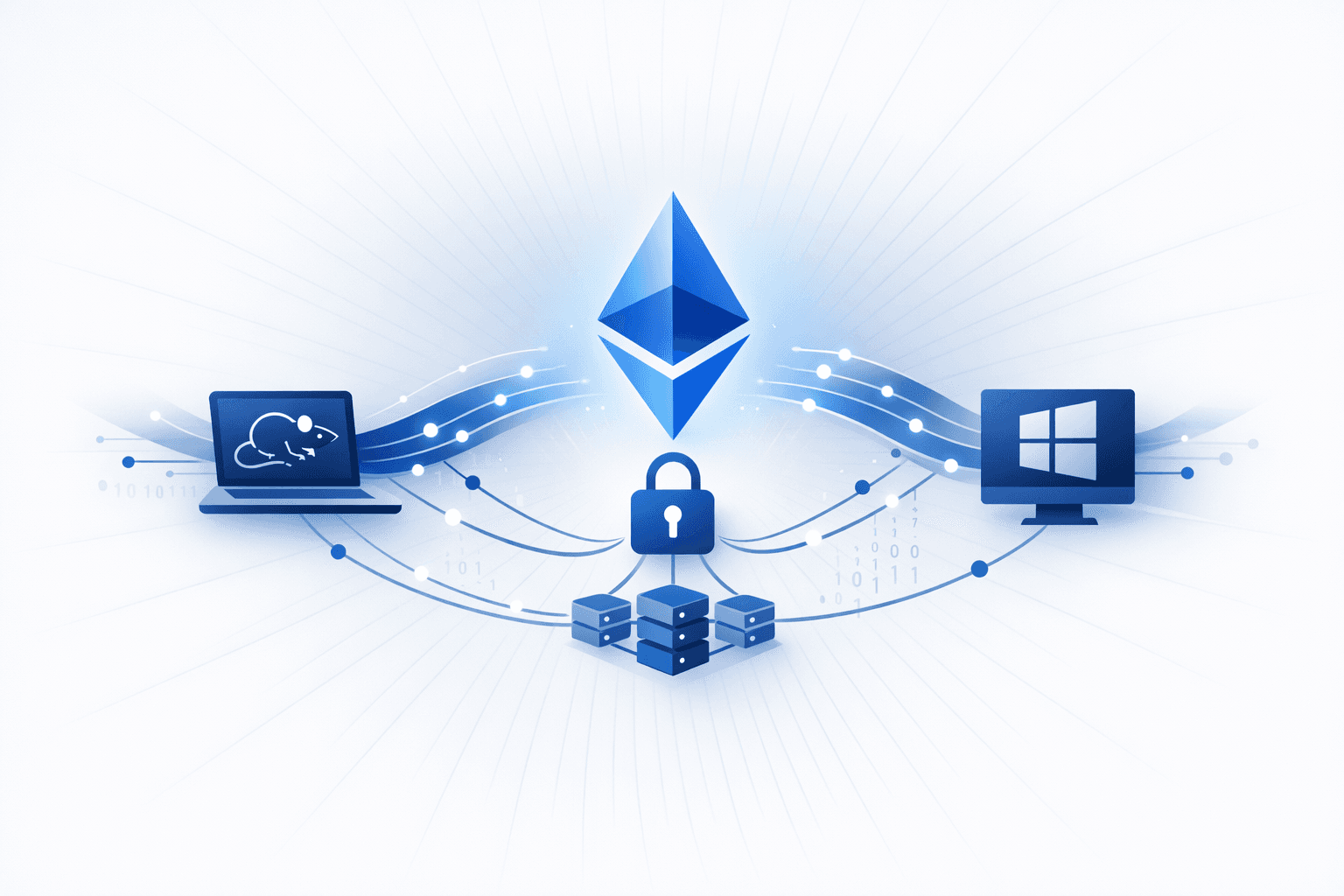
Researchers linked a **The Gentlemen** ransomware affiliate to a Windows domain intrusion in which operators deployed **EtherRAT**, a Node.js-based implant that retrieves command-and-control infrastructure from an **Ethereum smart contract** and can execute arbitrary JavaScript returned by its server. The activity was reconstructed from an exposed open directory on `193.233.202[.]17`, which captured tooling for persistence, credential theft, lateral movement, and remote access. Investigators said the intrusion used a broad post-exploitation stack including **Sliver**, custom Go reverse shells, **Chisel**, **Ligolo-ng**, **Mimikatz**, and **Potato** privilege-escalation tools, indicating preparation for domain-wide ransomware operations. The operators reportedly used LOLBAS techniques to spread the malware across Windows systems, including `certutil.exe` to fetch an MSI package and `msiexec.exe` to install it silently through remote scheduled tasks. Persistence included scheduled tasks and a `Run` key named **WindowsHost**, while defenders were also given indicators such as **ESET** service tampering, an unusual `X-Bot-Server` HTTP header in EtherRAT polling traffic, and specific filesystem artifacts. Infrastructure analysis connected the staging server to additional controllers at `146.103.127[.]44` and `77.110.126[.]46`, plus a related EtherRAT node at `77.110.122[.]58` using the same Ethereum contract, strengthening attribution to The Gentlemen and providing detection opportunities for defenders.
Aug 5, 2026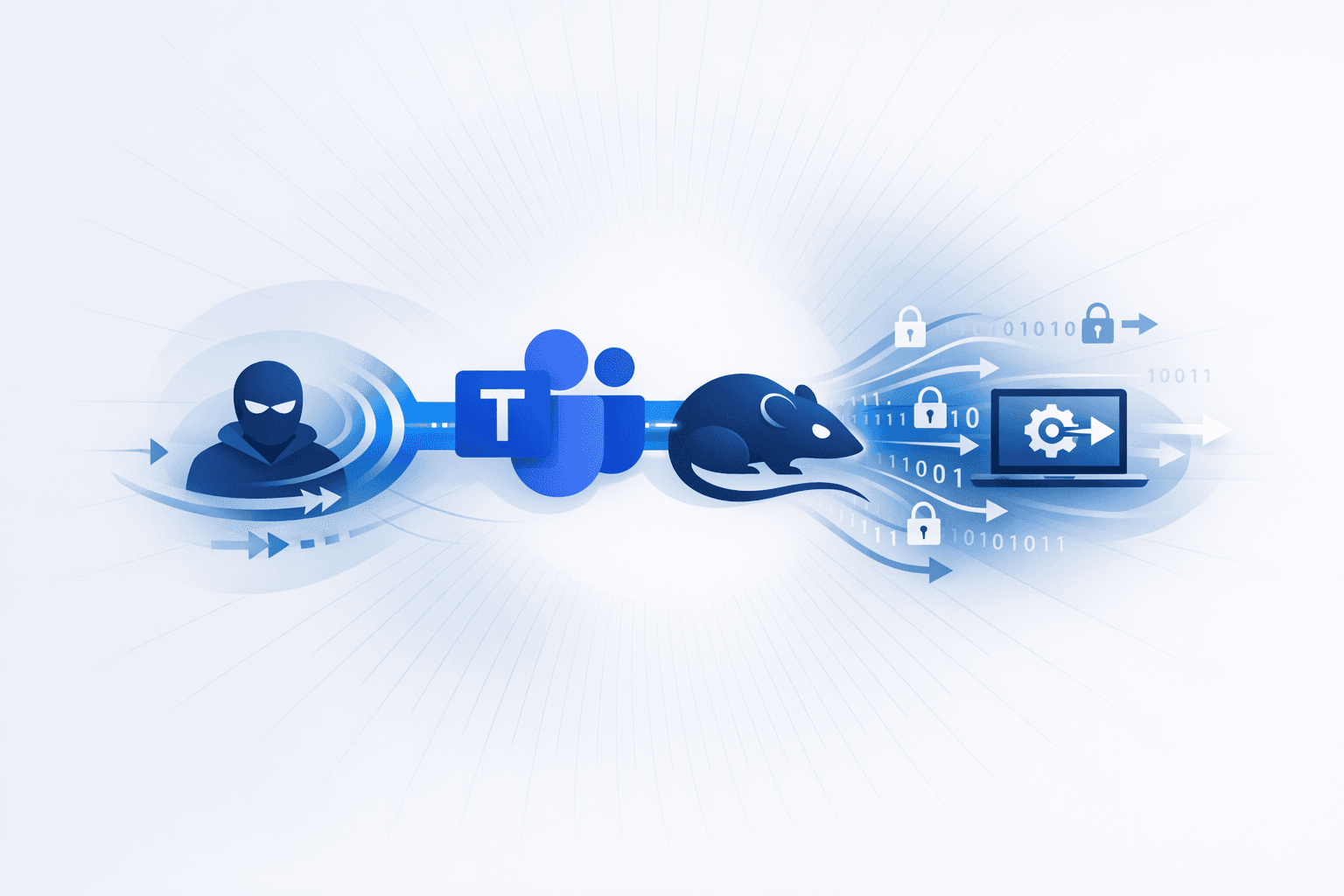
Threat actors are impersonating corporate IT support staff in **Microsoft Teams** voice calls to trick employees into granting remote access and installing the **EtherRAT** remote access trojan. The campaign begins with a phishing email themed as an **"Employee Survey"**, then shifts to a Teams call from an external Microsoft 365 tenant, where the caller poses as helpdesk or system administration staff and persuades the target to enable screen sharing and install legitimate remote management tools such as **HopToDesk** or **AnyDesk**. Attackers then execute a malicious MSI installer, including samples such as `v7.msi`, to deploy a multi-stage loader that fetches a legitimate **Node.js** runtime, decrypts embedded payloads, and launches EtherRAT. Researchers said EtherRAT is a cross-platform Node.js RAT for **Windows, Linux, and macOS** that supports command execution, file manipulation, persistence, and data theft. The malware uses **Ethereum smart contracts** to locate active command-and-control infrastructure, with some reporting also noting a fallback conventional domain, making disruption more difficult. Investigators found multiple installer versions in an open directory, including versions 1 through 9, indicating active development, and identified Teams forensic artifacts such as files beginning with `CtrlVirtualCursorWin_*` that may show an attacker remotely controlled a victim's desktop during a session. The activity adds to a broader rise in Teams-based impersonation attacks, even as Microsoft rolls out protections such as external caller warnings and stricter handling of suspected third-party bots.
Jul 7, 2026