
Loading story…
HUMAN's Satori Threat Intelligence and Research Team disclosed an Android ad fraud and malvertising operation dubbed Trapdoor that relied on 455 malicious apps and 183 threat actor-controlled command-and-control domains. The apps were disguised as common utilities such as PDF readers, file managers, and device cleanup tools, then prompted users to install fake software updates or secondary apps. Those follow-on payloads used hidden embedded browsers and WebViews to load malicious HTML5 content in the background, generating fraudulent ad impressions, clicks, and bid requests without the victim's knowledge.
Researchers said the scheme was effectively self-funding, turning seemingly legitimate installs into an illicit advertising revenue loop that financed further malvertising. At its peak, Trapdoor generated up to 659 million bid requests per day and was tied to more than 24 million fraudulent app installs. The malware also used install attribution services and download-origin checks to activate malicious behavior mainly for users acquired through the actors' own ad campaigns while suppressing activity for organic installs, helping it evade detection. Most observed traffic came from the United States, with additional activity seen in Japan, Australia, Russia, New Zealand, India, and elsewhere; after responsible disclosure, Google removed the identified apps from Google Play.

Get the actors, campaigns, and ATT&CK mapping behind it.
3 events from the most recent confirmed update back to the earliest known activity.
HUMAN researchers publicly reported the Trapdoor Android ad fraud and malvertising scheme, detailing its use of utility-themed apps, fake software updates, selective activation via install attribution abuse, and global traffic footprint. Multiple outlets reported the disclosure on May 19, 2026.
After responsible disclosure by HUMAN's Satori Threat Intelligence and Research Team, Google removed the identified malicious Android apps from the Google Play Store. The takedown disrupted the Trapdoor ad fraud and malvertising operation.
The Trapdoor operation used 455 malicious Android apps and 183 threat actor-controlled command-and-control domains, disguising apps as benign utilities and pushing fake updates that delivered a second-stage payload. The malware used hidden embedded browsers and HTML5 content to generate fraudulent ad impressions, clicks, and bid requests, reaching up to 659 million daily bid requests and more than 24 million app installs, with most traffic observed in the United States.
Vulnerabilities, threat actors, malware, products, organizations, and breaches Mallory has linked to this story.
Get the adversaries, campaigns, and ATT&CK mapping behind this technique, with detections ready to deploy.
8 references tracked. Mallory keeps watching after this page renders.
zimperium.com
Open sourcesecurityonline.info
Open sourcescworld.com
Open sourcetechradar.com
Open sourcethehackernews.com
Open sourcebankinfosecurity.com
Open sourcegovinfosecurity.com
Open sourcehumansecurity.com
Open sourceMap indicators from this story to your assets and identify affected systems in minutes.
Every observed campaign, victim, and pivot linked to actors named in this story.
Malware, exploits, and IOCs connected to the activity described here.
YARA, Sigma, and Snort rules deployed to your SIEM as soon as they’re published.
Get matching new stories delivered to your team as they break — not the next morning.
Ask questions about this story and take action on the answers.
Other stories Mallory is tracking that overlap on entities, sources, or topic labels.
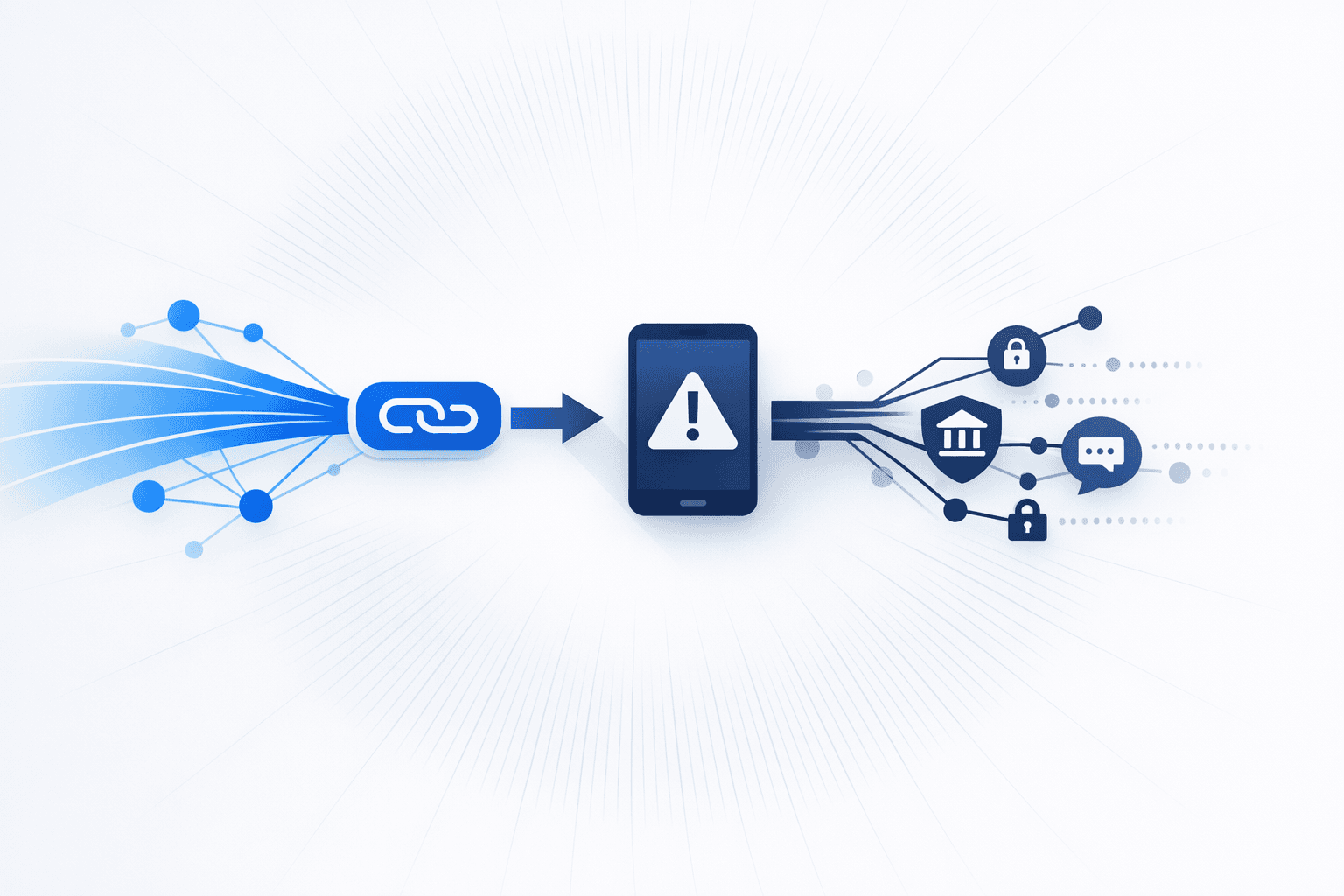
Researchers reported that monetized URL shortener services and fake download pages were used to push **Android/FakeAdBlocker** and other malicious Android apps disguised as ad blockers or popular applications. Victims were funneled through aggressive advertising chains and prompted to install APKs with misleading names such as `adBLOCK app.apk`, after which the malware hid its icon, contacted command-and-control infrastructure, and fetched additional payloads. ESET said the campaign generated more than **150,000** Android downloads in the first half of 2021, while iPhone users were steered into fraudulent calendar-subscription scams rather than direct malware installs. The Android infections did not stop at adware. Researchers said the delivery chains also deployed banking trojans including **Cerberus**, **Ginp**, and **TeaBot**, alongside SMS trojans and other payloads, making the outcome dependent on the victim's region and the operators' current configuration. Separate reporting on Cerberus and Ginp described both as mobile banking malware families, and Bitdefender documented similar lures using mockups of well-known apps to spread **TeaBot** and **FluBot**, underscoring a broader ecosystem in which deceptive mobile install flows are used to distribute credential theft, financial fraud, and messaging abuse malware on Android.
Aug 14, 2026A large-scale ad fraud operation, dubbed SlopAds, leveraged 224 Android apps with over 38 million downloads to generate up to 2.3 billion fraudulent ad requests per day. The campaign used novel techniques including steganography, multi-layered code obfuscation, and conditional activation based on installation source to evade detection. Google has removed the identified apps and enhanced Play Protect to block similar threats, but researchers warn these sophisticated tactics are likely to reappear.
Jun 29, 2026
Two separate Android-focused threat operations were reported, both relying on social engineering to drive manual installation of malicious apps. Bitdefender documented a campaign that abuses **Hugging Face** as a trusted hosting/CDN distribution point for an Android credential-stealing payload targeting popular financial and payment services. Victims are lured into installing a dropper app named **TrustBastion** via scareware-style ads; after installation it displays a fake Google Play “mandatory update” flow, then contacts infrastructure associated with `trustbastion[.]com` which redirects to a Hugging Face dataset repository hosting the final APK. The actor used **server-side polymorphism** to generate new payload variants roughly every 15 minutes, resulting in thousands of variants and rapid repository churn (reported as >6,000 commits over ~29 days); after takedown, the operation reportedly resurfaced under a new name (“**Premium Club**”) with refreshed branding. ESET separately identified an Android spyware campaign tracked as **GhostChat** that uses **romance-scam** tactics to target individuals in Pakistan. The malicious app is disguised as a chat/dating service but primarily functions as a surveillance tool; it presents “locked” female profiles with passcodes (hardcoded in the app) to create a sense of exclusivity, then routes victims into WhatsApp chats tied to Pakistani numbers likely controlled by the operator. The app was distributed via unofficial sources (not Google Play) and is blocked by Google Play Protect by default; ESET also linked the same actor to a broader surveillance effort including a **ClickFix** compromise chain and a WhatsApp device-linking attack, using websites impersonating Pakistani government organizations as lures.
Jun 29, 2026