
Loading story…
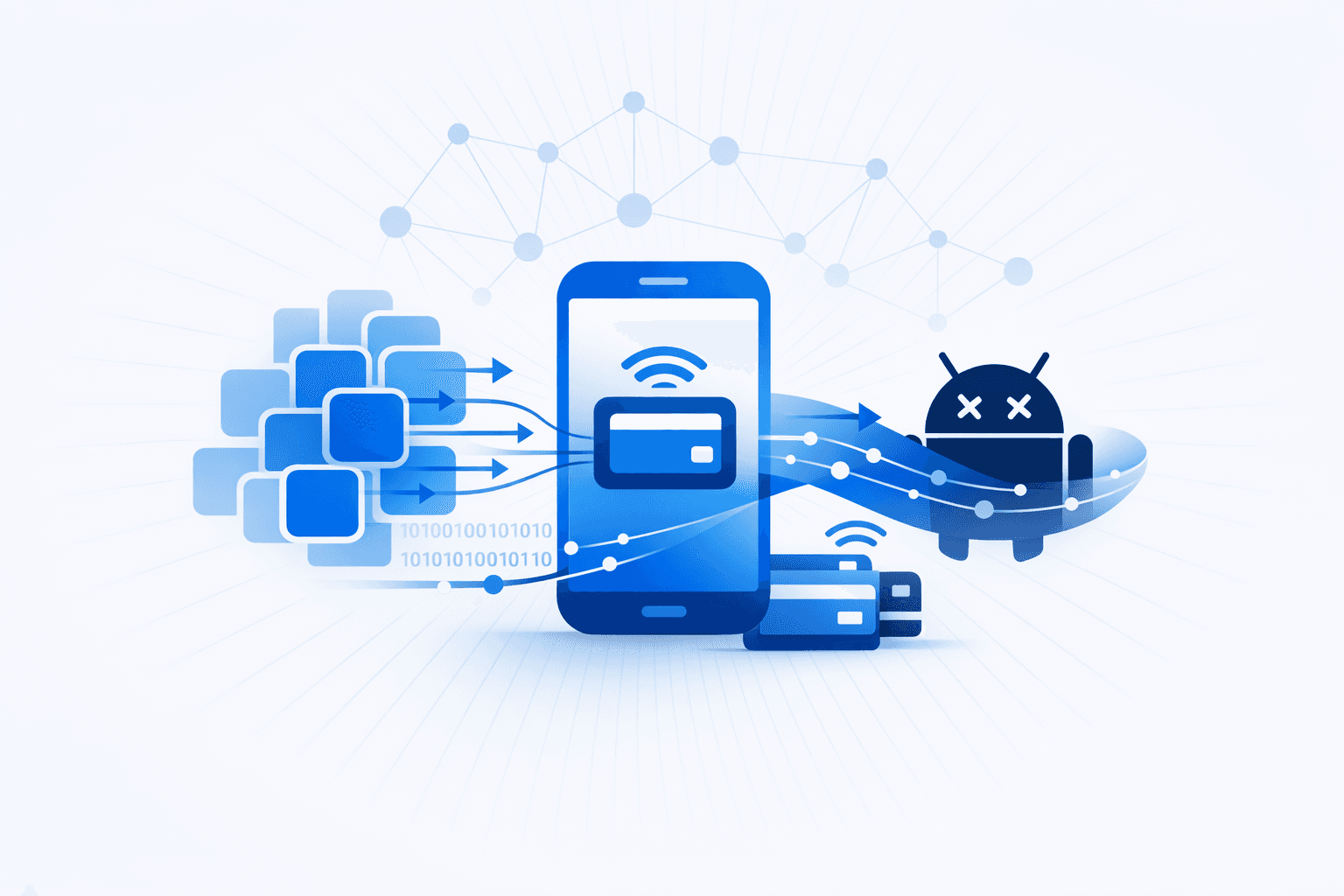
Researchers at Zimperium’s zLabs uncovered a large Android malware campaign that used nearly 250 malicious apps to silently subscribe victims to premium carrier-billing services and abuse premium SMS flows without consent. The apps impersonated well-known brands and games including Facebook Messenger, Instagram Threads, TikTok, Minecraft, and Grand Theft Auto, and targeted users in Malaysia, Thailand, Romania, and Croatia. The operation was active from March 2025 through January 2026, with some attacker infrastructure still online at the time of reporting.
zLabs identified three malware variants that activated only when a device’s SIM matched specific mobile operators, helping the fraud remain hidden from non-targeted users by showing benign fallback pages. The malware used hidden WebViews and JavaScript to automate subscription pages, intercepted one-time passwords through Google’s SMS Retriever API, disabled Wi‑Fi to force cellular billing, stole cookies, sent delayed premium SMS messages, and reported activity through attacker-controlled Telegram channels. Researchers said the infrastructure supported command-and-control, victim tracking, analytics, and exfiltration of device metadata and billing-page content.
Get the infrastructure and lures behind it.
4 events from the most recent confirmed update back to the earliest known activity.
On publication of its research, Zimperium disclosed the global Android fraud campaign and said parts of the attacker infrastructure were still operational. The company described the distributed infrastructure supporting command and control, victim tracking, analytics, and exfiltration of device and billing-page data.
Researchers reported that the malware campaign was still active through the second week of January 2026. They identified three malware variants, including one tailored to Thai users and another that sent operational updates to attacker-controlled Telegram channels.
From March 2025 through the second week of January 2026, the operation used nearly 250 malicious Android apps to target users in Malaysia, Thailand, Romania, and Croatia. The malware selectively activated based on the victim's SIM operator and used hidden WebViews, OTP interception, Wi‑Fi disabling, cookie theft, premium SMS abuse, and Telegram-based reporting to complete fraudulent subscriptions.
Zimperium's zLabs first observed a large Android malware operation in March 2025. The campaign used malicious apps posing as popular brands to target users for unauthorized carrier-billing and premium SMS charges.
Vulnerabilities, threat actors, malware, products, organizations, breaches, and observables Mallory has linked to this story. Indicator values are masked here and available in full in the app.
Indicator values are masked on this page. See the values in Mallory Domains, IPs, hashes, and URLs are exportable to your SIEM.
Get the infrastructure, lures, and IOCs behind this campaign, ready to push into your email and identity stack.
4 references tracked. Mallory keeps watching after this page renders.
securityonline.info
Open sourcecybersecuritynews.com
Open sourceeconomictimes.indiatimes.com
Open sourcezimperium.com
Open sourceMap indicators from this story to your assets and identify affected systems in minutes.
Every observed campaign, victim, and pivot linked to actors named in this story.
Malware, exploits, and IOCs connected to the activity described here.
YARA, Sigma, and Snort rules deployed to your SIEM as soon as they’re published.
Get matching new stories delivered to your team as they break — not the next morning.
Ask questions about this story and take action on the answers.
Other stories Mallory is tracking that overlap on entities, sources, or topic labels.
Several Android malware families, including **Joker**, **MobOk**, **Vesub**, and **GriftHorse**, were found fraudulently enrolling victims in paid mobile subscription services by abusing device permissions, intercepting SMS confirmation codes, and hiding billing steps inside deceptive app workflows. Researchers said the malware used techniques such as notification access, invisible webviews, fake login prompts, and anti-fraud evasion to complete sign-ups without clear user consent, turning infected phones into tools for recurring premium-service charges. The campaigns were distributed through multiple channels, including **Google Play**, unofficial app stores, preinstalled software, and trojanized popular applications. **Joker** operated as a staged downloader that could tamper with confirmation flows, **MobOk** added CAPTCHA bypass capabilities and was often linked to delivery by **Triada**, **Vesub** spread through fake apps from unofficial sources, and **GriftHorse** variants relied on misleading subscription pages and hidden recurring billing terms. Victim telemetry covering January 2021 through March 2022 showed **Russia** as the most affected country overall, with **MobOk** identified as the most prevalent family among the subscription trojans reviewed.
Aug 14, 2026
The **Joker** Android malware repeatedly infiltrated **Google Play** through seemingly legitimate apps, where it used multistage payload delivery, dynamic code loading, and heavy obfuscation to evade review while stealing **SMS messages**, **contacts**, device data, and notification content. Researchers tied campaigns across dozens of apps and hundreds of thousands of installs, including trojanized utility, wallpaper, camera, and medical-themed applications. Multiple reports showed Joker hiding malicious logic in ad frameworks, splash-screen code, packed APKs, Apache Cordova components, and runtime-loaded `.dex` or `.jar` files, with some samples using **DexClassLoader**, **JavaScript-to-Java bridges**, and notification-listener abuse to capture one-time PINs and SMS content without directly requesting sensitive permissions. The malware’s primary objective was **premium-service fraud**: it identified victims by SIM or mobile country code, selectively targeted users in specific countries, intercepted verification messages, and silently enrolled devices in **premium WAP** or **premium SMS** subscriptions. Analysts observed infrastructure hosted on domains and cloud storage including **Aliyun OSS**, as well as payload concealment through **GitHub-hosted** resources, while newer variants unpacked themselves at runtime with commercial packers and fetched additional stages from remote servers before activating classes absent from the original APK. Google removed identified malicious apps from the Play Store, but the reporting showed Joker remained active for years and continuously adapted its delivery and evasion techniques to sustain mobile fraud operations.
Aug 15, 2026
Multiple reports highlight evolving **Android** threats that abuse SMS/telephony access and advanced evasion to enable fraud, surveillance, and account takeover. CloudSEK described a shift from repackaged apps to **runtime manipulation** using the *LSPosed* framework, where a malicious module (e.g., **Digital Lutera**) hooks `SmsManager` and `TelephonyManager` to undermine India’s **UPI SIM-binding** controls. The technique can intercept registration tokens and 2FA, spoof device identity/phone number, and exfiltrate data to **Telegram**; it also uses **Socket.IO** for real-time C2 and can remotely inject fabricated SMS entries into the device’s “Sent” database to make bank backends believe a SIM is present on a different device, enabling scalable payment fraud and account takeover. Separately, Acronis TRU (reported by Hackread) identified a **fake Red Alert** rocket-warning app distributed via SMS lures impersonating Israel’s Home Front Command; the trojanized app displays legitimate alerts to reduce suspicion while requesting extensive permissions to steal **GPS location**, **SMS/OTP**, contacts, installed-app inventory, and on-device account details, then exfiltrates data to a remote server, including via **certificate spoofing** and UI tricks to appear Play Store-installed. Zimperium reported a new Android RAT, **SurxRAT**, that can download and run **LLM modules** from third-party repositories to automate phishing and social engineering and to interact with apps/UI for credential theft and data exfiltration, reinforcing the need for behavior-based mobile detection, tighter app controls, and stronger integrity enforcement (e.g., *Play Integrity API* with `MEETS_STRONG_INTEGRITY`) where applicable.
Jun 29, 2026