
Loading story…
Researchers at KU Leuven disclosed WhisperPair, a set of Bluetooth attacks against flawed implementations of Google’s Fast Pair protocol in headphones, earbuds, and speakers from multiple vendors, including Sony, Anker, Nothing, and others. The vulnerabilities can allow an attacker within Bluetooth range to silently pair with a target device, play audio, intercept calls, and activate built-in microphones for eavesdropping. Reporting on the disclosure said the issue affects audio accessories that rely on Fast Pair and stems from vendor implementation weaknesses rather than confirmed abuse in the wild.
In the most serious cases, affecting five Sony models and Google Pixel Buds Pro 2, researchers said an attacker could bind a device to their own Google account and misuse Google’s Find Hub network to track a victim’s location if the accessory had not already been linked to an Android device and Google account. Google said it coordinated with the researchers, issued remediation guidance to accessory makers in September 2025, and tightened certification requirements, while vendors reported patches released, under testing, or planned through OTA firmware updates. Researchers also said they quickly bypassed an added Find Hub mitigation, though Google said that bypass depended on outdated firmware and remains under investigation.
See affected versions and whether adversaries are exploiting it.
4 events from the most recent confirmed update back to the earliest known activity.
Following disclosure, several affected manufacturers said fixes had already been released, were in testing, or were planned for delivery through OTA firmware updates. Because Fast Pair cannot be disabled, users depend on vendor updates for protection.
The researchers said they bypassed an additional Find Hub mitigation within hours of testing it. Google responded that the bypass depended on outdated accessory firmware and said it was investigating the issue.
Researchers from KU Leuven University disclosed a set of Bluetooth attacks dubbed WhisperPair affecting improper implementations of Google's Fast Pair protocol in audio devices from vendors including Sony, Anker, and Nothing. The flaws could allow nearby attackers to secretly pair with devices, play audio, intercept calls, use microphones for eavesdropping, and in some cases bind devices to their own Google account for tracking via Google's Find Hub.
Google said it worked with KU Leuven researchers and sent recommended fixes to affected accessory OEMs in September 2025. It also updated Fast Pair certification requirements in response to the issues.
Vulnerabilities, threat actors, malware, products, organizations, and breaches Mallory has linked to this story.
See whether adversaries are exploiting this yet, and where the affected versions run in your environment.
4 references tracked. Mallory keeps watching after this page renders.
theregister.com
Open sourcepcgamer.com
Open sourcetheverge.com
Open sourcecybernews.com
Open sourceMap indicators from this story to your assets and identify affected systems in minutes.
Every observed campaign, victim, and pivot linked to actors named in this story.
Malware, exploits, and IOCs connected to the activity described here.
YARA, Sigma, and Snort rules deployed to your SIEM as soon as they’re published.
Get matching new stories delivered to your team as they break — not the next morning.
Ask questions about this story and take action on the answers.
Other stories Mallory is tracking that overlap on entities, sources, or topic labels.
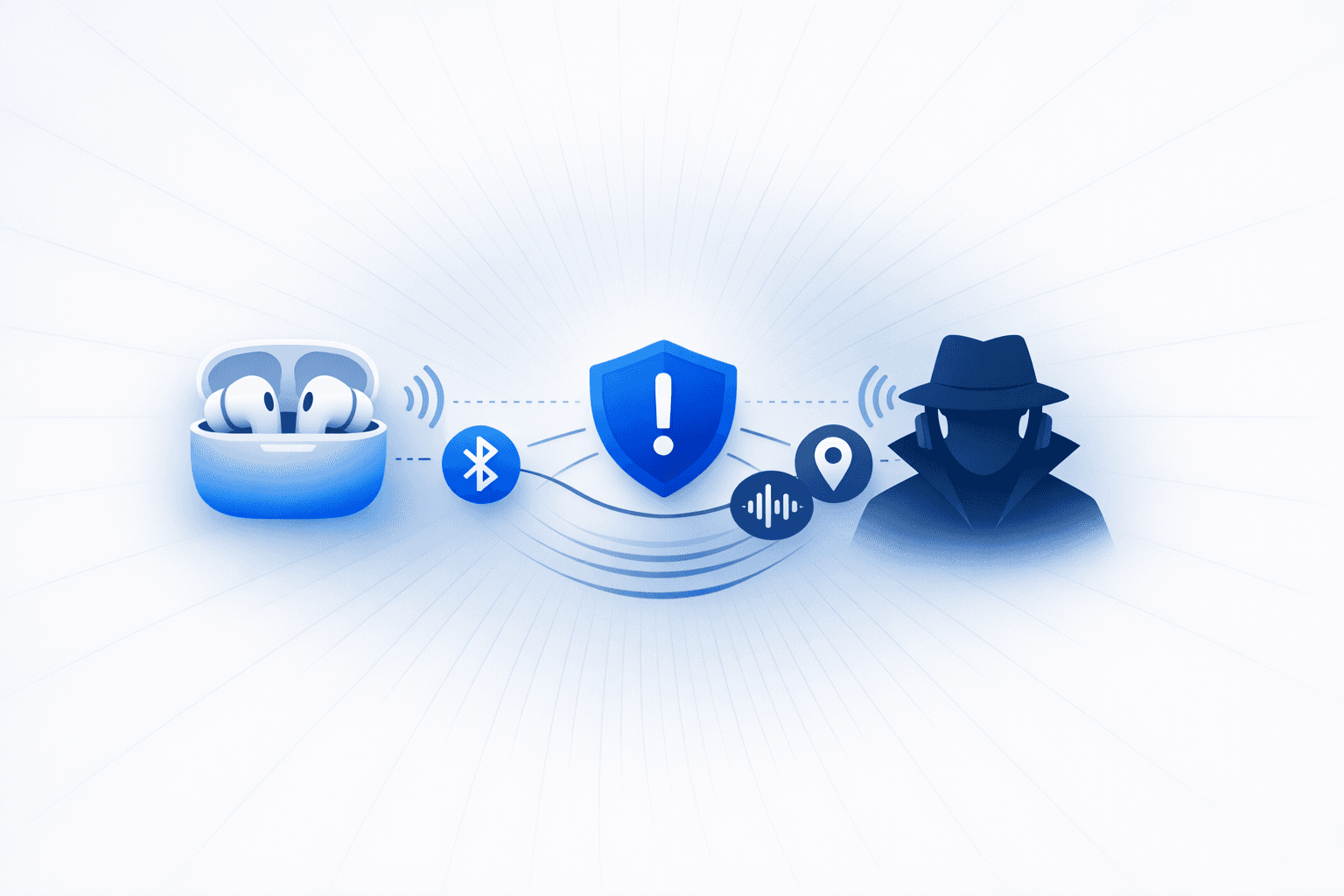
Security researchers from **KU Leuven** disclosed a critical weakness in Google’s *Fast Pair* Bluetooth pairing protocol implementation—tracked as **CVE-2025-36911** and dubbed **WhisperPair**—that enables attackers to forcibly initiate pairing with vulnerable Bluetooth audio accessories even when they are not in pairing mode. Because the flaw is in the accessories’ Fast Pair behavior (not the phone OS), it can affect users across platforms, including iPhone users, and could be exploited using common Bluetooth-capable hardware (e.g., laptops, phones, or small single-board computers) to hijack connections, **track users**, and potentially **eavesdrop** via compromised headphones/earbuds/speakers from multiple vendors. Reporting indicates the root cause is widespread failure to enforce a key Fast Pair requirement: accessories should ignore pairing requests unless explicitly in pairing mode, but many products respond anyway, allowing an attacker to complete a standard Bluetooth pairing without user awareness. The disclosures also raised questions about Google’s certification pipeline: devices tested by the researchers were reportedly **Fast Pair certified**, implying they passed Google’s *Validator App* checks and additional lab testing, yet still exhibited the vulnerable behavior; Google said it has since added new tests focused on these requirements. Responsibility remains unclear between device manufacturers and chipset suppliers; WIRED notes multiple chipset vendors were contacted without comment, while **Xiaomi** attributed the issue to a “non-standard configuration” by chip suppliers (with **Airoha** identified as the chipset maker in at least one vulnerable product cited by the researchers).
Jun 29, 2026
Researchers disclosed three vulnerabilities in Bluetooth audio devices built on Airoha systems-on-chip that can allow an attacker within radio range to gain unauthorized access to device memory and communications. The flaws, tracked as **`CVE-2025-20700`**, **`CVE-2025-20701`**, and **`CVE-2025-20702`**, stem from missing authentication in GATT and Bluetooth BR/EDR components and weak permission controls in a proprietary protocol, affecting headphones and earbuds sold by brands including **Sony, Bose, Jabra, JBL, Marshall, Beyerdynamic, and Teufel**. ERNW researchers said the bugs can be chained to hijack the Bluetooth link between a phone and an audio device, issue commands to the paired phone through the **Hands-Free Profile**, eavesdrop on conversations, and potentially overwrite firmware for remote code execution on the accessory. The attack requires proximity because exploitation is limited by Bluetooth range, but defenders were urged to apply vendor firmware updates and investigate or restart devices showing abnormal Bluetooth behavior.
Jul 24, 2026
Apple has released **Beats Firmware Update `1B211`** to fix a high-severity Bluetooth vulnerability in **Beats Studio Buds** that could let an attacker within wireless range listen through the earbuds’ microphone under limited conditions. The flaw, tracked as **`CVE-2025-20701`**, affected devices while they were **unpaired and actively seeking a pairing request**, allowing pre-pairing eavesdropping. Apple said the issue originated in **open source code** and noted that Apple software was among the affected projects. The bug was identified in **Airoha** system-on-chip code by researchers **Dennis Heinze** and **Frieder Steinmetz** of **ERNW GmbH**, who linked it to missing authentication in the Bluetooth **BR/EDR** radio. ERNW said the flaw could be chained with **`CVE-2025-20700`** and **`CVE-2025-20702`** to enable broader attacks against vulnerable headphones, including issuing phone commands, extracting link keys, accessing call history and contacts, and placing calls, though such attacks require close proximity and substantial technical skill. The update is delivered automatically when the earbuds are paired with an **iPhone, iPad, or Mac**, placed on a charger, and kept within Bluetooth range.
Jun 29, 2026