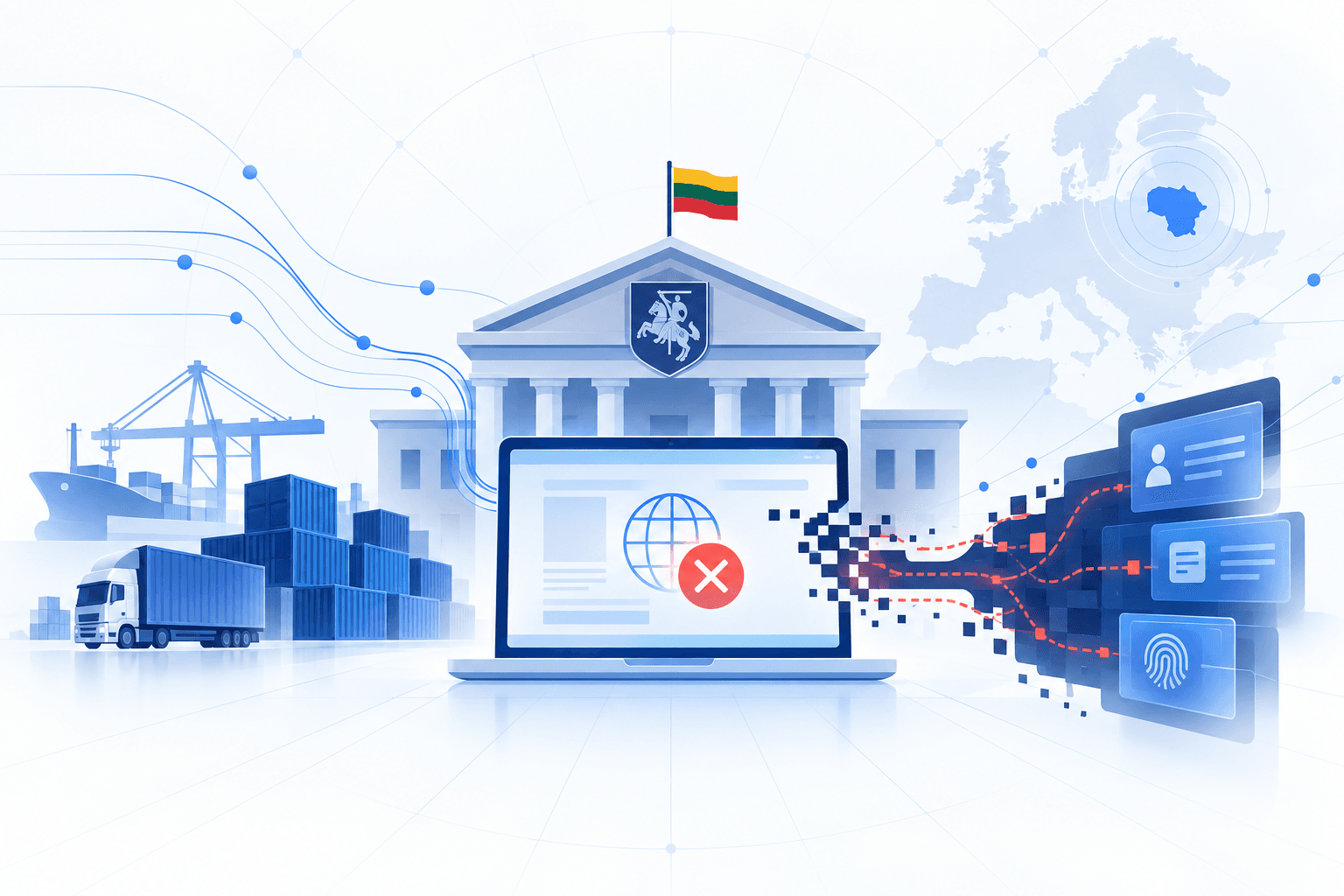
Lithuania Probes Theft of 600,000 State Registry Records After Credential Abuse
Breach & Incident Intelligence · 2 sources · Updated 5mo ago · First seen May 26, 2026

Lithuanian prosecutors are investigating a major breach of the state registry systems after attackers used login credentials assigned to authorized institutions to access more than 600,000 records held by the Centre of Registers. The intrusion affected the Real Estate and Legal Entities Registers and exposed sensitive personal and property data, including names, dates of birth, national identification numbers, addresses, cadastral information, and registry numbers. Authorities said the breach was detected in early April, but disclosure was delayed while the criminal investigation proceeded, and the estimated financial damage exceeds €111,000.
Lithuania has blocked suspected accounts and ordered credential changes as it works to contain the incident, while questions over the security of state IT systems intensified. Centre of Registers chief Adrijus Jusas resigned following the leak and said years of underinvestment had left government platforms in need of as much as €60 million in cybersecurity upgrades. Officials have not publicly attributed the attack or identified a responsible threat actor, despite political claims that the operation may show signs of foreign, possibly Russian, involvement.
Why it matters
Impact assessment
Attackers accessed more than 600,000 records from Lithuania’s state registry systems by abusing credentials assigned to authorized institutions. The primary impact is large-scale exposure of sensitive personal and property data affecting citizens, legal entities, and government-linked populations whose records reside in the Real Estate Register and Legal Entities Register.
The incident is severe because it creates long-term privacy, fraud, targeting, and counterintelligence risk even though authorities said no bank data, payment data, contact details, or official document files were exposed. Exposure appears broad rather than narrowly targeted, and while attribution remains unconfirmed, authorities are treating it as a criminal breach with possible foreign-state involvement.
Supporting details
- Affected entities: Lithuania’s Centre of Registers, including the Real Estate Register and Legal Entities Register.
- Affected populations: individuals and organizations whose names, dates of birth, national identification numbers, addresses, cadastral information, and registry numbers were stored in those systems.
- Scale: more than 600,000 records accessed.
- Business and operational impact:
- Sensitive identity and property data can support fraud, impersonation, phishing, surveillance, coercion, and physical targeting.
- Exposure of address and property data may increase risk to government personnel or other sensitive individuals.
- Public-sector trust and leadership stability were affected; the Centre of Registers chief resigned.
- Financial impact: estimated direct damage exceeds €111,000.
- Scope: broad exposure across national registry data, not a single organization’s isolated dataset.
- Exploitation status: confirmed unauthorized access occurred; this is not a theoretical exposure.
- Attribution: no threat actor publicly identified or confirmed by prosecutors.