
Loading story…
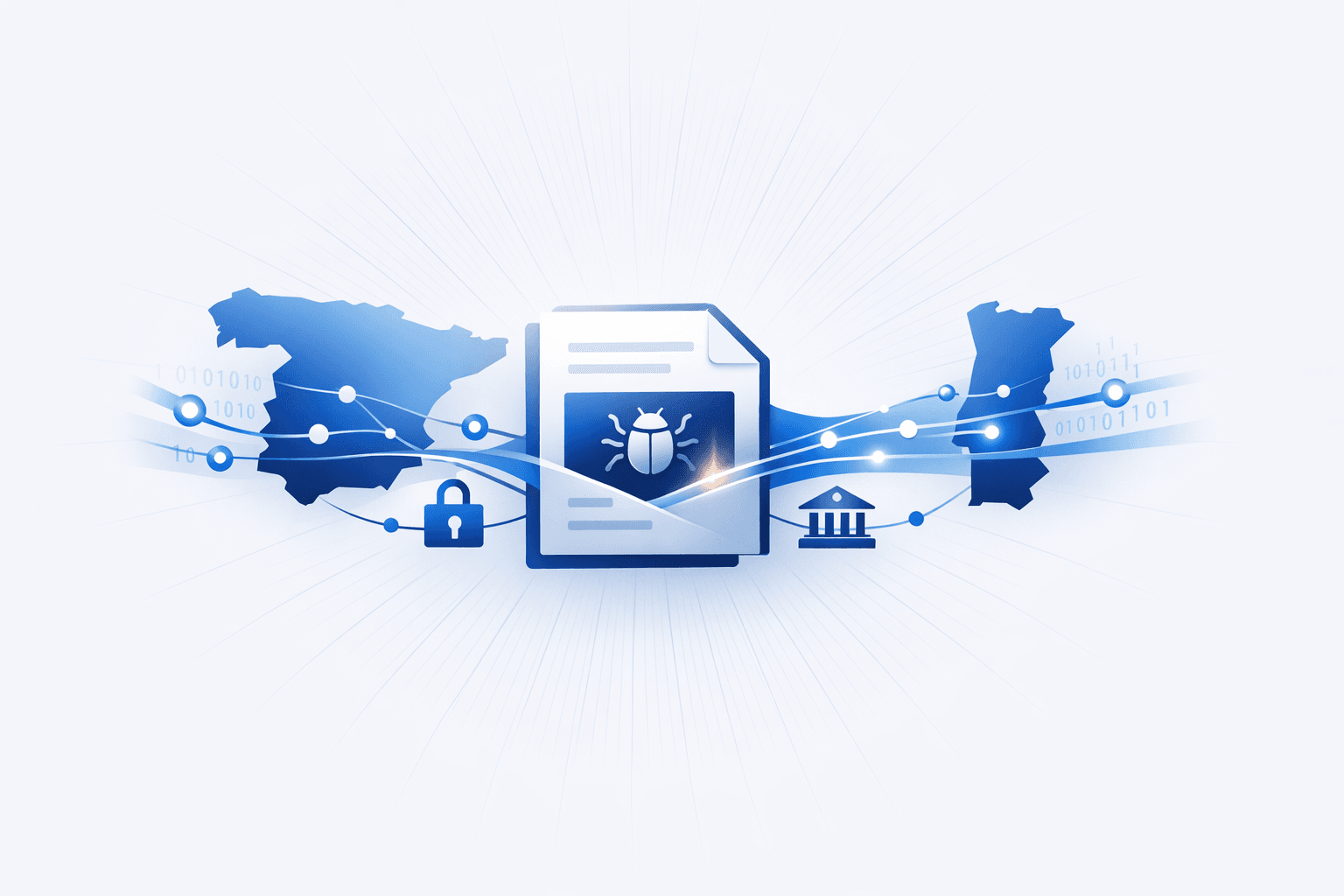
Fortinet reported an ongoing Ousaban banking Trojan campaign targeting Microsoft Windows users in Spain and Portugal, using phishing PDFs disguised as corrupted documents to redirect victims to malicious webpages. The operation applies geofencing and environment checks to limit infections to Iberian targets, then delivers a VBS script that extracts a hidden ZIP archive from an image and executes the final payload. Researchers said the campaign marks an evolution from late-2025 Ousaban activity that relied on MSI installers and ClickFix-style lures.
Once installed, Ousaban establishes persistence through a Windows Registry Run key named Financeiro and waits for victims to access banking services. The malware supports remote control, keylogging, screenshot capture, clipboard manipulation, and fake on-screen messages to facilitate account takeover. Fortinet said the operators no longer depend on a decoy Pastebin configuration for command-and-control, instead resolving infrastructure through daily changing DDNS hostnames generated from the current date, a tactic that adds resilience and complicates detection.
See the actors and campaigns active against you right now.
5 events from the most recent confirmed update back to the earliest known activity.
On 2026-07-02, Gurucul published analysis of the ongoing Ousaban campaign that included domains, IP addresses, SHA-256 hashes, and example detection queries. The report also described the malware's execution via DLL side-loading or process injection.
On 2026-07-01, FortiGuard Labs published an analysis describing the ongoing Ousaban attacks targeting the Iberian Peninsula, including the malware's persistence, banking-focused monitoring, and date-derived daily changing command-and-control hostnames.
The May 2026 campaign redirected victims from phishing PDFs to malicious webpages that downloaded a VBS script, which extracted a ZIP archive hidden inside an image and executed the final Ousaban payload. Fortinet said this reflected an evolution in the malware's delivery chain.
In May 2026, operators behind the Brazilian banking trojan Ousaban targeted Microsoft Windows users in Spain and Portugal with phishing PDFs posing as corrupted files. The campaign used geofencing and environment checks to limit payload delivery to intended Iberian victims.
Fortinet reported that Ousaban activity observed in late 2025 used earlier delivery methods, including MSI installers and ClickFix-style lures, before the campaign evolved to newer phishing techniques.
Vulnerabilities, threat actors, malware, products, organizations, and breaches Mallory has linked to this story.
See the adversaries and campaigns active against your sector right now, ranked by what they're exploiting.
7 references tracked. Mallory keeps watching after this page renders.
cybersecuritynews.com
Open sourcecommunity.gurucul.com
Open sourcescworld.com
Open sourcethehackernews.com
Open sourceinfosecurity-magazine.com
Open sourcefeeds.fortinet.com
Open sourcefortinet.com
Open sourceMap indicators from this story to your assets and identify affected systems in minutes.
Every observed campaign, victim, and pivot linked to actors named in this story.
Malware, exploits, and IOCs connected to the activity described here.
YARA, Sigma, and Snort rules deployed to your SIEM as soon as they’re published.
Get matching new stories delivered to your team as they break — not the next morning.
Ask questions about this story and take action on the answers.
Other stories Mallory is tracking that overlap on entities, sources, or topic labels.
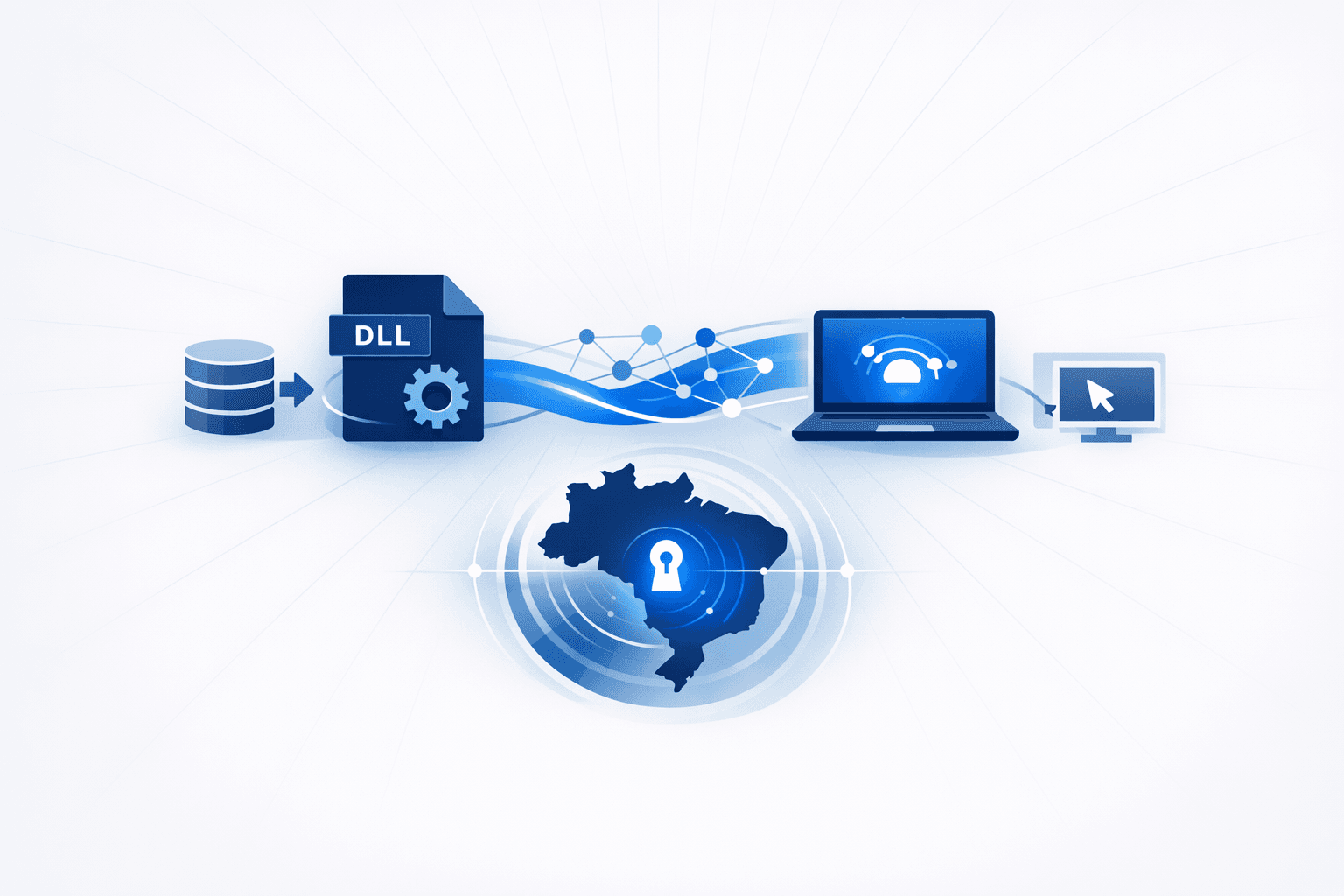
Researchers detailed **Ousaban**, a Brazil-focused banking trojan active since at least 2018 that targets financial institutions and regional email services with credential-theft overlays and phishing-led infection chains. The malware, written in Delphi, has been delivered through MSI installers, JavaScript downloaders, and CAB or ZIP archives, then executed via **DLL side-loading** through legitimate applications. Reporting on Brazilian financial malware also highlighted DLL hijacking and side-loading as a recurring technique in the broader ecosystem of banking threats operating in the region. Beyond credential theft, Ousaban includes backdoor functions such as keylogging and simulated mouse and keyboard actions, enabling operators to interact directly with infected systems. Recent campaigns used multistage components including encrypted injectors, downloaders, configuration files, and a support module that changed RDP and firewall settings and created a new administrative account for follow-on access. The malware stored remote configuration data on public services including **YouTube** and later **Google Docs**, while command-and-control traffic was protected with **AES** encryption over **RealThinClient**; researchers also noted code and operational overlaps with other Latin American banking trojans including **Grandoreiro, Amavaldo, Mispadu, Vadokrist, Mekotio, Casbaneiro,** and **Guildma**.
Aug 14, 2026
The **Grandoreiro** banking trojan has re-emerged in campaigns targeting Portuguese banks and organizations across Spain, Mexico, and Latin America, showing that the malware remains active despite earlier law-enforcement disruption. Researchers reported phishing-led delivery chains using ZIP archives, loaders disguised as PDFs, **DLL side-loading**, and malicious **VBS** scripts hosted through abused legitimate services. In earlier observed activity, the operators impersonated government entities such as the Attorney General's Office of Mexico City and Spain's Public Ministry to lure employees at manufacturing, automotive, machinery, and chemicals companies into opening malicious attachments. The latest variants use stronger evasion and persistence techniques, including binary padding to roughly **400MB**, CAPTCHA-based execution, Windows Registry persistence, geofencing, and anti-analysis checks. Once installed, Grandoreiro can steal credentials, log keystrokes, monitor the clipboard, enumerate antivirus products, cryptocurrency wallets, and e-banking applications, and display fake banking overlays, while blending command-and-control traffic through trusted cloud services including **Google Cloud**, **Microsoft Azure**, and **Amazon**. Brazilian police previously arrested suspects tied to Grandoreiro operations, but the renewed campaigns indicate the financially motivated group continues to operate across multiple countries.
Jun 29, 2026
The **Bizarro** banking Trojan, long associated with Brazilian cybercrime, expanded its operations to victims in **Spain, Portugal, France, Italy, Germany, Argentina, Chile, and Brazil**, broadening a campaign focused on stealing online banking credentials and enabling fraud. Researchers said the malware was delivered through spam emails that pushed victims to download **MSI installers**, which then retrieved additional payloads from compromised websites, hacked WordPress servers, and cloud-hosted infrastructure on **Azure** and **AWS**. Once installed, Bizarro used heavy obfuscation and a backdoor supporting more than **100 commands** to disrupt browser sessions, capture screens, log keystrokes, and hijack clipboard data. The operators also relied heavily on social engineering, displaying fake banking pop-ups, bogus security-update prompts, and requests for **two-factor authentication** codes, while also using malicious **QR codes** that could redirect victims to Android malware to extend the fraud chain beyond desktop systems.
Aug 14, 2026