Loading story…

Researchers and security firms disclosed multiple ways attackers can manipulate AI agents and coding assistants into exposing sensitive data or executing malicious actions. In one case, Invariant Labs showed GitHub integrations built on the Model Context Protocol (MCP) could be abused to access private repositories, while Adversa AI reported a two-click exploit in Cursor that can trick developers into installing a malicious MCP server through a deeplink argument-injection flaw and a misleading confirmation dialog. Because MCP servers run with the user’s privileges, a successful attack could lead to arbitrary command execution, theft of source code and secrets, and full compromise of a developer workstation.
Separate academic research found that AI agents can also be subverted through poisoned but trusted-looking data rather than explicit prompt injection. A study covered by Nature showed agents from OpenAI, Anthropic, and Google often accepted doctored datasets and altered README files, producing manipulated conclusions, while another paper introduced agent data injection (ADI), in which attackers tamper with fields such as sender names, button IDs, or tool history to trigger misclicks, unauthorized purchases, fraudulent merge approvals, or attacker-command execution. Researchers said current defenses remain weak because agents do not reliably distinguish trusted from untrusted data, although measures such as MCP allowlisting, randomized identifiers, and stronger provenance tracking can reduce risk.
Track how attackers are adapting to this technology.
7 events from the most recent confirmed update back to the earliest known activity.
Manifold Security disclosed a prompt-injection vulnerability in Microsoft's official Azure DevOps MCP server that lets attackers hide malicious instructions in pull request descriptions using invisible HTML comments. The issue could cause AI review agents to access other projects and exfiltrate data with the reviewer's permissions; Microsoft had not released a fix or assigned a CVE as of July 21.
The ADI researchers said they reported the issue to affected vendors after finding all tested models from OpenAI, Anthropic, and Google vulnerable. They also said there was no public evidence of in-the-wild exploitation.
Dark Reading reported that Adversa AI found a two-click Cursor AI exploit combining deeplink argument injection with a misleading confirmation dialog to hide malicious MCP server installation commands. Cursor said it had reopened investigation of the bug after a third-party security vendor had previously closed the report.
Nature reported on a new arXiv study finding that autonomous AI agents from Anthropic, OpenAI, and Google could be misled by manipulated datasets that resembled legitimate ones. The study found agents accepted altered datasets about half the time on average and warned that weak provenance checking creates scientific integrity risks.
Researchers from Seoul National University, the University of Illinois Urbana-Champaign, and Largosoft posted a paper on July 6 describing agent data injection (ADI), a new attack class that corrupts trusted-looking data fields to manipulate AI agents. The paper demonstrated proof-of-concept attacks against web agents and coding assistants, including unauthorized purchases, attacker-command execution, and fraudulent merge decisions.
Microsoft published a blog post describing Spotlighting, a probabilistic mitigation designed to help large language models distinguish trusted user instructions from untrusted external text. The post outlined delimiting, datamarking, and encoding modes, along with system-prompt changes intended to prevent models from following malicious embedded instructions.
Invariant Labs published a report describing a vulnerability involving GitHub MCP that could allow access to private repositories via MCP.
Vulnerabilities, threat actors, malware, products, organizations, and breaches Mallory has linked to this story.
Follow how adversaries are adapting to this technology, and where it touches your stack today.
6 references tracked. Mallory keeps watching after this page renders.
thehackernews.com
Open sourcethehackernews.com
Open sourcedarkreading.com
Open sourcenature.com
Open sourcemicrosoft.com
Open sourceinvariantlabs.ai
Open sourceMap indicators from this story to your assets and identify affected systems in minutes.
Every observed campaign, victim, and pivot linked to actors named in this story.
Malware, exploits, and IOCs connected to the activity described here.
YARA, Sigma, and Snort rules deployed to your SIEM as soon as they’re published.
Get matching new stories delivered to your team as they break — not the next morning.
Ask questions about this story and take action on the answers.
Other stories Mallory is tracking that overlap on entities, sources, or topic labels.
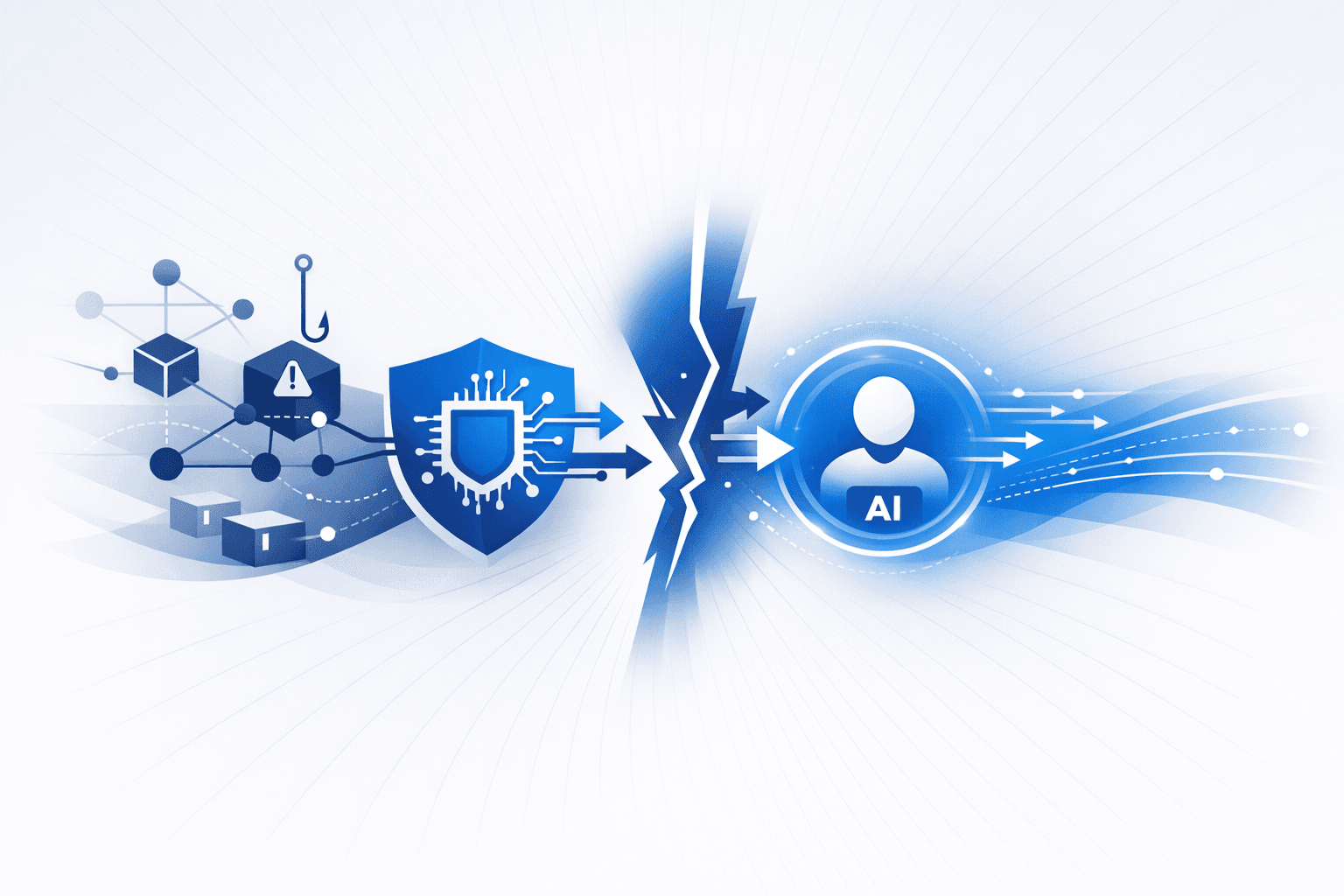
Security reporting and research warned that the **Model Context Protocol (MCP)** has opened a new attack surface for enterprise AI agents, allowing malicious content delivered through context windows, documentation, support tickets, GitHub issues, or untrusted MCP servers to trigger unauthorized actions without compromising the underlying model. Reported examples included WhatsApp data exfiltration, leakage of private repository data, abuse of a Supabase Cursor agent through crafted support tickets, and **`CVE-2025-6514`**, a high-severity OS command-injection flaw that could enable remote code execution via untrusted MCP servers. A separate proof-of-concept targeting Andrew Ng’s **Context Hub** showed how poisoned API documentation served through an MCP server could silently steer coding agents into adding fake or malicious dependencies to generated projects, highlighting a software supply-chain risk in community-authored documentation pipelines. Across the coverage, researchers and vendors said perimeter controls and AI gateways are not enough because attackers or insiders can interact directly with MCP services; they urged organizations to treat MCP connectivity as privileged access, sanitize all context inputs, enforce policy and approval checks at the MCP server, restrict agent network and data access, and adopt zero-trust execution controls with auditable action receipts.
Jul 23, 2026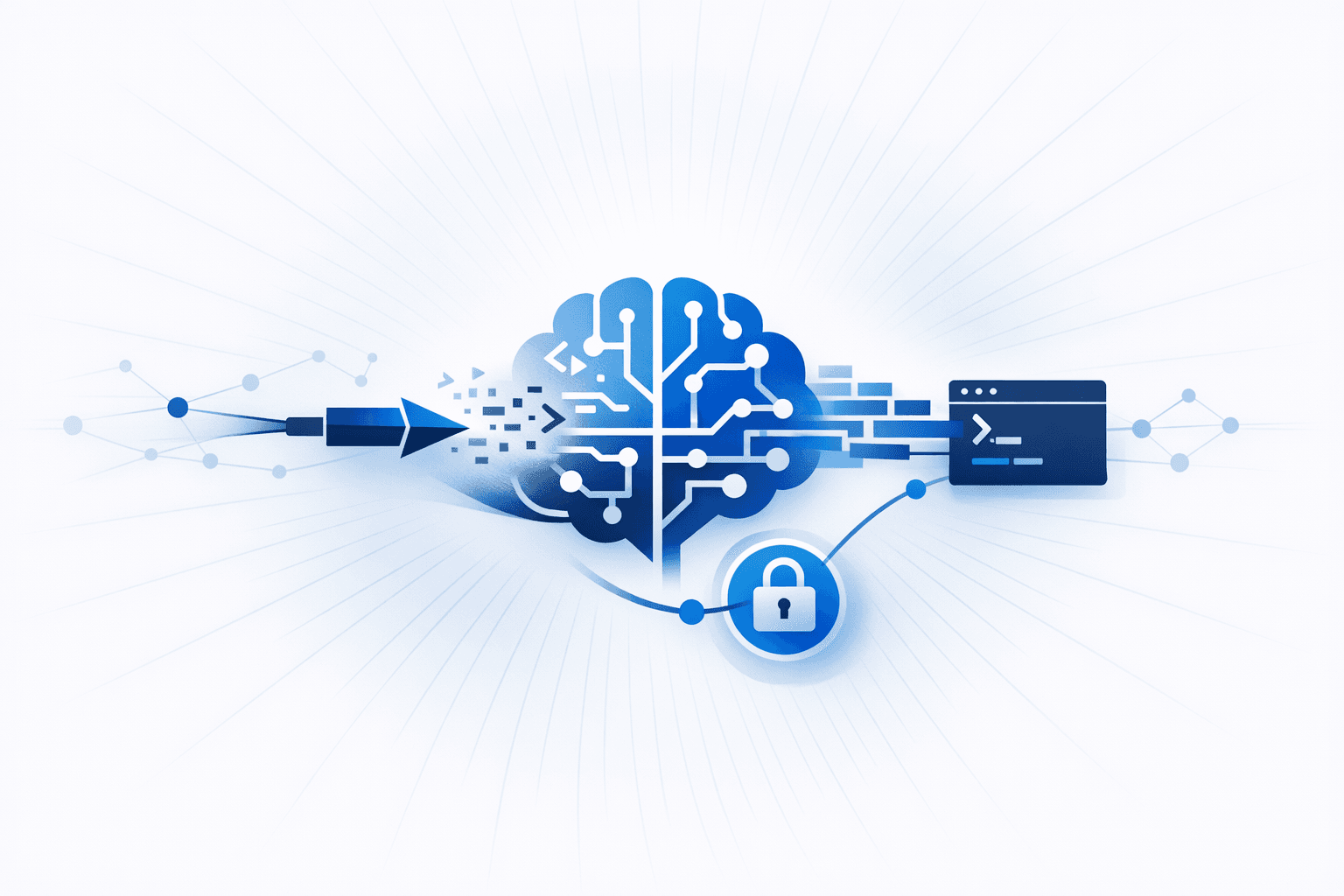
Microsoft disclosed two critical vulnerabilities in its **Semantic Kernel** AI agent framework that could let prompt injection escalate into host compromise. `CVE-2026-26030` affected the Python implementation before version `1.39.4`, where unsafe `eval()`-based lambda construction in the Search Plugin’s default In-Memory Vector Store filter path enabled remote code execution, while `CVE-2026-25592` affected the .NET SDK before version `1.71.0` and allowed arbitrary file write through `SessionsPythonPlugin`’s `DownloadFileAsync`, creating a path to sandbox escape and host takeover; a related arbitrary file read issue was also present in upload handling. Microsoft said it hardened AST validation, restricted callable functions and attributes, removed unintended tool exposure, added path validation, and urged customers to patch and review endpoint telemetry for signs of exploitation. The disclosure lands amid broader warnings that AI agents can preserve and amplify malicious instructions through memory and context reuse. Cisco researchers recently showed that poisoned memory files in Anthropic’s **Claude Code** could persist across projects and sessions, steering the assistant to insert hard-coded secrets, choose insecure packages and configurations, and spread tainted changes to another developer. Researchers and defenders say the incidents reinforce that AI models are not security boundaries and that any model-influenced tool parameter, memory file, or context artifact should be treated as attacker-controlled input, with mitigations including patching vulnerable frameworks, scanning memory and dependency files, and purging stored agent memory after suspected compromise.
May 7, 2026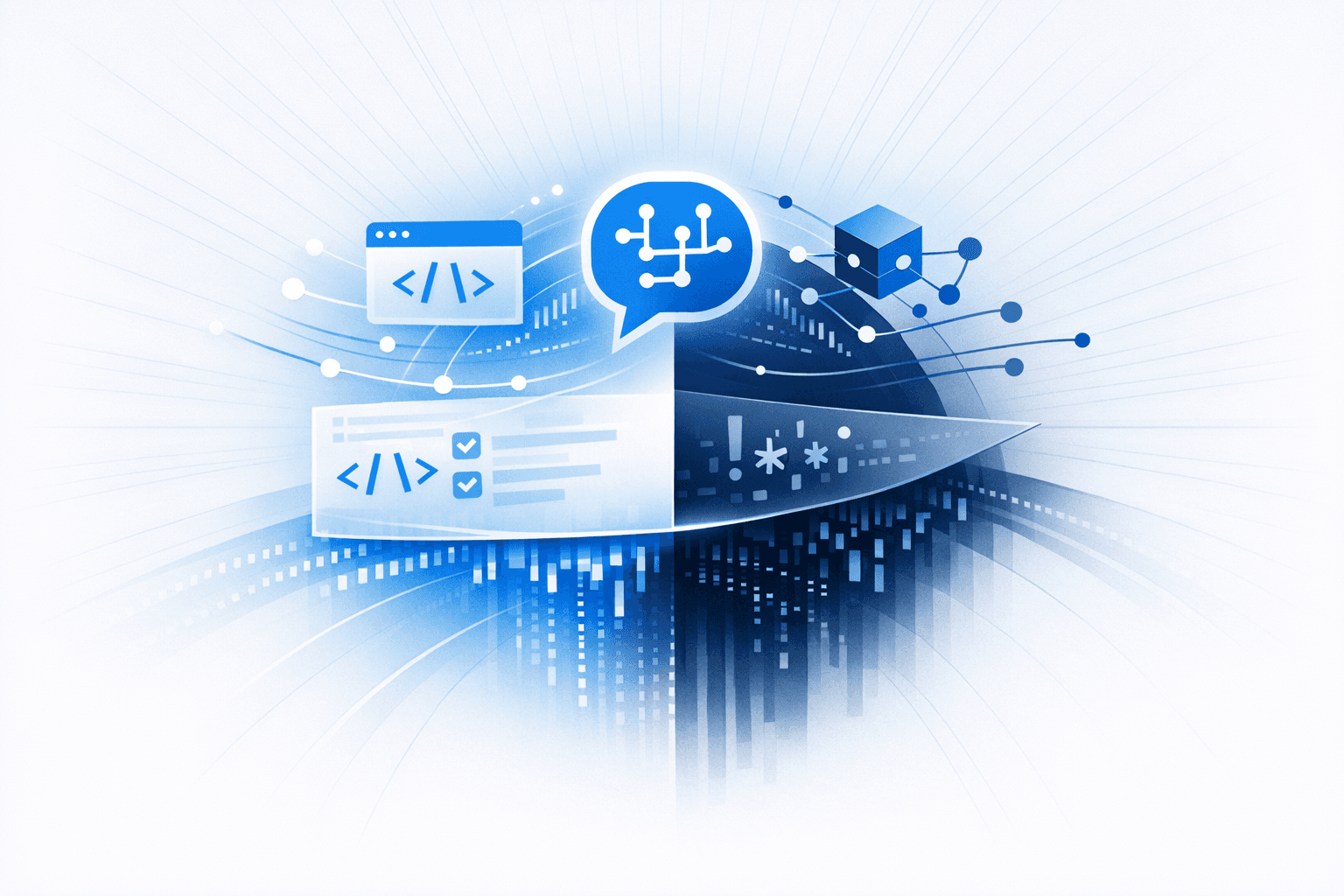
New research shows that **AI assistants and coding agents can be manipulated by hidden or misleading instructions embedded in content they process**, creating a practical path to social engineering, data leakage, and potentially malicious command execution. LayerX reported that a **custom font and CSS-based rendering attack** can make a webpage appear harmless in the DOM while showing different instructions to the user in the browser, exploiting the gap between what AI systems analyze and what humans actually see. In its proof of concept, a page that looked like benign fanfiction at the HTML level rendered instructions that could steer a user toward executing a reverse shell, and the company said major AI assistants it tested failed to detect the threat. Separate research highlighted a related **semantic injection** risk in software repository `README` files used by AI coding agents. In testing, attackers embedded malicious setup-style instructions into documentation so agents would exfiltrate local files or other sensitive data to external servers during project setup, with reported success rates of up to **85%**. The benchmark, *ReadSecBench*, used 500 open source repositories across multiple programming languages and found the attack worked across agents using models from **Anthropic, OpenAI, and Google**, indicating that hidden-instruction attacks are not limited to one interface or vendor but reflect a broader weakness in how AI systems interpret untrusted content and operational guidance.
Mar 17, 2026