
Loading story…
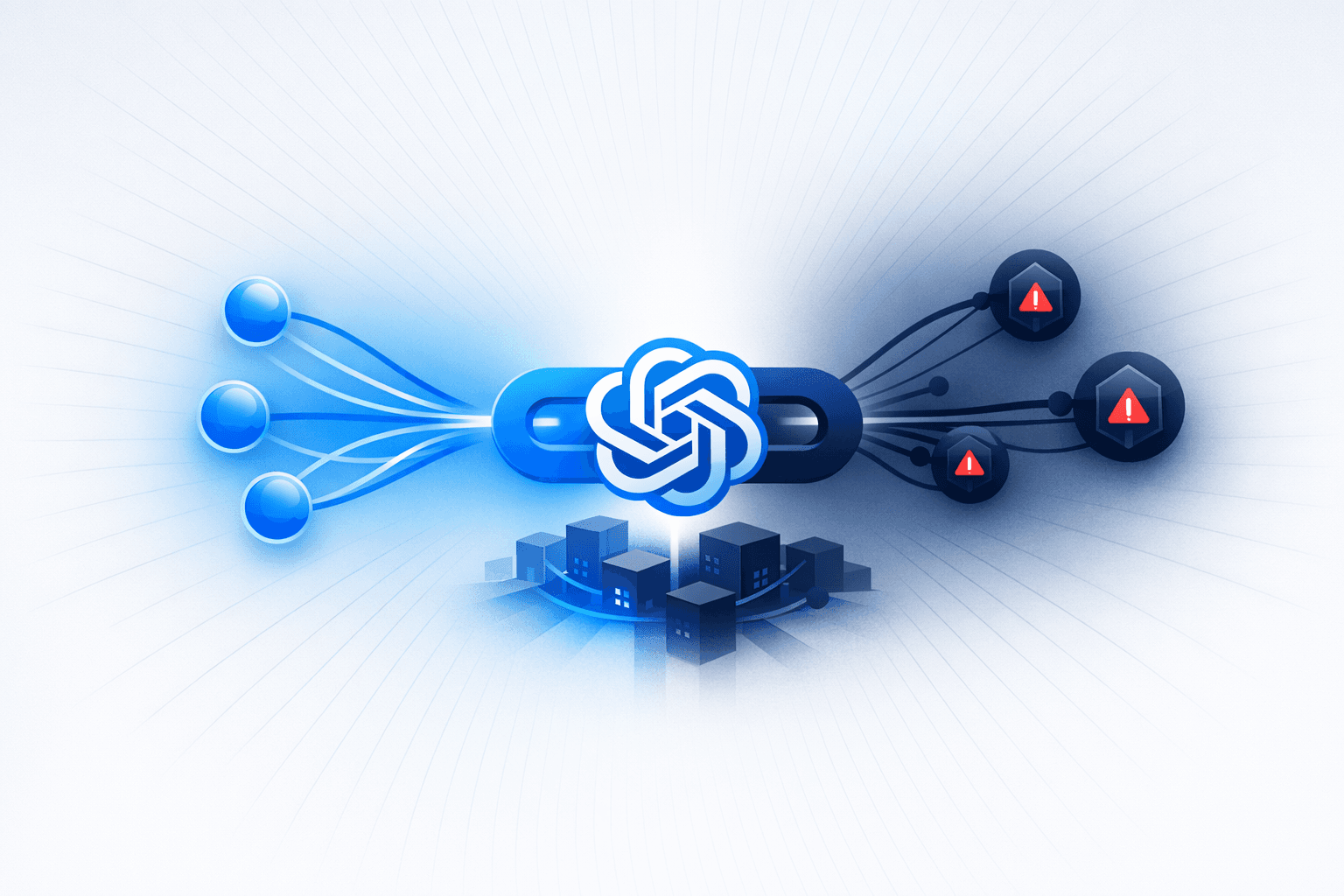
Researchers at Zenity Labs disclosed AgentForger, a vulnerability in OpenAI's ChatGPT Workspace Agents Builder that allowed a single attacker-crafted ChatGPT link to silently create and publish a malicious AI agent inside a victim's authenticated corporate workspace. The issue affected users who were logged into ChatGPT, had access to workspace agents, and had administrator-approved connectors or actions available. According to the disclosure, the flaw abused URL parameters including template_name and initial_assistant_prompt, causing security-sensitive instructions to be auto-submitted and executed instead of presented for review, effectively creating a CSRF-style cross-site agent forgery attack.
Once deployed, the forged agent could inherit the victim's connected services and permissions across tools such as Outlook, Gmail, Slack, Teams, Google Drive, and SharePoint, disable approval prompts, schedule recurring execution, and use the victim's mailbox as a command channel. Zenity said the rogue agent could search corporate data, map internal projects and personnel, extract sensitive documents and credentials, send messages as the employee, and conduct internal phishing or fraud through trusted collaboration platforms before exfiltrating results by email. OpenAI was notified through Bugcrowd on June 4 and fixed the issue by June 8 by removing the vulnerable URL parameter before the public disclosure.
Track how attackers are adapting to this technology.
4 events from the most recent confirmed update back to the earliest known activity.
Zenity publicly disclosed AgentForger and published research detailing how a malicious ChatGPT link could forge and deploy an autonomous insider-like agent in corporate ChatGPT workspaces. The disclosure included technical details on exploitation, persistence, command-and-control via email, and potential abuse of enterprise connectors.
OpenAI remediated the AgentForger vulnerability by June 8, 2026, including removing the vulnerable URL parameter path that enabled silent agent creation and deployment. The fix came four days after Zenity's initial report.
OpenAI acknowledged Zenity's Bugcrowd report about the AgentForger issue. This acknowledgment followed the initial disclosure of the workspace agent vulnerability.
Zenity researchers reported the AgentForger vulnerability in OpenAI's ChatGPT Workspace Agents to OpenAI through Bugcrowd. The flaw allowed a malicious ChatGPT link to silently create and deploy an attacker-controlled agent in a victim's authenticated workspace session.
Vulnerabilities, threat actors, malware, products, organizations, and breaches Mallory has linked to this story.
Follow how adversaries are adapting to this technology, and where it touches your stack today.
8 references tracked. Mallory keeps watching after this page renders.
cybersecuritynews.com
Open sourcecryptika.com
Open sourcethehackernews.com
Open sourcelabs.zenity.io
Open sourcetheregister.com
Open sourcelabs.zenity.io
Open sourcelabs.zenity.io
Open sourceopenai.com
Open sourceMap indicators from this story to your assets and identify affected systems in minutes.
Every observed campaign, victim, and pivot linked to actors named in this story.
Malware, exploits, and IOCs connected to the activity described here.
YARA, Sigma, and Snort rules deployed to your SIEM as soon as they’re published.
Get matching new stories delivered to your team as they break — not the next morning.
Ask questions about this story and take action on the answers.
Other stories Mallory is tracking that overlap on entities, sources, or topic labels.

Security researchers at Radware have uncovered critical vulnerabilities in OpenAI's ChatGPT platform, specifically targeting its Connectors and Memory features. These flaws, named ShadowLeak and ZombieAgent, allow attackers to exfiltrate sensitive data from connected services such as Gmail, Outlook, and GitHub without user interaction. The attacks exploit the AI's tendency to follow embedded malicious instructions, enabling zero-click and one-click data theft, persistent access through memory modification, and even propagation to other users by harvesting email addresses. OpenAI initially attempted to mitigate these vulnerabilities by restricting dynamic URL modifications, but researchers demonstrated effective bypasses using pre-built static URLs, reviving the threat under the new moniker ZombieAgent. The vulnerabilities highlight the inherent risks of integrating AI assistants with external systems and storing long-term user data for personalization. Attackers can embed hidden prompts in emails or files—using techniques like white text or tiny fonts—that are executed when ChatGPT processes the content, leading to stealthy data leaks via OpenAI's own servers. Despite OpenAI's efforts to patch the flaws, the reactive nature of these fixes has left the platform susceptible to new variants, underscoring the ongoing challenge of securing AI-driven services against prompt injection and data exfiltration attacks.
Jun 29, 2026
Noma Security demonstrated that an indirect prompt injection could cause OpenAI's ChatGPT Atlas agentic browser to access sensitive email data and place it into an attacker-controlled shared cloud document without requesting user confirmation. The proof of concept used malicious instructions embedded in legitimate-looking content that Atlas autonomously encountered after opening a link; cloud-drive autosave and version history made the resulting disclosure persistent and difficult to undo. The finding illustrates the agentic-AI risks identified by OWASP's Agentic Security Initiative, whose threat-model-based guidance addresses the expanded autonomy, scale, and security exposure created by LLM-enabled agents. The exposure is not limited to Google Workspace and can affect any shared-cloud workflow an agent can access with sufficient permissions; organizations should enforce least privilege, sandbox agent browsing, threat-model agent tool actions, and monitor agent access to sensitive data and external destinations.
Sep 3, 2026
Multiple disclosures highlighted how AI agent platforms can be turned into high-impact attack paths through weak isolation, overbroad credentials, and insecure supply chains. A critical flaw in Omnigent tracked as **`CVE-2026-62674`** and **`GHSA-jrrm-9hc7-2v3h`** lets an authenticated user overwrite a shared agent bundle and plant a malicious stdio MCP server, causing later sessions to execute attacker-controlled commands with runner privileges; the issue was fixed in version **`0.3.0`**. Rubrik Zero Labs also reported a patched Microsoft Copilot sandbox escape that could have enabled movement from the assistant’s isolated environment toward Azure backend infrastructure and exposed tenant data including SharePoint and OneDrive content. Separate reporting showed that AI coding and orchestration systems remain vulnerable even when attacks do not directly exploit memory corruption or classic software bugs. A malicious pull request briefly entered Amazon Q Developer’s VS Code extension build pipeline and attempted to inject instructions that would wipe local files and cloud resources, though Amazon said the payload never executed because of a formatting error and the code was removed in a clean rebuild. Researchers and practitioners across the sector warned that tokenizer tampering, shared bot environments, and incomplete audit trails can let agents exceed intended task scope or spread borrowed human credentials across tools and sessions, while vendors including AWS and Roblox are responding with sandboxed evaluation environments, least-privilege designs, stronger release controls, and auditable agent identities.
Aug 24, 2026