
Loading story…
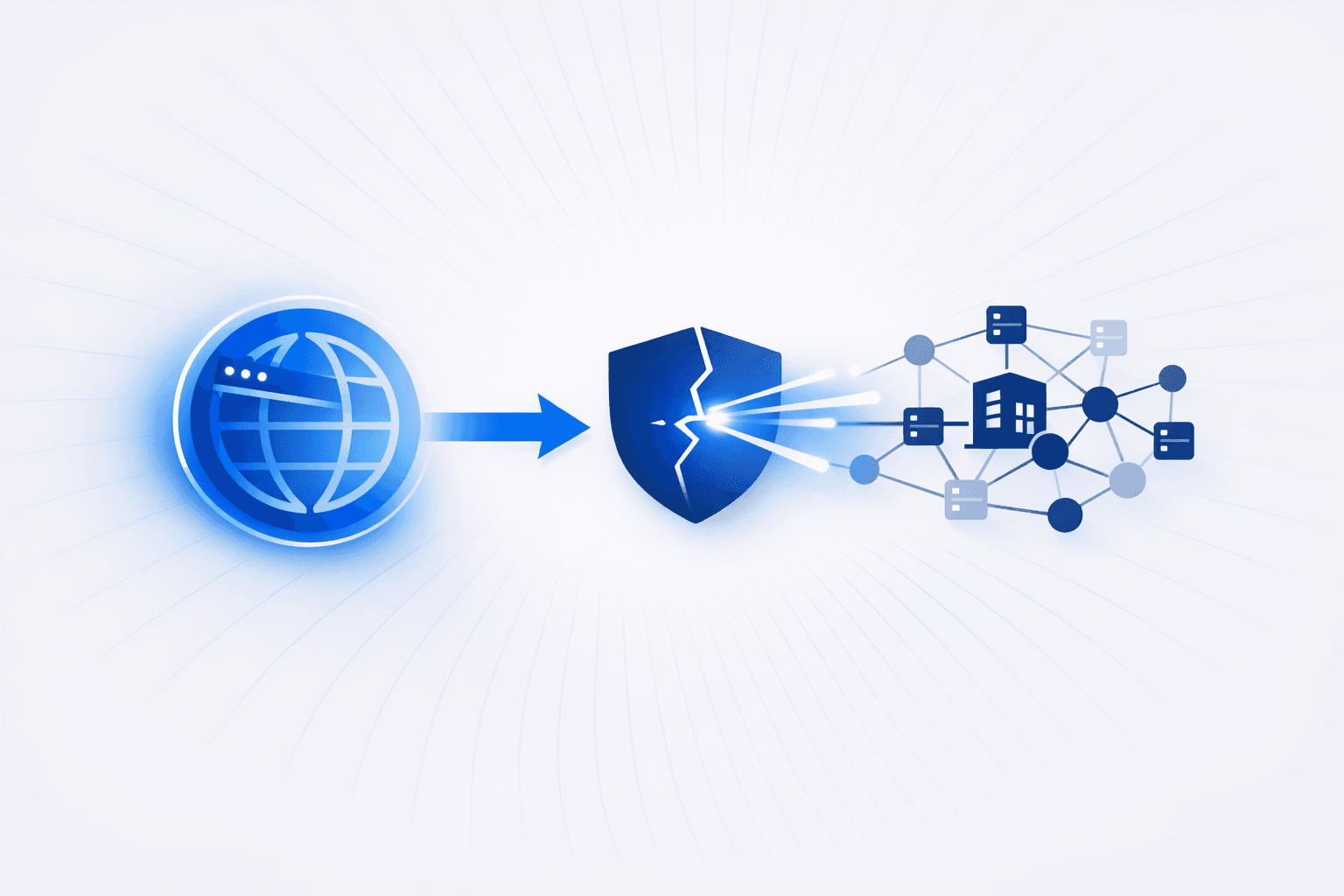
A high-severity server-side request forgery vulnerability, CVE-2026-54691, was disclosed in datamodel-code-generator, affecting versions 0.9.1 through 0.60.x. The flaw stems from the tool's HTTP fetch logic accepting user-supplied --url targets and redirect destinations without validating the host or IP address, allowing requests to reach localhost, loopback, private, link-local, metadata, and other non-public network resources. The issue is rated CVSS 8.2 and is considered remotely exploitable.
The project addressed the issue in version 0.61.0 with changes that block HTTP(S) requests to non-public network targets by default and validate redirect destinations before following them. The patch also introduced --allow-private-network and --no-allow-private-network options so users can explicitly opt in to trusted internal schema endpoints, while preserving public remote schema and $ref fetching behavior with warnings and updated tests, documentation, and CLI/config handling.
See affected versions and whether adversaries are exploiting it.
2 events from the most recent confirmed update back to the earliest known activity.
A June 8, 2026 commit to koxudaxi/datamodel-code-generator introduced protections against unsafe HTTP schema fetching, including blocking localhost, loopback, link-local, private, reserved, and other non-public network targets by default and validating redirect destinations before following them. The change also added a new allow-private-network option and updated related documentation and tests.
CVE-2026-54691 was disclosed as a high-severity server-side request forgery vulnerability in datamodel-code-generator affecting versions 0.9.1 up to, but not including, 0.61.0. The issue stems from accepting --url targets and redirect chain targets without host or IP validation, and the disclosure states it is fixed in version 0.61.0.
Vulnerabilities, threat actors, malware, products, organizations, breaches, and observables Mallory has linked to this story. Indicator values are masked here and available in full in the app.
Indicator values are masked on this page. See the values in Mallory Domains, IPs, hashes, and URLs are exportable to your SIEM.
See whether adversaries are exploiting this yet, and where the affected versions run in your environment.
2 references tracked. Mallory keeps watching after this page renders.
Map indicators from this story to your assets and identify affected systems in minutes.
Every observed campaign, victim, and pivot linked to actors named in this story.
Malware, exploits, and IOCs connected to the activity described here.
YARA, Sigma, and Snort rules deployed to your SIEM as soon as they’re published.
Get matching new stories delivered to your team as they break — not the next morning.
Ask questions about this story and take action on the answers.
Other stories Mallory is tracking that overlap on entities, sources, or topic labels.

A high-severity server-side request forgery flaw tracked as **CVE-2026-54690** affects `datamodel-code-generator` when it processes attacker-controlled JSON Schema `$ref` values pointing to `http` or `https` URLs. In vulnerable releases, the tool silently resolves remote references during schema processing, allowing outbound requests to arbitrary destinations; one report places the affected range at **0.9.1 through 0.60.x**, while another indicates exposure through **0.61.0**. The issue has a **CVSS v3.1 score of 8.2** and is tied to schema resolution and HTTP fetch logic in files including `jsonschema.py` and `http.py`. Researchers said the vulnerable code passes untrusted URLs directly to the HTTP client, follows redirects, and does not adequately restrict hostnames, ports, or IP ranges, creating a path to reach internal services such as `127.0.0.1` and cloud metadata endpoints like `169.254.169.254`. Fetched content may also be incorporated into generated output, raising information disclosure risk in addition to SSRF. The issue is fixed in **version 0.61.0**, with the patch adding URL validation and blocking localhost-style and non-global IP targets unless private-network access is explicitly enabled; recommended mitigations include disabling remote reference resolution or blocking private-network access.
Jul 29, 2026
A high-severity code injection vulnerability, **CVE-2026-54653**, affects `datamodel-code-generator` versions `0.17.0` through `0.60.1`, allowing attacker-controlled JSON Schema input to inject unsafe `default_factory` values into generated Python models. When a victim later imports the generated code, the embedded Python expression can execute, creating a remotely exploitable path from untrusted schema parsing to code execution. The issue is tracked with **CVSS 8.8** and mapped to `CWE-94` and `CWE-1336`. Project maintainers addressed the flaw in version `0.60.2`, which includes fixes for this and other code-injection vectors involving schema-provided `default_factory`, `x-python-type`, comment data passed through `--extra-template-data`, and Pydantic v2 validator definitions supplied via `--validators` or `--extra-template-data`. The patch for `default_factory` now limits accepted values to an allowlist of `dict`, `list`, and `set`, rejecting code-like strings, lambdas, function references, and `None`; defenders are advised to upgrade to `0.60.2`, review previously generated models for unsafe `default_factory` usage, and avoid importing generated code produced from untrusted schemas until updated.
Jul 29, 2026
A high-severity server-side request forgery flaw tracked as **CVE-2026-10582** affects **Hugo 0.91.0 through 0.165.0**. The issue lies in outbound fetches performed by `resources.GetRemote`, where `security.http.urls` validates only the supplied URL text and some canonicalized IPv4 variants, but does not resolve hostnames or verify the destination IP at connection time. That gap allows attacker-controlled hostnames to pass policy checks even if they ultimately resolve to loopback, private-network, or cloud-metadata addresses. If an attacker can influence a URL through front matter, site content, or a CMS field, Hugo’s build process can retrieve internal resources and embed the response into the generated static site, creating a path for data exfiltration through published artifacts. Hugo’s security code already includes SSRF-focused checks such as blocking localhost-style URL patterns, userinfo in URLs, and alternate IPv4 encodings, but the advisory says those protections do not enforce dial-time destination validation. The vulnerability is classified as **CWE-918** and has been scored **7.4 CVSS v3.1** and **8.3 CVSS v4.0**.
Aug 24, 2026