
Loading story…
Palo Alto Networks Unit 42 reported that a Chinese-speaking threat actor used an AI-enabled offensive workflow built around Hermes Agent and the DeepSeek model to autonomously scan the internet, identify vulnerable systems, evaluate exploit paths, and launch attacks against exposed services. The activity initially targeted Langflow instances and later shifted to n8n servers after unsuccessful exploitation attempts, showing a repeatable machine-driven cycle of reconnaissance, exploit research, and attack execution with limited human intervention.
Researchers said the campaign did not achieve full compromise through the autonomous workflow alone, but the same actor also conducted manual intrusions that successfully exploited Citrix NetScaler devices, obtained command execution on Marimo notebook instances, and attempted reverse-shell access against Apache Tomcat and VPN targets. Unit 42 gained rare visibility into the operation after Hermes accidentally exposed the operator’s home directory through a public HTTP file server, revealing scripts, target lists, API settings, shell history, and autonomous session logs that showed AI-assisted cyberattacks are already operationally viable against internet-facing infrastructure.
Track how attackers are adapting to this technology.
5 events from the most recent confirmed update back to the earliest known activity.
Unit 42 attributed the Hermes Agent and DeepSeek-enabled activity to a Chinese-speaking threat actor using the aliases knaithe and KnYuan, reportedly based in Zhuhai, China. The report also linked the actor to Telegram-based orchestration and custom offensive Hermes modules.
Jesta Security reported that an autonomous DeepSeek v4 'Flash free' agent began attacking its network on July 2, using hundreds of short-lived SSH sessions over five days to conduct reconnaissance and attempt deployment of MicroSocks SOCKS5 proxies. Jesta said it uncovered a target list of 1,283 hosts with credentials and assessed that about 1,000 additional internet-exposed victims, mostly SMBs, were also targeted to build relay infrastructure for follow-on attacks.
Separate manual operations attributed to the same actor successfully exploited Citrix NetScaler devices, achieved command execution on Marimo notebook instances, and attempted reverse-shell access against Apache Tomcat and VPN targets. These actions were described as distinct from the autonomous Hermes-led exploitation attempts.
Researchers gained visibility into the campaign after Hermes mistakenly exposed the operator’s home directory through an internet-accessible HTTP file server. The exposed data included scripts, target lists, API configurations, command history, and autonomous session logs.
Unit 42 reported that a Chinese-speaking threat actor used an offensive workflow built around Hermes Agent and the DeepSeek model to autonomously scan for vulnerable internet-facing systems, assess exploit paths, and launch attacks with limited human intervention. The activity initially targeted exposed Langflow instances and later shifted to n8n after failed exploitation attempts.
Vulnerabilities, threat actors, malware, products, organizations, breaches, and observables Mallory has linked to this story. Indicator values are masked here and available in full in the app.
Indicator values are masked on this page. See the values in Mallory Domains, IPs, hashes, and URLs are exportable to your SIEM.
Follow how adversaries are adapting to this technology, and where it touches your stack today.
10 references tracked. Mallory keeps watching after this page renders.
xakep.ru
Open sourcedarkreading.com
Open sourcesecurityaffairs.com
Open sourcehelpnetsecurity.com
Open sourcethehackernews.com
Open sourcecybersecuritynews.com
Open sourceunit42.paloaltonetworks.com
Open sourcecve.org
Open sourceMap indicators from this story to your assets and identify affected systems in minutes.
Every observed campaign, victim, and pivot linked to actors named in this story.
Malware, exploits, and IOCs connected to the activity described here.
YARA, Sigma, and Snort rules deployed to your SIEM as soon as they’re published.
Get matching new stories delivered to your team as they break — not the next morning.
Ask questions about this story and take action on the answers.
Other stories Mallory is tracking that overlap on entities, sources, or topic labels.
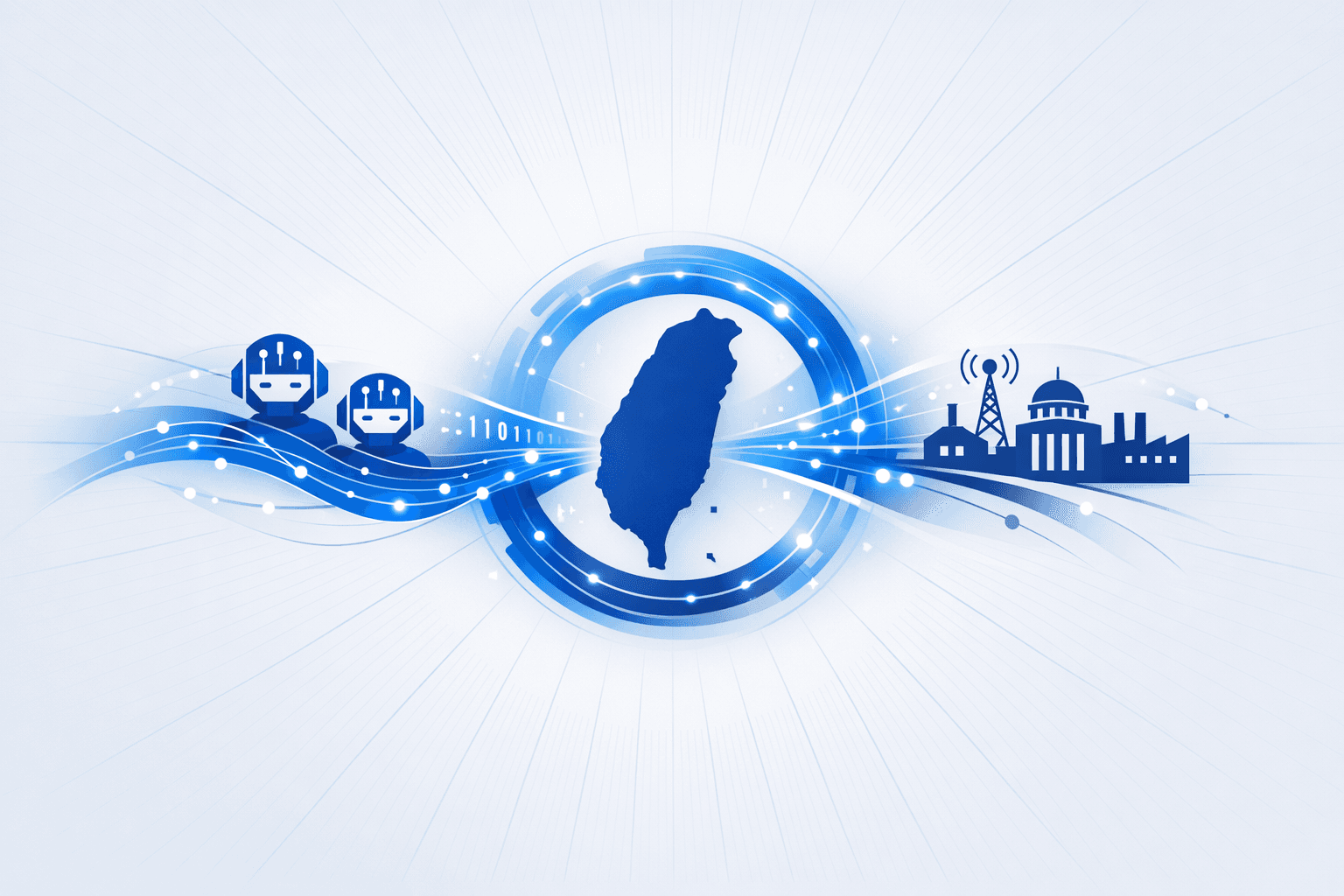
Security researchers reported that suspected China-linked operators used open-source AI agent frameworks and multiple large language models to automate cyber intrusions against internet-exposed targets in Taiwan and elsewhere in Asia. Palo Alto Networks Unit 42 said a Chinese-speaking actor tracked as **"knaithe"** and **"KnYuan"** used **Hermes Agent** connected to a **DeepSeek** model to perform reconnaissance, vulnerability research, and parts of exploitation, while also falling back to manual exploitation when autonomous attempts failed. The actor also tested other Chinese and Western models, including **Qwen**, **GLM**, **Kimi**, **MiniMax**, **Claude Code**, and **OpenAI Codex**, indicating active evaluation of AI tooling for offensive operations. Dream said a related campaign in early July used a platform built from the open-source **Hermes** and **OpenClaw** frameworks to carry out what it described as the first observed end-to-end autonomous cyberattack on a government target in Taiwan. According to the firm, the operation ran for four days, deployed up to eight agents in parallel, mapped 21 government systems, compromised at least 85 user accounts, and stole more than 2,500 personnel records before expanding to Taiwan’s nuclear safety agency, at least seven energy companies, government suppliers, and other government systems. Researchers said the activity showed AI agents can continuously adapt attack paths in real time and materially increase the speed and scale of intrusion activity, even without custom malware or highly specialized operators.
Aug 14, 2026
Dream reported that attackers used the open-source AI agent frameworks **Hermes** and **OpenClaw** to conduct a near-autonomous intrusion against government entities in Asia, compromising **85 employee accounts** and stealing at least **2,500 personnel records**. The campaign unfolded in **12 attack waves** and used up to **eight parallel sub-agents** to automate reconnaissance, credential attacks, API testing, data collection, and lateral movement at machine speed. The attackers reportedly mapped **21 connected government systems** and exploited multiple server-side weaknesses, including unauthenticated APIs, insecure authentication endpoints, weak token validation, and acceptance of JWTs using the `none` algorithm. Dream said the operation harvested employee identifiers from exposed APIs, used OCR-assisted password spraying, and then reused compromised credentials through an SSO bridge to reach internal systems; an archive linked to the campaign also contained internal network ranges, **seven SSO client secrets**, and **six database credentials**. The operator was not identified, but Dream observed Chinese-language indicators in the activity, while public reporting linked the targets to Taiwan.
Aug 25, 2026
A Chinese-speaking operator used the **SecFlow** framework to orchestrate AI agents associated with Claude, Qwen, and DeepSeek in intrusion activity against government, education, industrial, and telecommunications organizations across Asia. The agents automated reconnaissance, testing of known vulnerabilities, credential collection, and reporting, while conventional tooling—including webshells, stolen credentials, custom implants, GLUTTON tooling, and shared SOCKS infrastructure—carried out the intrusions. Researchers linked activity through reused accounts, `niestools.com` services, SecFlow artifacts, and the recurring handle “Nie.” The most severe confirmed breach affected a Fengtai District government Office Automation environment, where the operator obtained Windows command execution, captured LSASS memory and registry hives, extracted OA accounts and records, created a privileged application account, exfiltrated government and health data, and deployed the **SecBox** implant. A Chinese education AI platform’s control and data plane were also compromised; other targets included Taiwan’s Kuomintang archives, Indonesia’s Ministry of Foreign Affairs, Vietnamese organizations, Chinese public-service systems, and an Afghan telecommunications operator. Workflows tested eight known flaws, including Shellshock, Spring4Shell, Ghostcat, Shiro deserialization, Log4Shell, Grafana and Nexus traversal vulnerabilities, and a Nacos authentication bypass, though not all exploitation attempts succeeded.
Sep 4, 2026