
Loading story…
The U.S. Federal Trade Commission warned that gamified job scams, also called task scams, are causing record consumer losses by luring people with unsolicited offers of easy online work. Victims are commonly contacted by text message or WhatsApp and told they can earn money by completing simple actions such as liking videos, rating product images, or performing so-called "product boosting" and "optimization" tasks.
The scam relies on fake earnings displayed in an app or platform to create the illusion of profit, after which victims are pressured to send their own money to continue working or to unlock withdrawals. The FTC said scammers often demand deposits in cryptocurrency, while the promised commissions do not exist and only the fraudsters get paid. The agency urged consumers to ignore unexpected job offers sent through messaging apps, avoid any role that requires payment to receive wages, and be skeptical of offers to earn money for liking or rating content online.

Get the infrastructure and lures behind it.
2 events from the most recent confirmed update back to the earliest known activity.
The FTC published a Data Spotlight reporting that gamified job scams were driving record losses. The publication highlighted the growing impact of these scams.
The FTC published a consumer alert warning about gamified job scams, also called task scams, in which victims are lured by unsolicited job offers and then told to deposit their own money, often in cryptocurrency, to unlock fake earnings.
Get the infrastructure, lures, and IOCs behind this campaign, ready to push into your email and identity stack.
2 references tracked. Mallory keeps watching after this page renders.
Map indicators from this story to your assets and identify affected systems in minutes.
Every observed campaign, victim, and pivot linked to actors named in this story.
Malware, exploits, and IOCs connected to the activity described here.
YARA, Sigma, and Snort rules deployed to your SIEM as soon as they’re published.
Get matching new stories delivered to your team as they break — not the next morning.
Ask questions about this story and take action on the answers.
Other stories Mallory is tracking that overlap on entities, sources, or topic labels.

The U.S. Federal Trade Commission said consumers reported losing **$3.5 billion** to imposter scams in 2025, making them the most frequently reported fraud category and marking nearly a threefold increase since 2020. The agency said total reported fraud losses across all categories reached about **$16 billion**, roughly 25% higher than 2024, with especially heavy losses tied to business impersonators, bank impersonators, and government impersonators. Victims lost nearly **$1 billion** to business impersonators and about **$920 million** to government impersonators, while fake bank security alerts were cited as one of the most damaging tactics. The FTC said social media was the most effective delivery channel for these scams, accounting for more than **$2.1 billion** in losses, with **Facebook, WhatsApp, and Instagram** among the leading platforms used by fraudsters. In response, the agency pointed to its **Impersonation Rule**, which took effect in April 2024, a broader **Never Ever** awareness campaign, and multiple enforcement actions filed in 2025 and 2026; it said those cases have already produced more than **$70 million** in consumer redress. Separate FBI figures cited alongside the FTC data put total U.S. losses from cyber-enabled crime at nearly **$21 billion** in 2025.
Jul 3, 2026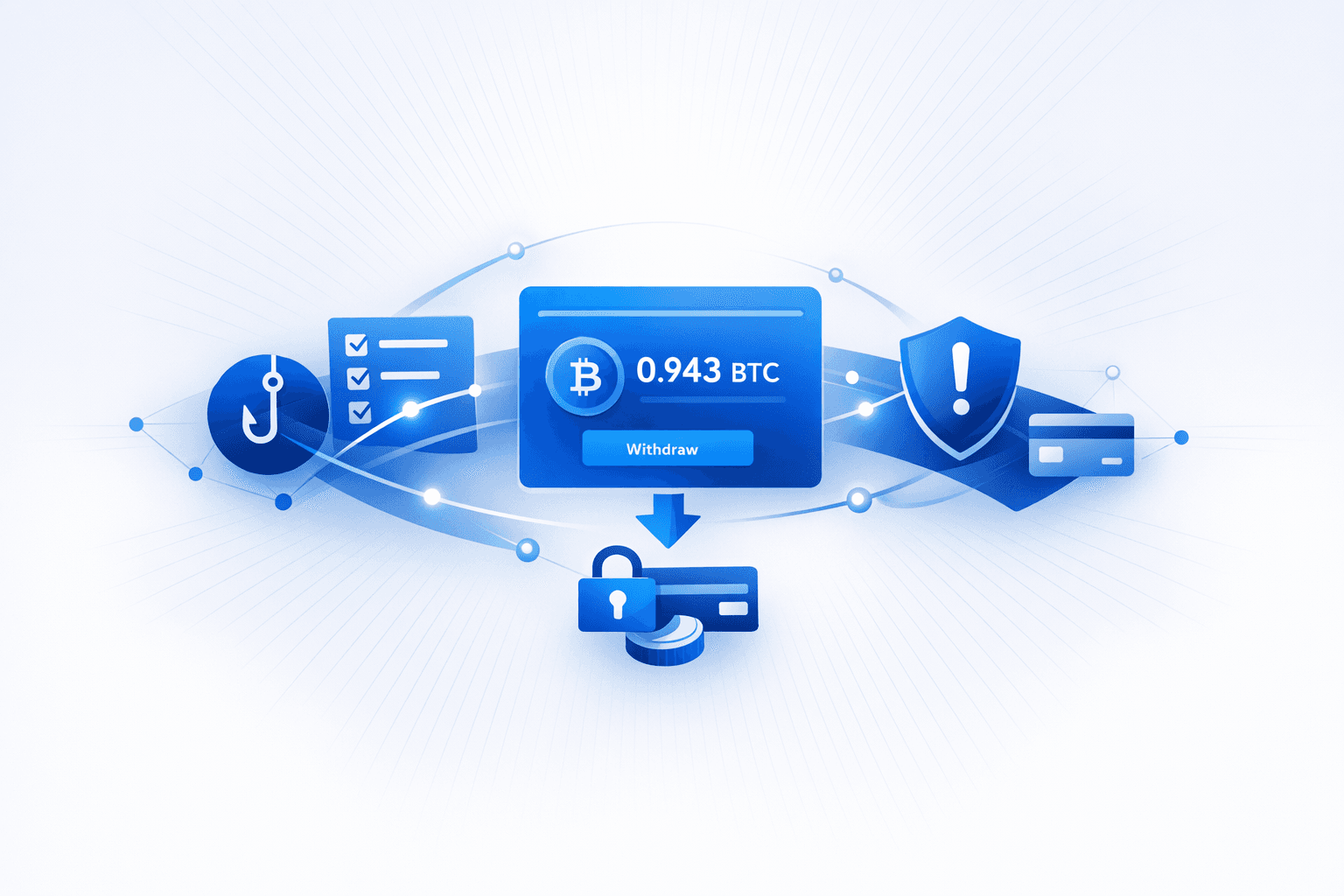
Multiple reports describe **social-engineering scams** that impersonate trusted brands and payment providers to drive victims into credential theft or direct monetary loss. A “crypto compensation” lure abuses a legitimate-looking *Yandex* poll as an entry point, then redirects victims to a fake Bitcoin payout page claiming an approved `0.943 BTC` transaction and imposes a small “commission”/fee to withdraw funds—classic advance-fee fraud wrapped in a polished, multi-step funnel (including a fake chat “support agent”). Separately, Japanese-language phishing emails impersonating **ANA**, **DHL**, and **myTOKYOGAS** show consistent infrastructure patterns (notably `.cn` domains in sender and landing-page URLs), suggesting a single operator or shared kit targeting Japanese-speaking recipients. Several consumer scam advisories highlight **SMS-based fraud alerts** that push targets to call attacker-controlled phone numbers, where scammers pose as “support” to steal **Apple ID/2FA codes** or payment details, or to coerce victims into moving money. One PayPal-themed case escalated to cash withdrawals handed to a courier after a victim called a number from an unsolicited text, illustrating how “fraud department” pretexts can transition from phishing to **cash-out theft**. Additional warnings cover lookalike payment sites (e.g., `payyourbill.aps medical.com`) and generic guidance on what to do after clicking a phishing link; these are broadly consistent with the same theme (phishing/payment fraud) but are not tied to a single, specific campaign or actor across all items.
Jul 2, 2026
Malwarebytes telemetry collected from April 15 to July 14 found that fraudsters increasingly match scam types to the channels most likely to produce victims. The web remained the largest overall delivery route, followed by email and SMS; job scams favored email, romance scams social media, tech-support and IRS lures phone calls, and toll scams email or text messages. U.S.-targeted scam texts peaked around noon Eastern Time and on Fridays, indicating deliberately timed campaigns rather than random delivery. Impersonation operations commonly exploited MrBeast, Elon Musk, Donald Trump, and brands including Google, Microsoft, Apple, Amazon, Roblox, and Steam. Gaming-platform impersonation increased from mid-June to mid-July, and Malwarebytes assessed roughly half of gaming scams as carrying a potential victim loss of at least $1,000. Organizations should reinforce channel-specific phishing awareness, particularly for SMS and social-media lures, and alert users to unsolicited messages invoking prominent brands or personalities.
Sep 4, 2026