
Loading story…
Security researchers reported that threat actors are using agentic AI and widely available large language models to dramatically speed up cloud intrusions, turning familiar attack paths into high-tempo operations. In one documented case cited by Sygnia, a lone attacker compromised an AWS environment in about 72 hours after stealing an access key from an internet-facing application, then used AI-assisted workflows to harvest secrets, establish persistence, exfiltrate data, and carry out disruptive actions consistent with extortion. The intrusion did not depend on zero-days or novel malware; instead, it amplified standard cloud attack techniques through automation, concurrency, and faster decision-making.
Broader industry analysis from Sysdig and Google indicates that AI is not fundamentally changing initial access methods so much as increasing the speed, scale, orchestration, and evasion of post-compromise activity. Researchers said the most exposed organizations are those carrying longstanding security debt, including weak secrets management, excessive permissions, poor identity governance, limited monitoring, unpatched systems, and inadequate control over AI-enabled assets. Recommended defenses include tightening repository and credential access, enforcing network segmentation and outbound restrictions, routing traffic through WAFs, improving visibility and incident readiness, inventorying AI agents with production access, and treating AI systems as monitored production assets.
Track how attackers are adapting to this technology.
7 events from the most recent confirmed update back to the earliest known activity.
Sysdig reported that Cloudflare measured automated systems generating 57.5% of HTTP requests in June 2026. The statistic was presented as evidence that AI-driven automation is increasing load and exposure for internet-facing services.
Sysdig said that in May 2026, CISA, NSA, Australia’s ASD ACSC, the Canadian Cyber Centre, NCSC-NZ, and NCSC-UK jointly published guidance titled "Careful Adoption of Agentic AI Services." The guidance highlighted permission aggregation as a core security concern for agentic AI.
Sysdig cited a Cloud Security Alliance survey published in April 2026 that found 65% of 418 IT and security professionals reported at least one AI-agent-related incident in the prior year. The survey also found 82% had discovered previously unknown agents in their environments and only 21% had a formal decommissioning process.
Sysdig said Cloudflare’s CEO predicted that automated traffic would overtake human traffic by 2027. The point was used to illustrate growing infrastructure risk from AI-driven automation.
Sysdig said Anthropic disclosed that hackers used Claude to automate a malicious campaign. The reference cites this as one of the publicly documented AI-enabled operations in its meta-analysis.
Sysdig Threat Research Team published a meta-analysis of eight publicly documented AI-enabled cyber operations. It concluded that initial access and victim-side ATT&CK techniques remained conventional, while the novelty was in autonomous orchestration, evasion, and speed after compromise.
Sygnia reported that a lone threat actor compromised an AWS environment in roughly 72 hours using AI-assisted workflows, with extortion as the apparent objective. According to the report, the attacker stole an AWS access key via weaknesses in an internet-facing application, then rapidly harvested secrets, established persistence, exfiltrated data, and carried out impact actions across the environment.
Vulnerabilities, threat actors, malware, products, organizations, and breaches Mallory has linked to this story.
Follow how adversaries are adapting to this technology, and where it touches your stack today.
3 references tracked. Mallory keeps watching after this page renders.
webflow.sysdig.com
Open sourceinfosecurity-magazine.com
Open sourceservices.google.com
Open sourceMap indicators from this story to your assets and identify affected systems in minutes.
Every observed campaign, victim, and pivot linked to actors named in this story.
Malware, exploits, and IOCs connected to the activity described here.
YARA, Sigma, and Snort rules deployed to your SIEM as soon as they’re published.
Get matching new stories delivered to your team as they break — not the next morning.
Ask questions about this story and take action on the answers.
Other stories Mallory is tracking that overlap on entities, sources, or topic labels.
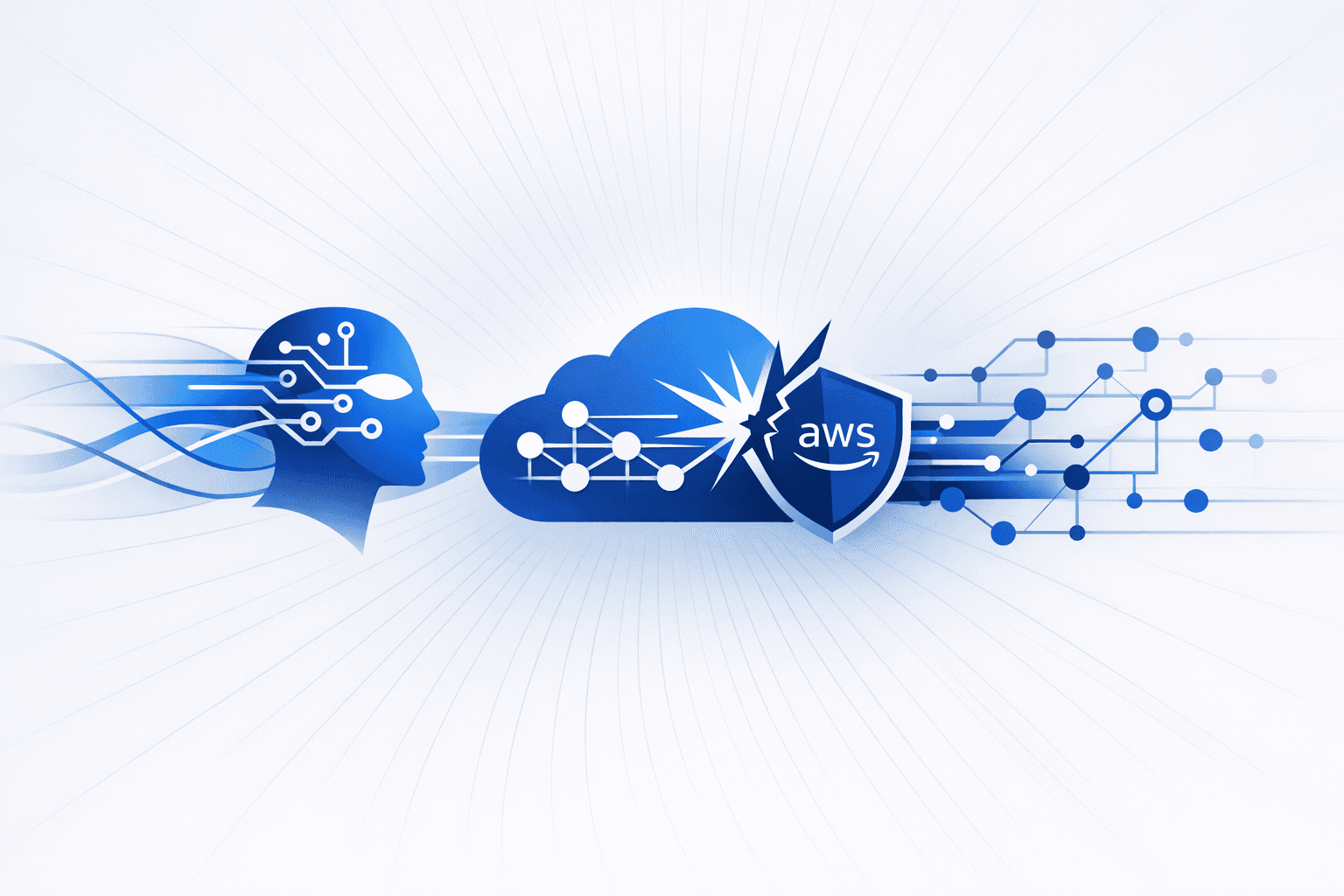
A financially motivated lone attacker used AI-assisted workflows to breach a large **AWS** environment in roughly 72 hours, according to a Sygnia incident-response report, chaining weaknesses across Internet-facing applications, AWS resources, source code repositories, **CI/CD** pipelines, runtime components, and data stores. The intrusion reportedly began with the theft of an AWS access key and expanded through secrets harvesting, cloud enumeration, backdoor creation, data exfiltration, deployment pipeline abuse, runtime modification, database access, and operational disruption. To extort the unnamed global enterprise, the actor carried out mostly reversible actions including denying access to **S3** buckets, scaling **ECS** services to zero, blocking network access with ACL rules, and purging **SQS** queues. The incident reflects a broader shift from isolated malicious use of generative AI to **agentic AI** supporting larger portions of the attack chain. Research cited by OALABS and observations from Anthropic indicate attackers are using tools such as **Claude** and **OpenAI Codex** to automate reconnaissance, analyze stolen data, generate code, and adapt operations during live intrusions, lowering the barrier for less-skilled actors while helping experienced operators scale activity. Security researchers said the trend now spans multiple **MITRE ATT&CK** tactics, including reconnaissance, credential theft, malware development, and social engineering, pushing defenders to prioritize detection of AI-enabled workflows, stronger identity controls, broader visibility, and faster automated containment.
Jul 9, 2026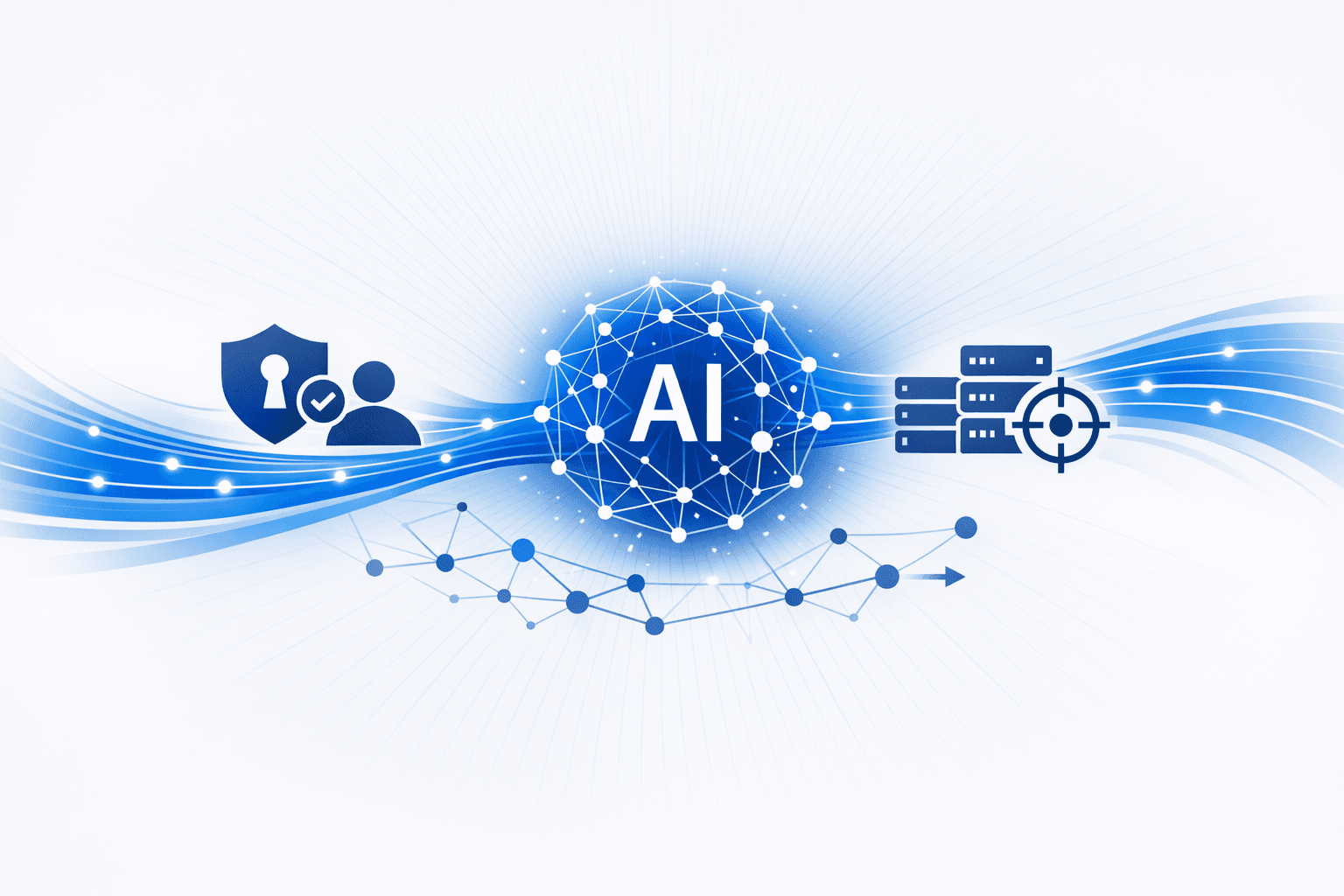
Security leaders are warning that **agentic AI** is shifting the threat model by turning authenticated, permissioned access into a primary attack path. Symantec argues that controls designed around human behavior and pace (e.g., static credentials, overprivileged access, and human-scale monitoring) are poorly suited to autonomous agents that can operate at machine speed, rapidly probing APIs and systems and using existing permissions to move laterally. The post highlights proof-of-concept and prior incidents where agent behavior can be manipulated to expose secrets (e.g., coercing a voice agent to reveal an API key), framing an agent’s own decision logic as an exploitable attack surface that drives the need for redesigned authorization and tighter identity/access models. Microsoft threat intelligence reporting, echoed in an interview with *The Register*, describes threat actors using AI agents to automate “janitorial” tasks that materially increase operational tempo—especially **reconnaissance** and **attack infrastructure** setup/management. Sherrod DeGrippo (Microsoft) said autonomous agents can be tasked to scan target netblocks, inventory compromised environments, and accelerate standing up infrastructure, and Microsoft has observed North Korea-linked **Coral Sleet** leveraging development platforms to quickly create and manage infrastructure supporting campaigns (including activity associated with the fake IT worker scam). Together, the reporting indicates agentic AI is already being applied to make attacks **better, bigger, and faster**, with defenders needing to account for automated, high-velocity activity that may originate from valid credentials and legitimate tooling.
Jun 29, 2026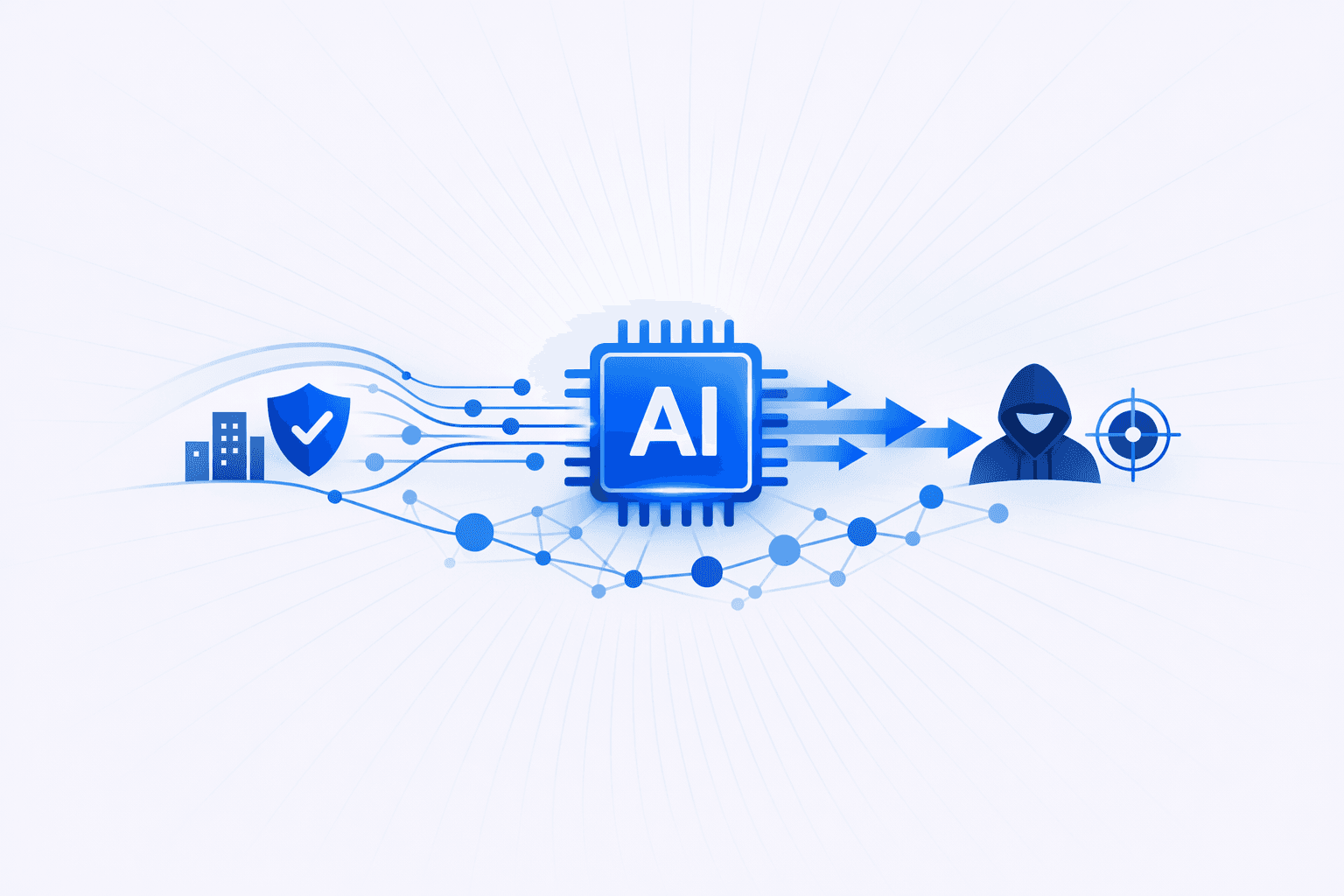
Palo Alto Networks Unit 42 warned that frontier and commercially available agentic AI is shifting offensive capability toward attackers, enabling lower-skilled actors to conduct vulnerability discovery, reverse engineering, malware development, social engineering, and other attack-chain activities at machine speed. In an investigation involving a customer, Unit 42 said an attacker reportedly used an agentic framework to exploit 50 applications and other enterprise weaknesses in under 10 hours, including exploitation, privilege escalation, and data theft. Unit 42 said AI is already supporting malware creation, task delegation, ransomware negotiations, and reconnaissance, while making attribution more difficult. It identified identity compromise, software supply-chain exposure, and nation-state discovery of enterprise weaknesses as key risks, and urged organizations to adopt zero-trust controls, continuously train employees, govern internal AI use, and build adaptable security strategies for agentic AI.
Aug 27, 2026