
Loading story…
DPRK-linked operators expanded the Contagious Interview social-engineering campaign by posing as recruiters and sending developers malicious GitHub or GitLab repositories that execute malware when opened in Visual Studio Code. Researchers said the attack does not rely on a software vulnerability; instead, it abuses trusted developer workflows, including .vscode/tasks.json, package.json, and Next.js configuration files, to trigger background execution after a victim opens a project and trusts the author. In observed cases, npm start or a VS Code task launched a staged JavaScript payload, including code hidden in files such as scripts/jquery.min.js, which then contacted attacker infrastructure hosted on Vercel and related domains.
TTPs, infrastructure, and targeting history in one profile.
20 events from the most recent confirmed update back to the earliest known activity.
A Microsoft Security Blog reference indicates publication of a report on a C2 developer-targeting campaign. No further factual content was supplied in the reference block to extract additional distinct events.
Ransom-ISAC reported that the 66.235.168.136 server was first observed with this C2 configuration on 24 January 2026. It matched the same Node.js/Express characteristics and /api/errorMessage pattern seen across related infrastructure.
Ransom-ISAC reported that the 87.236.177.9 server was first observed with this C2 configuration on 23 January 2026. The server used the /api/errorMessage endpoint later associated with BeaverTail overlap and Contagious Interview tradecraft.
The January 2026 campaign used a GitHub repository whose .vscode/tasks.json auto-ran npm start when opened in VS Code, while a weaponized next.config.js evaled a trojanized scripts/jquery.min.js stager. The stager fetched remote JavaScript from api-web3-auth.vercel.app and executed it without exploiting a software vulnerability.
Security researcher François-Julien Alcaraz was targeted in January 2026 by a fake recruitment campaign aimed at developers. The lure used LinkedIn recruiter personas, a Google Meet interview, and a malicious GitHub coding challenge.
Jamf Threat Labs reported that in December it identified additional abuse of Visual Studio Code tasks.json files, including obfuscated JavaScript executed when a victim opened a malicious repository. This reflected an evolution in the DPRK-attributed Contagious Interview campaign's initial execution method.
Ransom-ISAC stated that C2 IPs 66.235.168.136 and 87.236.177.9 had been active at least since mid-September of the previous year. The infrastructure later supported the VS Code-to-RAT campaign's /api/errorMessage beaconing pattern.
Ransom-ISAC and Crystal Intelligence investigated a September 2025 cryptocurrency and data theft attempt that originated from a private weaponized GitHub repository. The campaign evolved from an apparent phishing lure into a multi-layered attack using blockchain-based command-and-control and cross-platform malware.
Temporal analysis in the Ransom-ISAC investigation showed most pointer-address activity began in early June 2025 during weekdays. This marked the start of sustained blockchain-based command-and-control preparation.
SecurityScorecard reported that it identified an ongoing Lazarus Group supply-chain campaign dubbed Operation 99 on January 9. The operation targeted software developers through fake recruiter outreach and malicious GitLab repositories, deploying modular malware to steal source code, secrets, and cryptocurrency wallet material across Windows, macOS, and Linux.
Ransom-ISAC said the BOT250205 token contract had only 23 transactions since early 2025 and appeared to function mainly as an additional field for transaction text. The contract was tied to the campaign's cross-chain pointer infrastructure.
A BSC wallet used in the campaign, 0xab57bf80d77bf250331f9e1a523b2c11485a1a64, received more than 25,000 USDT between October 2024 and April 2025. Forward tracing from this wallet later showed bridging activity with exposure to addresses linked to North Korean thefts.
A public IoC report documented a social-engineering campaign using LinkedIn job or project lures and convincing GitHub repositories with hidden malicious code targeting development companies. The reporter submitted the activity to the Microsoft Security Response Center on 2024-09-27, establishing an earlier dated disclosure of this developer-focused intrusion method.
Ransom-ISAC reported that several infrastructure addresses tied to the blockchain-enabled campaign had been dormant since as far back as 2021 before being operationalized. This marks the earliest explicit temporal anchor in the references for the broader activity.
Ransom-ISAC published SHA-256 hashes for malicious files and a YARA rule named Actor_APT_DPRK_MAL_SCRIPT_JS_Dropper_Unknown_Strings_Mar26 to detect JavaScript droppers used in the campaign. The report also listed related staging domains and infrastructure characteristics.
Ransom-ISAC assessed the VS Code-to-RAT activity as linked to DPRK-affiliated operators and associated it with the Contagious Interview campaign, noting overlap with BeaverTail-related reporting. The article also identified additional likely related C2 IPs and staging domains through infrastructure pivoting.
Jamf Threat Labs reported an identified malicious repository to GitHub, and the repository was removed. Before takedown, Jamf observed the payload URL referenced in the repository change multiple times, including after a Vercel takedown.
Jamf Threat Labs observed additional JavaScript instructions executed roughly eight minutes after initial infection. The follow-on payload beaconed to the same C2 infrastructure, launched detached child Node processes, and included cleanup logic to stop managed processes on command.
Observed malware samples fingerprinted the host, beaconed every five seconds to C2 infrastructure, and could execute arbitrary JavaScript returned by the server. Jamf and Ransom-ISAC both described the same core behavior, including use of 87.236.177.9:3000/api/errorMessage and dynamic code execution.
A separate victim account described an attempted compromise through a fake job interview. The reference provides only the publication date metadata and no explicit event date in the supplied content, so the event date cannot be set.
Vulnerabilities, threat actors, malware, products, organizations, breaches, and observables Mallory has linked to this story. Indicator values are masked here and available in full in the app.
Indicator values are masked on this page. View all 112 in Mallory Domains, IPs, hashes, and URLs are exportable to your SIEM.
See this adversary's TTPs, infrastructure, and targeting history, correlated against your exposure.
8 references tracked. Mallory keeps watching after this page renders.
bsky.app
Open sourceransom-isac.org
Open sourceransom-isac.org
Open sourceblog.daviddodda.com
Open sourcegithub.com
Open sourcesecurityscorecard.com
Open sourcemicrosoft.com
Open sourcejamf.com
Open sourceMap indicators from this story to your assets and identify affected systems in minutes.
Every observed campaign, victim, and pivot linked to actors named in this story.
Malware, exploits, and IOCs connected to the activity described here.
YARA, Sigma, and Snort rules deployed to your SIEM as soon as they’re published.
Get matching new stories delivered to your team as they break — not the next morning.
Ask questions about this story and take action on the answers.
Other stories Mallory is tracking that overlap on entities, sources, or topic labels.
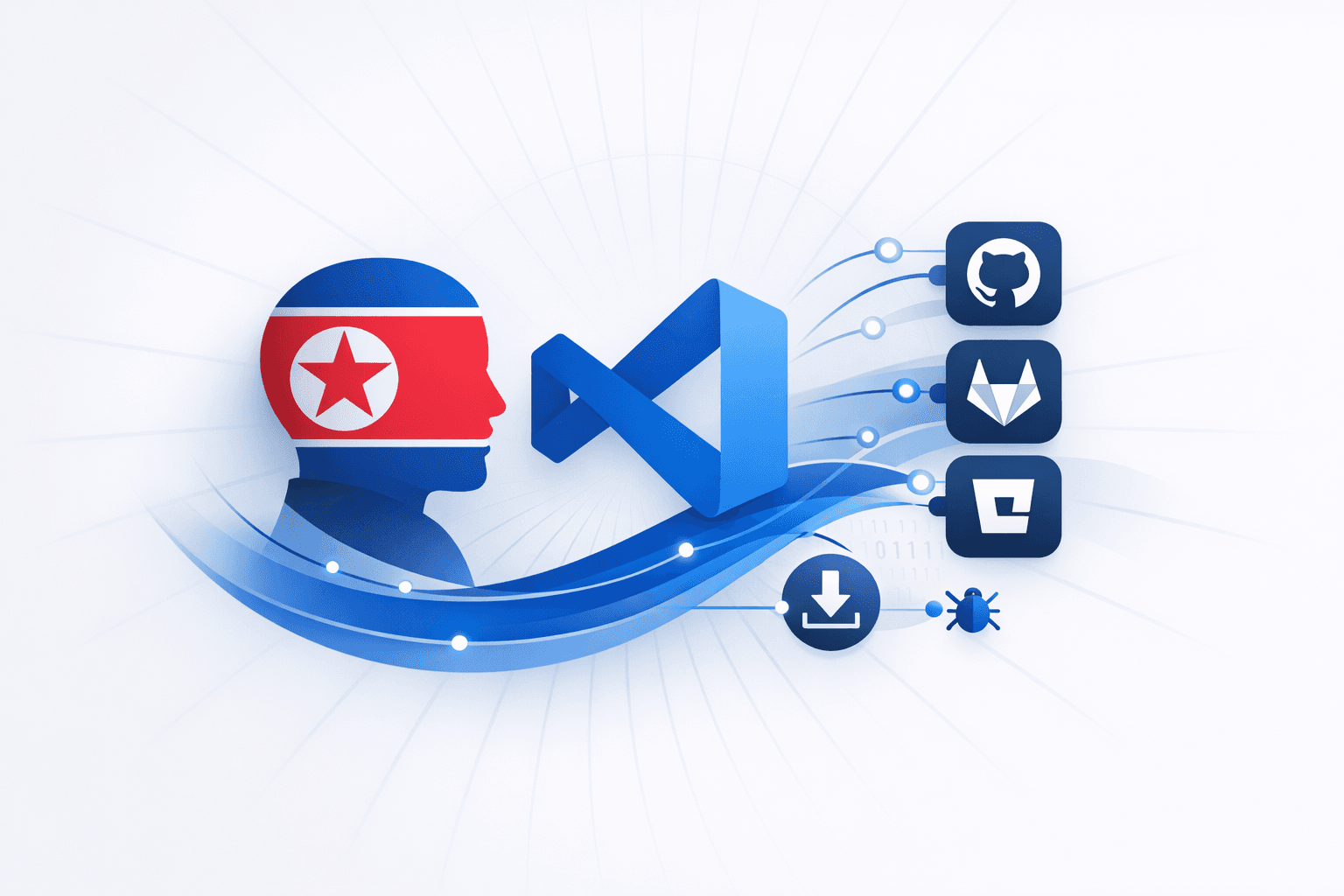
North Korea-linked threat actors tied to the long-running **Contagious Interview** operation have been observed using **malicious Microsoft Visual Studio Code (VS Code) projects** as part of fake job-assessment lures, instructing targets to clone repositories from GitHub/GitLab/Bitbucket and open them in VS Code. The technique abuses VS Code `tasks.json` configuration—specifically `"runOn": "folderOpen"`—to trigger execution when a folder is opened, pulling staged payloads from attacker-controlled infrastructure (including Vercel-hosted domains) and ultimately deploying backdoors such as **BeaverTail** and **InvisibleFerret** that enable remote code execution and follow-on control. Recent iterations reportedly add multi-stage droppers embedded in task configuration content and disguised as benign files (e.g., spell-check dictionaries) to improve resilience if network retrieval fails, and include command-and-control behavior that can execute attacker-supplied JavaScript from a remote server (e.g., `ip-regions-check.vercel[.]app`). Separate reporting on North Korean APT trends indicates continued reliance on **fraudulent IT employment schemes** and recruitment-platform abuse to gain access to Western organizations, including long-term social engineering and persistent remote access via legitimate tools (e.g., *AnyDesk*, *Google Remote Desktop*) and VPN/location obfuscation. This broader pattern aligns with the same overarching tradecraft used in developer-targeted “interview” lures: leveraging hiring workflows and developer tooling to establish initial access and persistence while reducing suspicion, particularly in environments with remote-work infrastructure and developer workstations.
Jul 4, 2026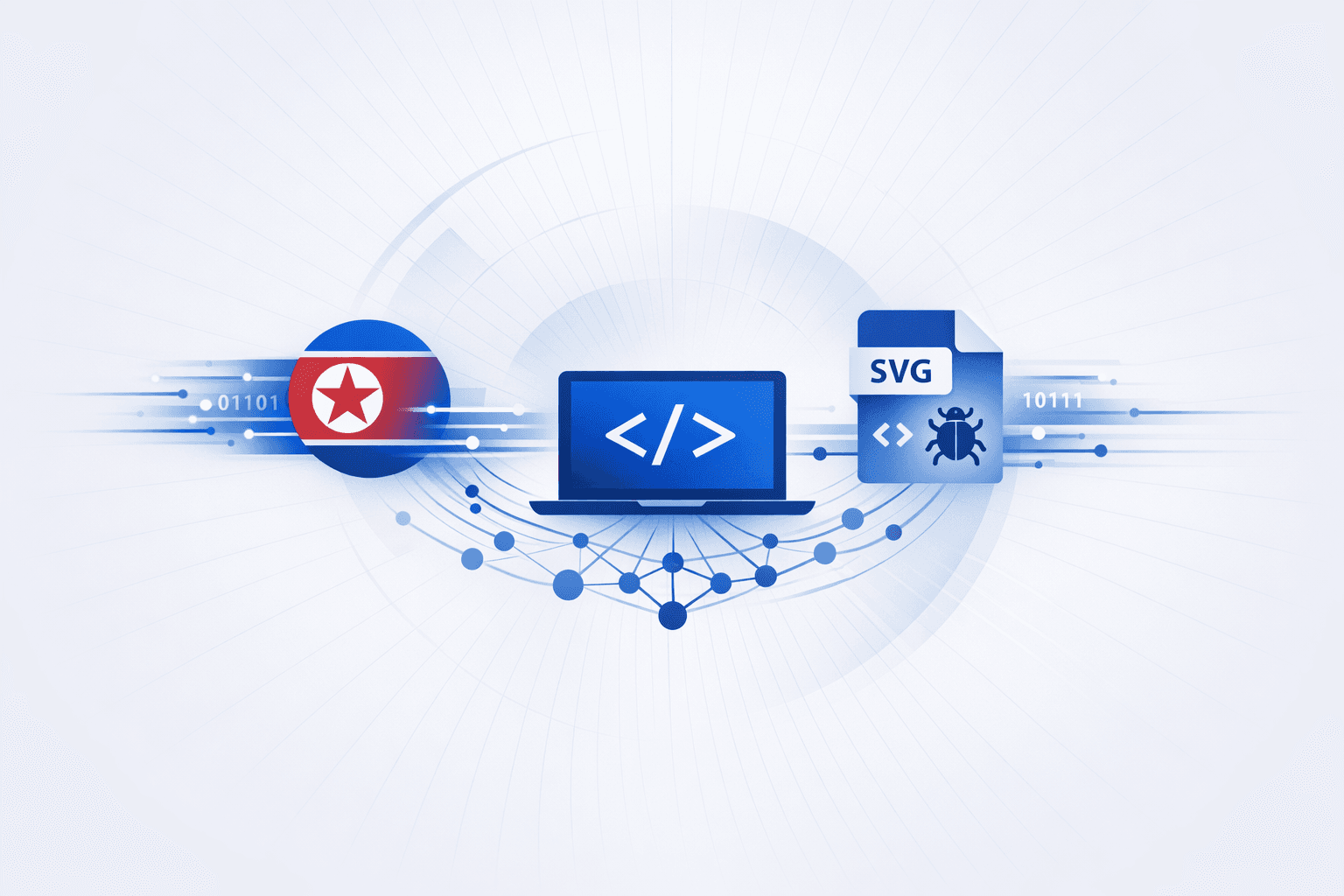
Elastic Security Labs reported a **Contagious Interview** intrusion tied to a DPRK-aligned threat cluster after suspicious activity targeted Elastic’s community Slack workspace. Using a fake recruiter persona named **Maxwell**, the operator posted a fraudulent job opportunity and coding challenge that directed victims to trojanized **Next.js** e-commerce repositories. The malicious code hid payload components inside SVG image files using steganography, embedding Base64 fragments in flag images that were reassembled by `serverValidation.js` and executed with `eval()` when the local development server started. The campaign matches the broader **Contagious Interview** tradecraft tracked in **MITRE ATT&CK** as **G1052**, which relies on fake hiring outreach, code-repository lures, and social engineering to infect developers across **Windows, macOS, and Linux**. Elastic said the infection chain deployed a browser credential and crypto-wallet stealer, a file stealer, a persistent **Socket.IO** RAT, and a clipboard stealer capable of fetching Windows PE payloads, while code similarities to **OTTERCOOKIE** and infrastructure overlaps previously documented by JFrog reinforced the attribution. MITRE also associates the cluster with malware such as **BeaverTail** and **InvisibleFerret**, along with credential theft, financial theft, persistence through platform-specific startup mechanisms, and exfiltration over C2 and cloud or messaging services.
Jul 24, 2026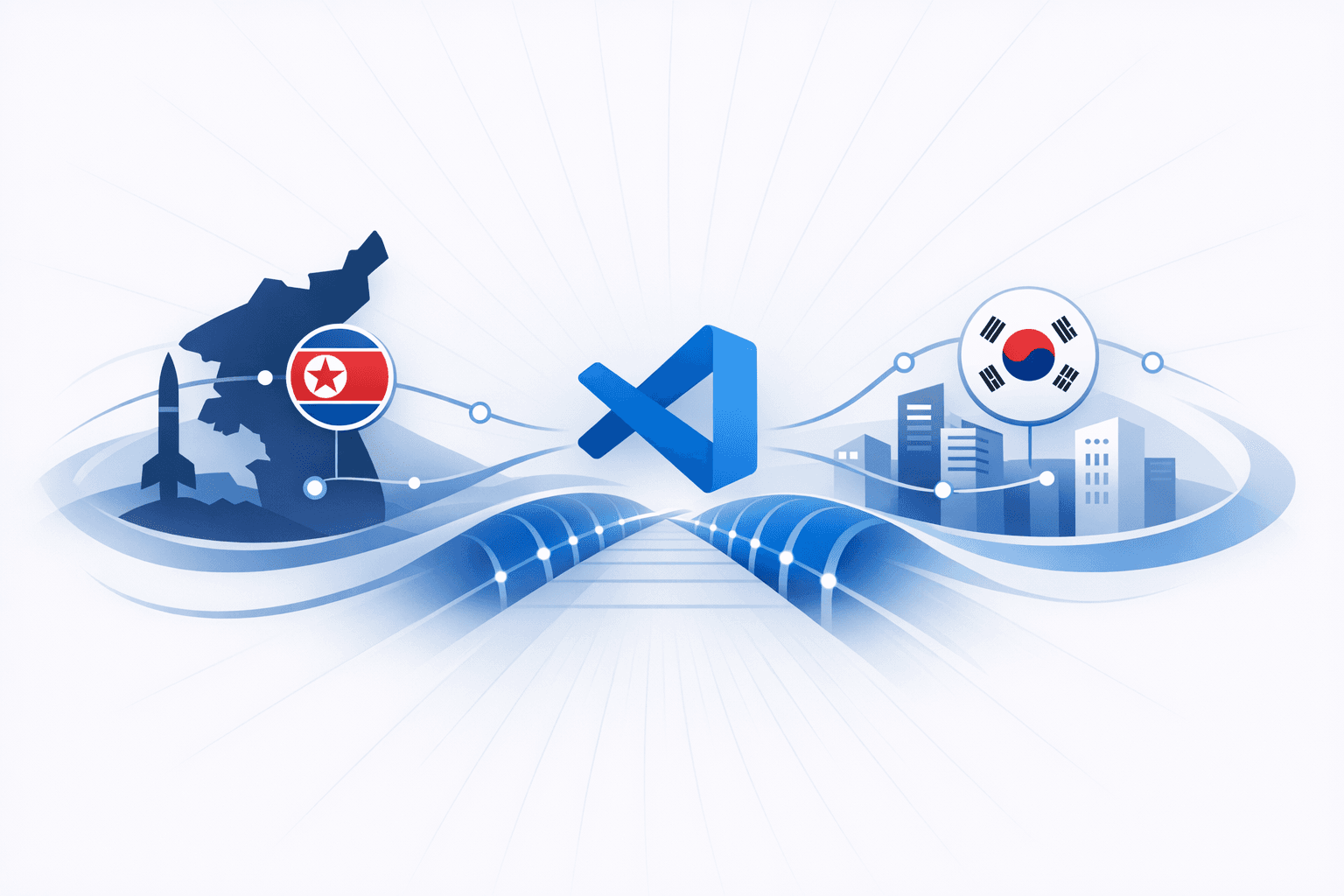
Darktrace reported a spear-phishing campaign targeting **South Korean** organizations that abuses a legitimate feature in *Microsoft Visual Studio Code* to establish remote access without deploying traditional command-and-control infrastructure. The lures used government-themed content, delivering files described as **JSE** scripts disguised as Hangul Word Processor (*HWPX*) documents; when opened, they installed VS Code and enabled **VS Code Tunnels**, allowing attackers to remotely control compromised hosts over trusted Microsoft infrastructure. Darktrace assessed the activity as heavily *living-off-the-land* and noted it as an apparent first for **DPRK-linked** actors using this specific tunneling technique. Other items in the set describe separate, unrelated activity and should not be conflated with the VS Code tunneling campaign. KnowBe4 detailed a dual-wave phishing operation that steals credentials and then weaponizes legitimate **RMM** tools for persistence; CybersecurityNews described a multi-stage Windows infection chain that uses LNK/PowerShell, GitHub-hosted loaders, Telegram Bot API communications, and repurposes the *Defendnot* tool to disable Microsoft Defender before dropping additional payloads; and The Hacker News “ThreatsDay” bulletin and Black Hills InfoSec’s “common threats” article are broad roundups/generic content rather than reporting the same South Korea VS Code incident. Darktrace’s separate blog post also discusses rapid exploitation of `CVE-2025-55812` (*React2Shell*) against exposed Next.js/React Server Components, which is a different topic from the DPRK VS Code Tunnels intrusion activity.
Jun 29, 2026