
Loading story…
Unknown cyber actors targeted a US renewable energy company in a spear-phishing campaign that impersonated a US-based financial institution and promised access to more than $62 million in funding. The phishing email used a fraudulent loan theme, spoofed financial and government-linked entities through registered domains, email subjects, and attached PDFs, and directed the recipient to download a fake Windows banking application from secureportal[.]online. Supporting lures included a document spoofing the UK National Crime Agency and another appearing to contain SWIFT information, indicating an effort to build credibility across multiple institutions.
The FBI, in coordination with DHS-CISA, said the malicious executable contacted secureportal[.]online and warned that the activity matched a broader campaign active since at least 2017. Additional reporting linked the infrastructure to numerous lookalike domains, fake login portals, and backdoored installers masquerading as banks in multiple regions; the installers were reportedly built with the open-source Squirrel framework and likely delivered TeamViewer-derived remote access trojans with low antivirus detection. Authorities recommended updated anti-malware, application control, reduced administrator privileges, and careful verification of unsolicited emails, attachments, and web addresses.
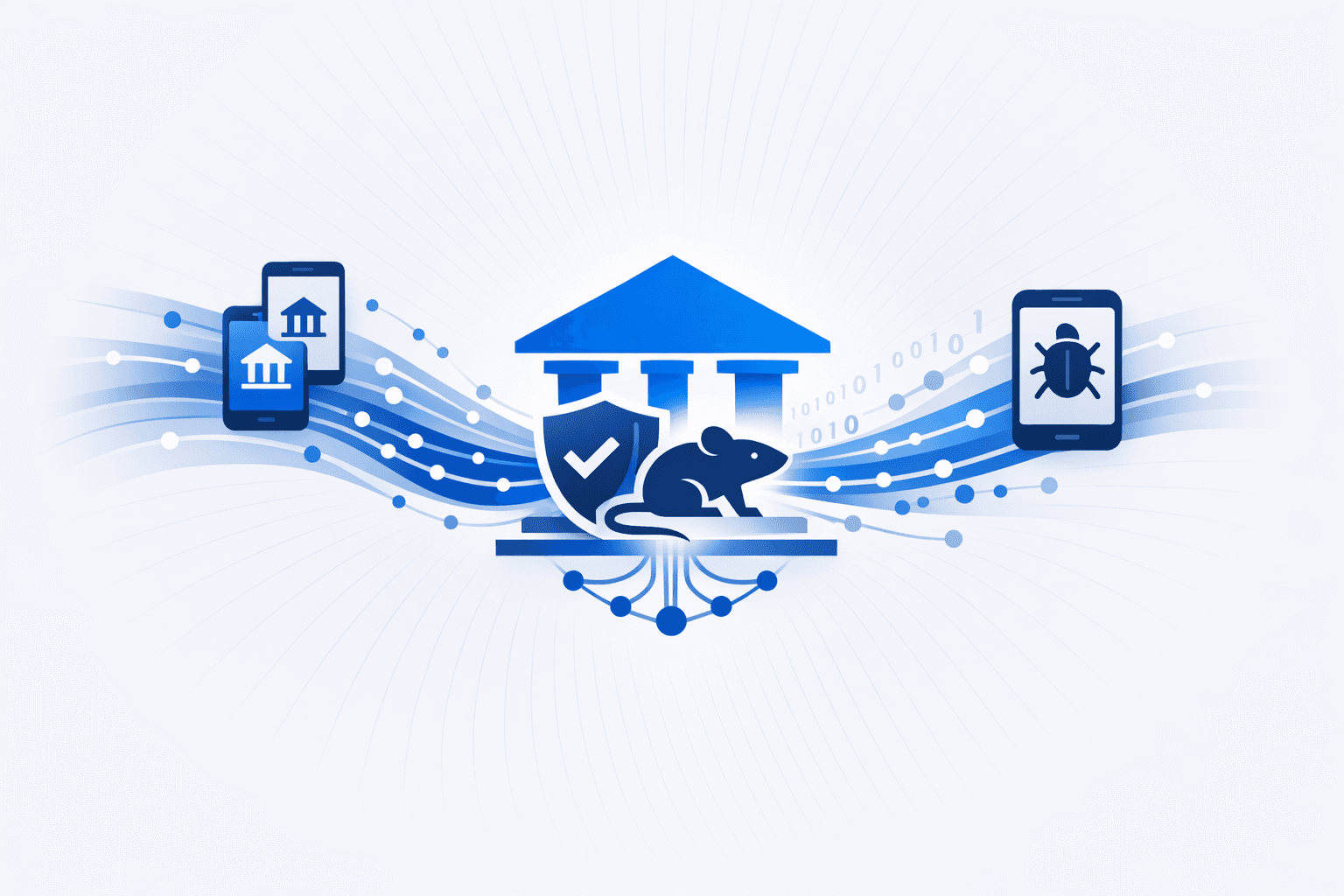
Get the infrastructure and lures behind it.
4 events from the most recent confirmed update back to the earliest known activity.
On 27 May 2021, Cyjax published analysis expanding on the FBI indicators and tied the incident to a wider infrastructure cluster using fake banking portals and backdoored installers. Cyjax said the malware appeared to use Squirrel-built applications and likely TeamViewer-derived remote access capability.
On 12 May 2021, the FBI issued Private Industry Notification 20210512-001, coordinated with DHS-CISA, describing the spear-phishing campaign and associated indicators. The notice warned that the attackers used spoofed financial branding, fraudulent PDFs, and a malicious executable that contacted secureportal(.)online.
In February 2021, unknown cyber actors spear-phished a renewable energy company while impersonating a US-based financial institution. The email promised more than $62 million in funding and directed the recipient to download a fake Windows application from attacker-controlled infrastructure.
Cyjax assessed the broader spear-phishing and fake banking application campaign had been active since at least 2017, using lookalike domains and fake portals to impersonate financial institutions across multiple regions.
Vulnerabilities, threat actors, malware, products, organizations, breaches, and observables Mallory has linked to this story. Indicator values are masked here and available in full in the app.
Indicator values are masked on this page. View all 34 in Mallory Domains, IPs, hashes, and URLs are exportable to your SIEM.
Get the infrastructure, lures, and IOCs behind this campaign, ready to push into your email and identity stack.
2 references tracked. Mallory keeps watching after this page renders.
Map indicators from this story to your assets and identify affected systems in minutes.
Every observed campaign, victim, and pivot linked to actors named in this story.
Malware, exploits, and IOCs connected to the activity described here.
YARA, Sigma, and Snort rules deployed to your SIEM as soon as they’re published.
Get matching new stories delivered to your team as they break — not the next morning.
Ask questions about this story and take action on the answers.
Other stories Mallory is tracking that overlap on entities, sources, or topic labels.
Threat researchers reported multiple phishing-driven intrusions in which attackers impersonate trusted brands and agencies to trick victims into installing legitimate remote monitoring and management (RMM) software for persistent access. In **Operation DoppelBrand**, financially motivated actor **GS7** spoofed Fortune 500 financial and technology brands (including **Wells Fargo** and **USAA**) using more than **150** lookalike domains to harvest credentials and exfiltrate data via attacker-controlled **Telegram bots**; researchers also identified nearly **200** additional domains with short registration terms, automated SSL, wildcard DNS, and brand-specific subdomains supporting the campaign. Separately, Forcepoint X-Labs described a wave of emails impersonating the **U.S. Social Security Administration** that delivers an attached `.cmd` script to weaken Windows defenses and enable silent installation of **ConnectWise ScreenConnect**. The script checks/elevates privileges, disables **Windows SmartScreen** via registry changes, removes **Mark-of-the-Web**, and uses **Alternate Data Streams (ADS)** for stealth before installing an MSI and configuring ScreenConnect (via `System.config`) to beacon to an attacker-controlled server (reported as `dof-connecttop` on port `8041`). Both activity sets highlight a recurring tradecraft pattern: **brand impersonation + scripted defense evasion + abuse of legitimate RMM tooling** (e.g., *LogMeIn Resolve*, *ScreenConnect*) to gain remote control and facilitate follow-on theft or persistence.
Jun 29, 2026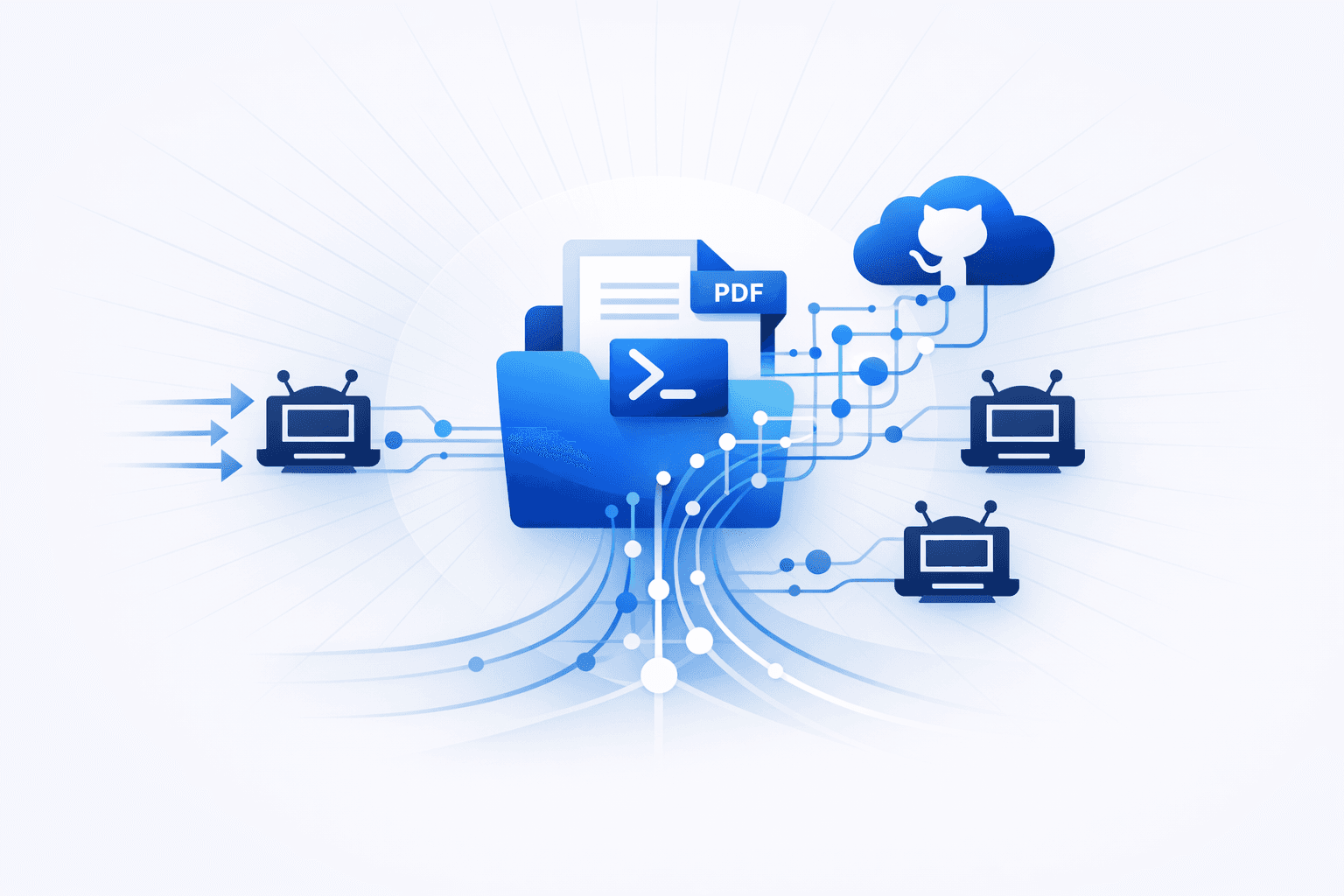
Security researchers reported several unrelated **remote access trojan (RAT)** delivery campaigns using different initial access vectors and lures. Seqrite Labs described “**Operation Covert Access**,” a spear‑phishing operation targeting Argentina’s judiciary with a ZIP attachment containing a convincing court-resolution decoy; execution is triggered by a malicious `LNK` masquerading as a PDF, which launches hidden PowerShell to fetch additional stages from a GitHub repository, culminating in a custom **Rust-based RAT** that attempts to blend in by renaming itself (e.g., `msedge_proxy.exe`). Separately, AhnLab Security Intelligence Center reported South Korea-focused activity distributing **RemcosRAT** through illegal online gambling-related tools and trojanized *VeraCrypt* installers, using embedded malicious VBS scripts and a multi-stage chain that ultimately deploys a RAT capable of surveillance and data theft (e.g., keylogging, screenshot/webcam/mic capture, credential/data harvesting). Another campaign documented by ReliaQuest abused **LinkedIn private messages** to deliver a bundled legitimate application alongside a malicious DLL for **DLL sideloading**, enabling RAT deployment under the guise of a trusted process; the reporting emphasized that social platforms can serve as effective phishing channels beyond email and that the technique is portable to other commonly used business messaging platforms.
Jun 29, 2026
Threat actors used an AI-generated typosquatting site impersonating a Brazilian bank to deliver **SmartRAT**, a PowerShell-based banking trojan built for financial theft. Victims were funneled through a fake Cloudflare CAPTCHA and then a fullscreen fake BSOD/system recovery page that pressured them to paste and run a malicious PowerShell command, which fetched additional payload stages from attacker-controlled infrastructure. Researchers linked the campaign to delivery from `64.95.13.238`, command-and-control at `windowsupdate-cdn[.]com`, and a fallback IP of `162.141.111.227`. Once installed, SmartRAT established encrypted raw TCP communications over port `51888`, persisted through scheduled tasks, registry Run keys, and optionally a Windows service named **MicrosoftEdgeUpdateCore**, and could run with elevated privileges while still interacting with the user session. The malware monitored Brazilian banking, payment, and cryptocurrency windows, used keylogging and fake bank-branded overlays to steal credentials, and supported QR-swap fraud by replacing on-screen banking QR codes with attacker-controlled images. It also provided full RAT capabilities including screen streaming, file exfiltration, clipboard manipulation, process and service listing, arbitrary PowerShell execution, and input freezing; researchers additionally found the web-based SmartRAT control panel had a critical authentication weakness, relying on client-side `localStorage` checks without server-side validation.
Jun 29, 2026