
Loading story…
Cybercriminals are increasingly using HTML attachments in phishing emails to evade detection and steal credentials, embedding malicious logic directly in attached files instead of placing suspicious links in the message body. The attachments commonly use JavaScript to redirect victims to fraudulent login pages or to display a complete phishing page locally inside the browser, making the email appear less obviously malicious to both users and some security controls.
Researchers found that attackers also obfuscate these attachments to hinder static analysis, including hiding phishing URLs, concealing entire scripts, and using deprecated JavaScript functions such as unescape() to decode and render phishing content at runtime. Kaspersky reported detecting nearly 2 million emails carrying malicious HTML attachments in the first four months of 2022, including 851,328 blocked in March alone, underscoring how effective and persistent the technique remains for credential-harvesting campaigns.

Get the infrastructure and lures behind it.
3 events from the most recent confirmed update back to the earliest known activity.
Kaspersky detected and blocked 851,328 emails with phishing HTML attachments in March 2022. This was highlighted as a peak month within the early-2022 activity described in the article.
The article states that January 2022 was the calmest month in the period, with 299,859 emails containing phishing HTML attachments detected by Kaspersky antispam solutions.
Kaspersky security solutions detected nearly 2 million emails containing malicious HTML attachments in the first four months of 2022. The article cites this as evidence that HTML attachments remained a widely used phishing technique.
Get the infrastructure, lures, and IOCs behind this campaign, ready to push into your email and identity stack.
1 reference tracked. Mallory keeps watching after this page renders.
Map indicators from this story to your assets and identify affected systems in minutes.
Every observed campaign, victim, and pivot linked to actors named in this story.
Malware, exploits, and IOCs connected to the activity described here.
YARA, Sigma, and Snort rules deployed to your SIEM as soon as they’re published.
Get matching new stories delivered to your team as they break — not the next morning.
Ask questions about this story and take action on the answers.
Other stories Mallory is tracking that overlap on entities, sources, or topic labels.
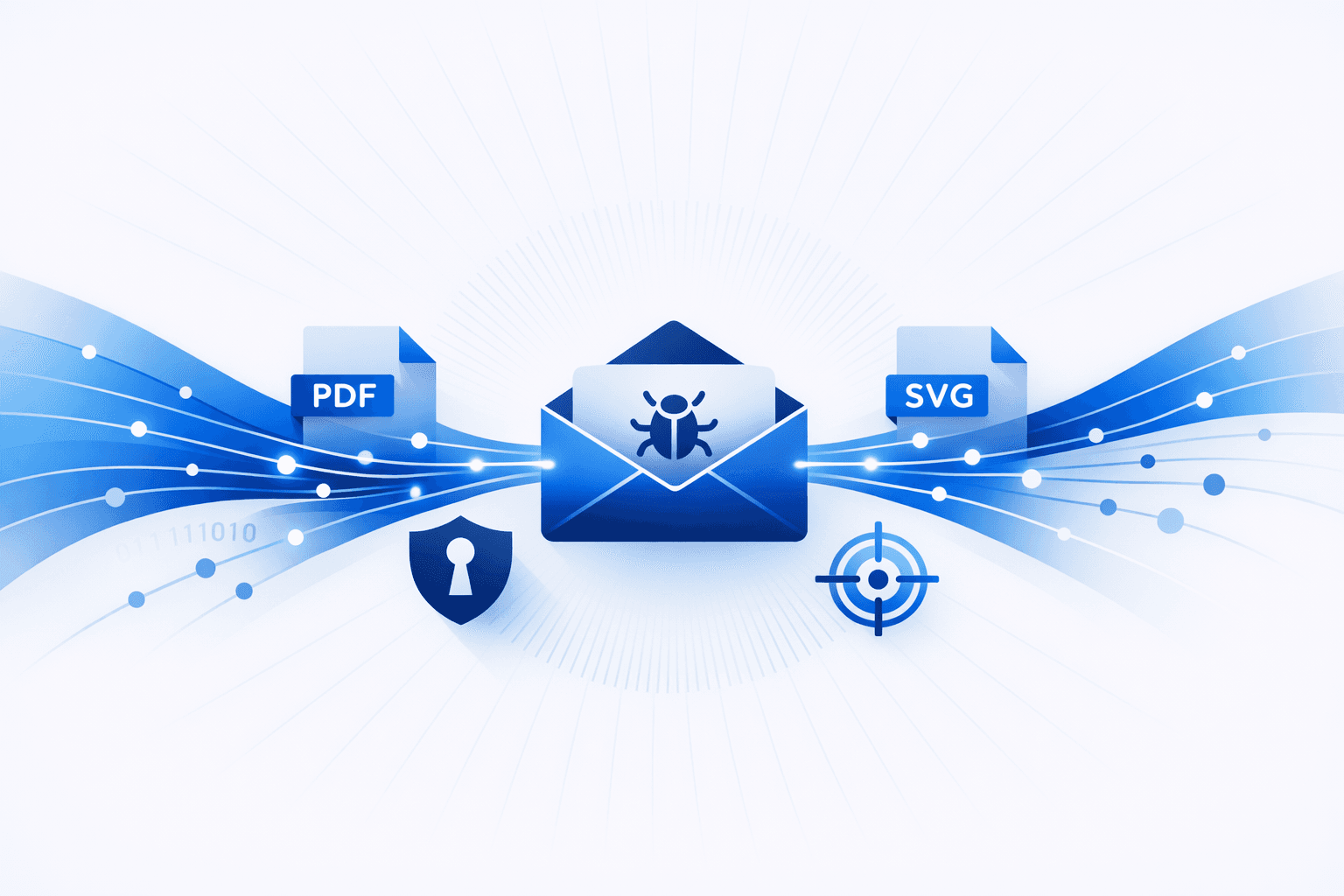
Threat actors are increasingly adopting sophisticated email phishing techniques that leverage both established and novel methods to bypass security controls and deceive users. One prominent trend is the use of PDF attachments in phishing emails, where attackers embed QR codes within the PDF files. This tactic encourages recipients to scan the QR code with their mobile devices, which often lack the robust security protections of corporate endpoints, thereby increasing the likelihood of successful credential theft or malware installation. In addition to QR codes, attackers are also distributing password-protected PDF attachments. The passwords are either included in the email or sent separately, which not only complicates automated scanning by security solutions but also lends an air of legitimacy to the communication, making recipients more likely to trust and open the files. These methods represent a resurgence and refinement of older phishing tactics, demonstrating the adaptability of threat actors in response to evolving security measures. Another significant development is the deployment of SVG image attachments as phishing lures, as seen in the Tykit phishing kit. This kit, identified as part of a phishing-as-a-service (PhaaS) operation, uses SVG files that mimic secure document viewers or prompt users to enter information, such as the last four digits of their phone number, under the guise of accessing secure content. The SVG files contain embedded JavaScript that redirects victims through a series of intermediary pages, ultimately leading to a fake Microsoft 365 login page designed to harvest credentials. The infrastructure supporting these attacks is highly organized, with command-and-control (C2) servers identified by unique URL patterns and attack flows that include adversary-in-the-middle (AitM) techniques to intercept and replay stolen credentials. The Tykit campaign has targeted hundreds of victims across multiple sectors, including finance, IT, government, professional services, and construction, with a notable concentration in the United States, Canada, and Southeast Asia. Activity associated with this campaign peaked in the latter half of 2025, indicating a surge in the adoption of these advanced phishing methods. The use of both PDF and SVG attachments in phishing campaigns highlights the ongoing arms race between attackers and defenders, as threat actors continuously refine their techniques to evade detection and exploit user trust. Security teams are challenged to adapt their defenses to account for encrypted attachments, QR code-based lures, and sophisticated image-based phishing kits. The prevalence of phishing-as-a-service offerings further lowers the barrier to entry for cybercriminals, enabling widespread and coordinated attacks. Organizations are urged to enhance user awareness, implement advanced email filtering, and monitor for emerging phishing tactics that leverage non-traditional attachment types and multi-stage attack chains. The evolving landscape of email phishing underscores the need for a multi-layered security approach that addresses both technical and human vulnerabilities.
Jun 29, 2026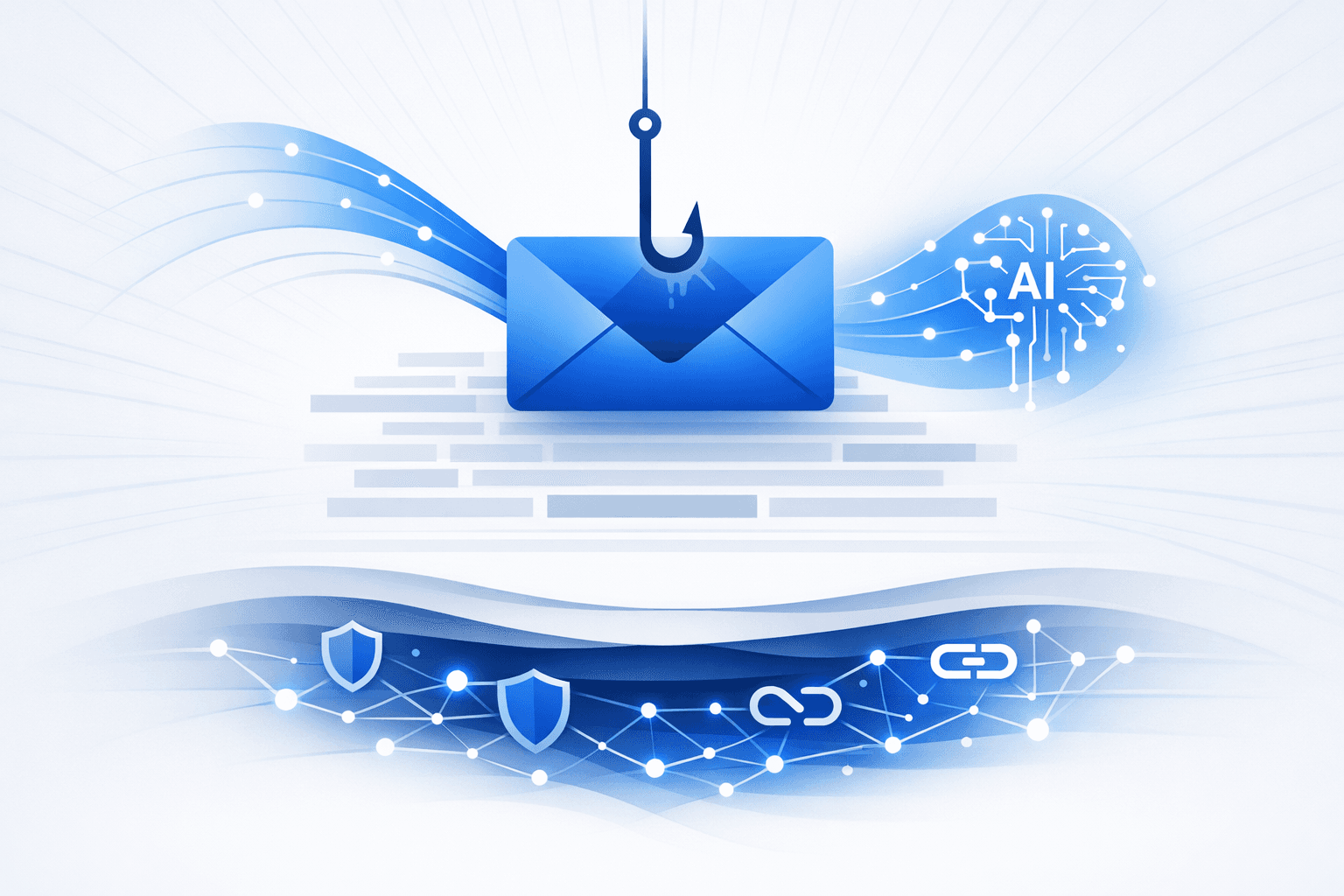
Security researchers reported multiple **phishing evasion** techniques designed to defeat modern email and AI-assisted defenses rather than relying only on traditional lure quality. One campaign analyzed by KnowBe4 used **graymail-style content padding** and extreme whitespace insertion to manipulate NLP-based email security tools, placing benign promotional text, legitimate signatures, and trusted links far below the visible phishing lure so scanners would weigh the message as less malicious. A separate LevelBlue-tracked trend showed attackers abusing enterprise **URL rewriting** and *Safe Links*-style protections by sending phishing through compromised accounts, causing security gateways to generate trusted wrapped URLs that could then be reused in campaigns targeting **Microsoft 365** users. The activity reflects a broader shift toward exploiting the gap between what users see and what automated systems inspect. In the URL-rewriting abuse, operators tied to **Tycoon2FA** and **Sneaky2FA** built multi-layer redirect chains across several trusted vendor domains to obscure final destinations and steal credentials and MFA session cookies through adversary-in-the-middle infrastructure, enabling account takeover, internal phishing, data theft, and sometimes ransomware follow-on activity. Related research from LayerX showed a different but thematically aligned evasion method in which **font rendering and CSS** make webpages display malicious commands to users while AI assistants parsing the underlying HTML see only harmless text, underscoring that attackers are increasingly targeting AI and trust-based inspection layers as part of phishing and social-engineering operations.
Jun 29, 2026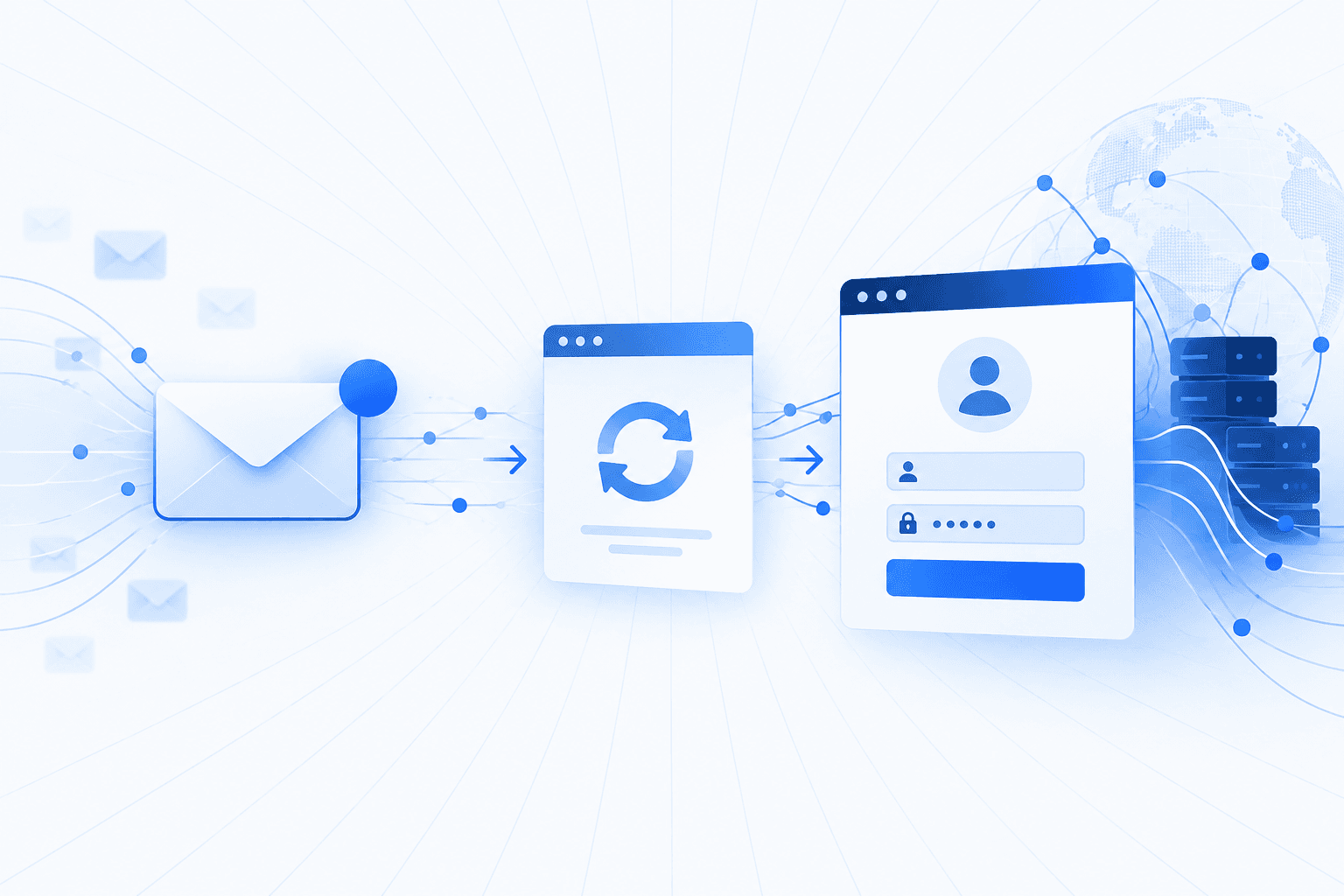
Unit 42 observed large-scale phishing campaigns using **HTTP Refresh response headers** to redirect browsers to credential-stealing pages, detecting approximately 2,000 associated malicious URLs daily from May through July 2024. Attackers primarily distributed links through email, using legitimate or compromised domains, URL-shortening services, and intermediate redirects to conceal phishing destinations. Redirect URLs embedded recipients’ email addresses, enabling personalized webmail login pages with pre-filled account details. Targets spanned global businesses, financial institutions, government agencies, educational institutions, and users of major internet portals; a June campaign predominantly targeted large corporations in Korea. Some counterfeit Outlook login pages captured up to three password submissions before redirecting victims to the legitimate Office website. The technique highlights the need for email and web defenses to inspect **HTTP-header redirects and complete redirect chains**, rather than relying solely on the initial link’s domain or page content.
Oct 11, 2026