
Loading story…
Securonix reported a phishing campaign distributing PY#RATION, a Python-based remote access trojan targeting Windows systems through password-protected ZIP archives that contain malicious .lnk shortcut files. Once launched, the malware establishes persistence and gives operators broad access to infected hosts, including remote command execution, keylogging, file transfer, clipboard theft, browser credential and cookie extraction, and host and antivirus enumeration. Newer variants also added network-scanning capability and stronger anti-detection features as the malware evolved from version 1.0 to 1.6.0.
The campaign stood out for using WebSockets through Python Socket.IO for command-and-control and data exfiltration, alongside Fernet-obfuscated Python code to hinder analysis. Securonix linked activity to infrastructure centered on 169.239.129.108, with staged payload delivery from domains including install.realproheros[.]com and Pastebin, and observed status callbacks to api.safeit[.]com. Researchers also noted overlap with a Python-packed infostealer executable named one.exe, indicating the operators were expanding tooling and refining methods to avoid detection.

Pull IOCs and campaign context straight into your stack.
3 events from the most recent confirmed update back to the earliest known activity.
Securonix observed PY#RATION samples beginning in August 2022, with code marked version 1.0. The campaign used phishing-delivered password-protected ZIP archives containing malicious .lnk files to infect Windows hosts.
Securonix publicly described the PY#RATION campaign as a Python-based remote access trojan using WebSockets for command-and-control and exfiltration. The report detailed its phishing infection chain, persistence, capabilities, and associated infrastructure.
Securonix later identified a PY#RATION payload marked version 1.6.0, indicating the malware was actively developed after the initial August 2022 samples. The newer version added Fernet-obfuscated Python code, sessioning, network scanning, and stronger anti-detection measures.
Vulnerabilities, threat actors, malware, products, organizations, breaches, and observables Mallory has linked to this story. Indicator values are masked here and available in full in the app.
Indicator values are masked on this page. View all 12 in Mallory Domains, IPs, hashes, and URLs are exportable to your SIEM.
Pull the IOCs, campaigns, and victimology behind this family, ready to push into your SIEM and EDR.
2 references tracked. Mallory keeps watching after this page renders.
Map indicators from this story to your assets and identify affected systems in minutes.
Every observed campaign, victim, and pivot linked to actors named in this story.
Malware, exploits, and IOCs connected to the activity described here.
YARA, Sigma, and Snort rules deployed to your SIEM as soon as they’re published.
Get matching new stories delivered to your team as they break — not the next morning.
Ask questions about this story and take action on the answers.
Other stories Mallory is tracking that overlap on entities, sources, or topic labels.

Multiple campaigns are using phishing emails and archive-based lures to deliver remote access malware through stealthy, multi-stage infection chains. Point Wild documented **Remcos RAT**, **DesckVB RAT**, and a Rust-based **COVERT RAT** being delivered through ZIP attachments, weaponized `LNK` files, obfuscated JavaScript droppers, and hidden PowerShell execution, often with decoy documents to mask activity. The payloads were loaded filelessly through .NET reflection and in-memory execution, with operators abusing legitimate binaries and services such as `aspnet_compiler.exe`, GitHub, and paste or web-hosting platforms to stage malware while evading detection. Reported command-and-control infrastructure included `192.3.27.141:8087`, `172.245.246.77:8080`, and `181.231.253.69:4444`, while observed artifacts included `C:\ProgramData\remcos\logs.dat`, `C:\ProgramData\colors\logs.dat`, and payload names such as `ALTERNATE.dll`, `ClassLibrary3.dll`, `Keylogger.dll`, and `msedge_proxy.exe`. Separate reporting showed the same tradecraft extending beyond custom RATs to commodity remote-access software and credential theft. A campaign targeting Russian aerospace and aviation organizations used invoice-themed phishing and spoofed domains to install a portable **AnyDesk** instance for unattended access, maintain persistence with a scheduled task, minimize visibility with Tray Minimizer, and exfiltrate configuration data through a command-line SMTP mailer; Seqrite linked the activity to **Rare Werewolf (Librarian Ghouls)**. Securonix research cited by Trojan Killer described **VEIL#DROP** using fake document-style JavaScript files, Blogspot-hosted staging, PowerShell download cradles, XOR decoding, and in-memory .NET loading to deploy **PureLog Stealer**, which targets browser credentials, cookies, session tokens, wallet data, and host information. Across the campaigns, the common pattern is phishing-led initial access followed by LOLBins, PowerShell, staged downloads, persistence, and covert data theft or long-term remote control.
Jul 12, 2026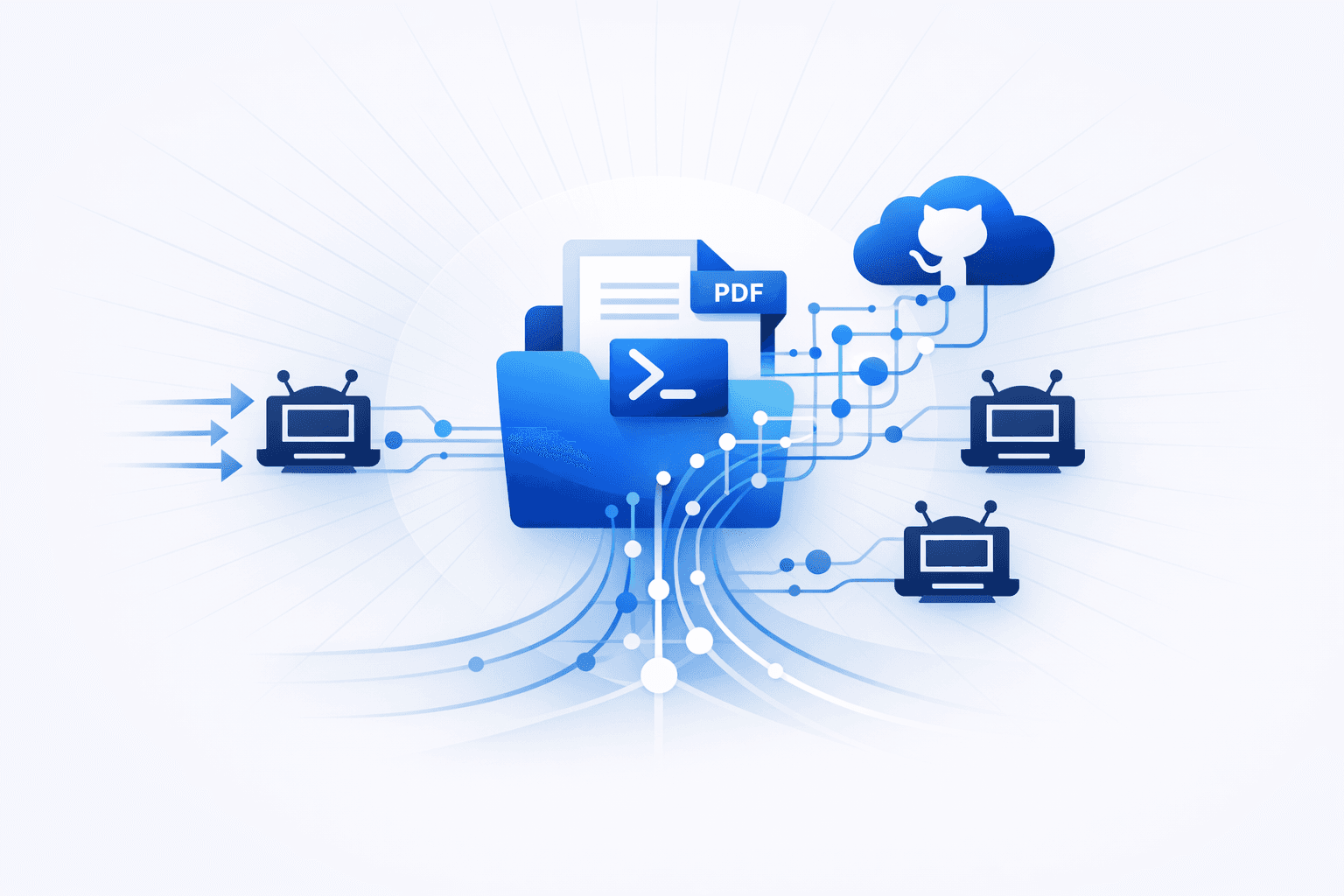
Security researchers reported several unrelated **remote access trojan (RAT)** delivery campaigns using different initial access vectors and lures. Seqrite Labs described “**Operation Covert Access**,” a spear‑phishing operation targeting Argentina’s judiciary with a ZIP attachment containing a convincing court-resolution decoy; execution is triggered by a malicious `LNK` masquerading as a PDF, which launches hidden PowerShell to fetch additional stages from a GitHub repository, culminating in a custom **Rust-based RAT** that attempts to blend in by renaming itself (e.g., `msedge_proxy.exe`). Separately, AhnLab Security Intelligence Center reported South Korea-focused activity distributing **RemcosRAT** through illegal online gambling-related tools and trojanized *VeraCrypt* installers, using embedded malicious VBS scripts and a multi-stage chain that ultimately deploys a RAT capable of surveillance and data theft (e.g., keylogging, screenshot/webcam/mic capture, credential/data harvesting). Another campaign documented by ReliaQuest abused **LinkedIn private messages** to deliver a bundled legitimate application alongside a malicious DLL for **DLL sideloading**, enabling RAT deployment under the guise of a trusted process; the reporting emphasized that social platforms can serve as effective phishing channels beyond email and that the technique is portable to other commonly used business messaging platforms.
Jun 29, 2026
Researchers detailed a phishing campaign that used an **SVG attachment** to launch JavaScript in the victim’s browser, drop an HTM file, and abuse the Windows `search-ms` handler with a **WebDAV** path to fetch additional stages. The infection chain pulled a VBScript, an obfuscated batch file, and Python-based payloads protected with **Pyarmor 9**, which analysts reverse engineered by unpacking the runtime’s AES-GCM and marshal customizations. The unpacked Python code decrypted **RC4-protected shellcode**, allocated executable memory, and launched a multi-stage sequence that included a **laZzzy-generated injector** targeting `notepad.exe`, more shellcode, and final **.NET malware** delivering **DcRat, AsyncRAT, XWorm RAT, and PureHVNC**. The tradecraft closely matches activity previously attributed to **DDGroup**, a long-running cybercrime actor tied to phishing campaigns that weaponize `search-ms` and WebDAV to present attacker-hosted files as local search results. Prior reporting linked the group to commodity malware including **XWorm, AsyncRAT, QuasarRAT, BitRat, Remcos, NetWire, Warzone RAT/AveMaria RAT, and ModiLoader/DBatLoader**, along with dynamic DNS infrastructure, open-source tooling such as **Freeze.rs** and **dufs**, and repeated process injection into `notepad.exe`. Researchers said the actor’s infrastructure spans more than 110 dynamic DNS domains and 94 IP addresses since 2019, and that observed domains and URLs from the newer campaign were reported to **URLhaus** to speed blocking.
Aug 15, 2026