
Loading story…
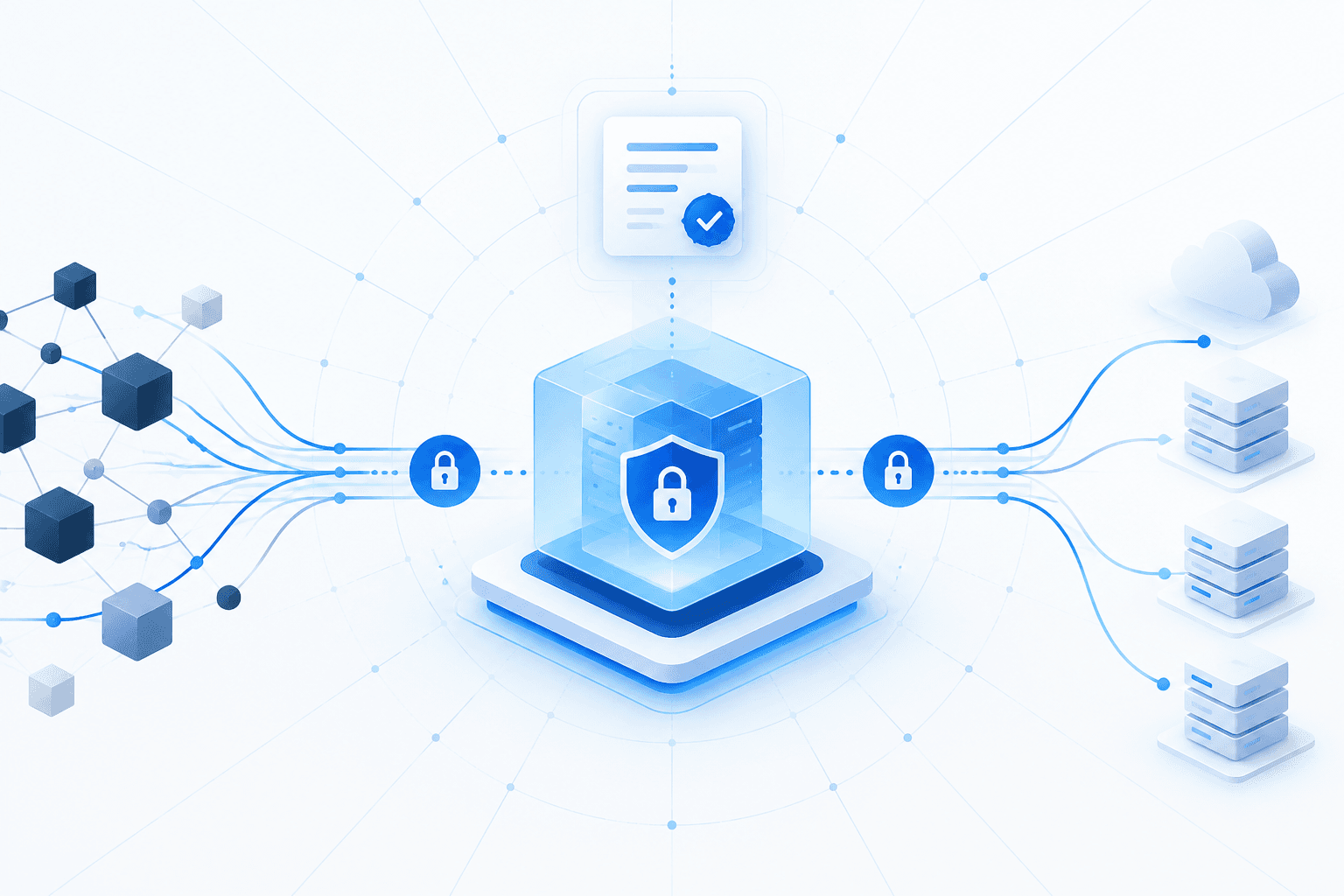
Researchers introduced SessionLatch, a session-attestation mechanism that binds confidential-VM remote-attestation evidence to individual TLS connections without modifying applications, TLS libraries, certificates, or accessing TLS session secrets. It observes a server-generated ephemeral public key at the operating-system layer, holds encrypted client records while evidence is exchanged alongside the TLS handshake, and releases traffic only after the server’s expected platform and software state is verified; an optional mutual mode also attests the client environment.
The prototype integrates with Linux and Windows and, on Linux, uses nftables, NFQUEUE, conntrack, libpcap, and SOCK_DIAG/Netlink to authorize a specific connection rather than a host or IP address. Tests using Hygon CSV attestation reported lower mean short-upload latency than TNG in interleaved Linux/Windows experiments, but SessionLatch remains a preprint research system: source code has not yet been published, certificate validation was disabled during performance testing, and independent compatibility, resilience, and deployment validation is still required.
See affected versions and whether adversaries are exploiting it.
1 event from the most recent confirmed update back to the earliest known activity.
Qi Gu and Sheng Ma submitted the paper "Session Attestation for Unmodified TLS Services in Confidential Virtual Machines," presenting SessionLatch for binding confidential-VM attestation to individual TLS sessions without changing applications, TLS implementations, or certificates.
See whether adversaries are exploiting this yet, and where the affected versions run in your environment.
2 references tracked. Mallory keeps watching after this page renders.
Map indicators from this story to your assets and identify affected systems in minutes.
Every observed campaign, victim, and pivot linked to actors named in this story.
Malware, exploits, and IOCs connected to the activity described here.
YARA, Sigma, and Snort rules deployed to your SIEM as soon as they’re published.
Get matching new stories delivered to your team as they break — not the next morning.
Ask questions about this story and take action on the answers.
Other stories Mallory is tracking that overlap on entities, sources, or topic labels.

Academic researchers disclosed a fundamental weakness in **attested TLS**, the remote attestation mechanism used by confidential computing platforms to prove a server is running inside a trusted execution environment (**TEE**). The team, led by Muhammad Usama Sardar of TU Dresden, found that current intra-handshake attestation designs do not securely bind attestation evidence to the actual TLS connection, enabling relay or diversion attacks in which a client validates a genuine attested server or AI agent but unknowingly sends encrypted traffic to a different malicious machine. The issue has been assigned **`CVE-2026-33697`** and rated high severity. The researchers formally analyzed seven cryptographic binding approaches and reported that none prevented this attack class, raising concerns that stronger “level-three” binding may be unattainable within the current architecture. Reported affected implementations include **Meta’s Private Processing for WhatsApp**, **Edgeless Systems’ Contrast**, **Cocos AI**, and a **Confidential Computing Consortium** proof of concept. Standards groups including the **IETF SEAT** and **TLS** working groups have acknowledged the findings, while the researchers recommended moving away from intra-handshake attestation toward **post-handshake attestation** as a safer alternative.
Jul 12, 2026
Multiple vulnerabilities were discovered in the use of LUKS2 disk encryption within confidential computing systems, allowing attackers with write access to storage disks to extract or modify confidential data. These flaws stem from malleable metadata headers in LUKS2, which can be exploited to trick trusted execution environment (TEE) guests into encrypting data with a null cipher, effectively disabling encryption. The vulnerabilities impact several confidential computing frameworks, including Edgeless Constellation, and are tracked under CVE-2025-59054 and CVE-2025-58356. Affected projects have released patches, and users are advised to update to the latest versions and ensure remote attestation reports reject pre-patch versions. Specifically, the Constellation Confidential Kubernetes platform was found to allow insecure use of LUKS2-encrypted persistent storage partitions. Due to unsafe handling of null keyslot algorithms in cryptsetup versions prior to 2.8.1, Constellation's CVM image could treat unencrypted volumes as confidential, exposing sensitive data. The vulnerability is addressed in Constellation version 2.24.0 and cryptsetup 2.8.1. There is no evidence of exploitation in the wild, but organizations using these frameworks should apply mitigations immediately to prevent potential data compromise.
Jun 29, 2026
Researchers from Vrije Universiteit Amsterdam developed 'L1TF Reloaded,' a novel attack combining L1TF (Foreshadow) and half-Spectre, successfully leaking VM memory from Google Cloud despite existing mitigations. The exploit enabled extraction of sensitive data, such as TLS keys, from co-tenant VMs and the hypervisor, even under high-noise conditions. Standard mitigations were insufficient, and only advanced protections like those on AWS limited the impact to non-sensitive data leaks.
Jun 29, 2026